


Quick Numbers
| Procedure time | Approximately 2 to 3 hours |
|---|---|
| Graft range | 500 to 1,200 follicular units |
| Anesthesia | Local (tumescent) |
| Growth onset | 3 to 6 months post-procedure |
| Final assessment | 12 months |
Key Takeaways
| PHT uses scalp FUE grafts implanted at flat angles (10 to 20°) to replicate natural growth direction. |
| Primary indications: pubic atrichosis, pubic hypotrichosis, post-radiation alopecia, and gender-affirming restoration. |
| Shedding of transplanted shafts at 2 to 4 weeks is expected and does not indicate graft failure. |
| Donor area healing and graft survival follow the same physiology as scalp transplantation. |
Pubic and other non-scalp cases still follow the same graft-handling discipline used in non-scalp hair transplants, with angle and density planned for delicate skin.
Female pattern goals and Sapphire FUE channel work are reviewed in consultation when candidacy and donor limits are clear.
What Is Pubic Hair Transplantation?
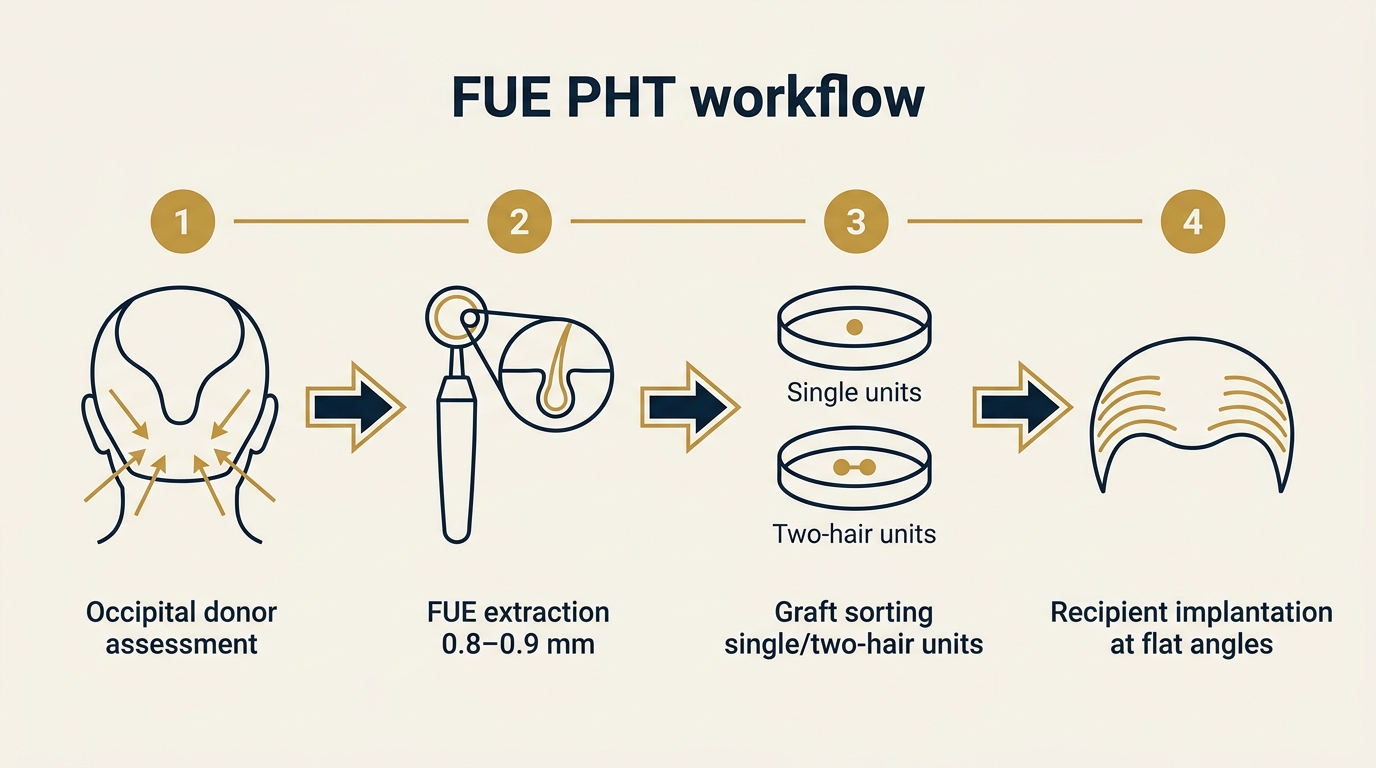
Pubic hair transplantation (PHT) is a microsurgical procedure that restores hair density to the mons pubis and surrounding pubic region using follicular unit extraction (FUE) grafts harvested from the occipital scalp donor zone. The procedure follows the same surgical principles as scalp and eyebrow transplantation: individual follicular units are extracted under local anesthesia, then implanted into micro-incisions created at anatomically appropriate angles to replicate the natural flat-lying growth pattern of pubic hair.
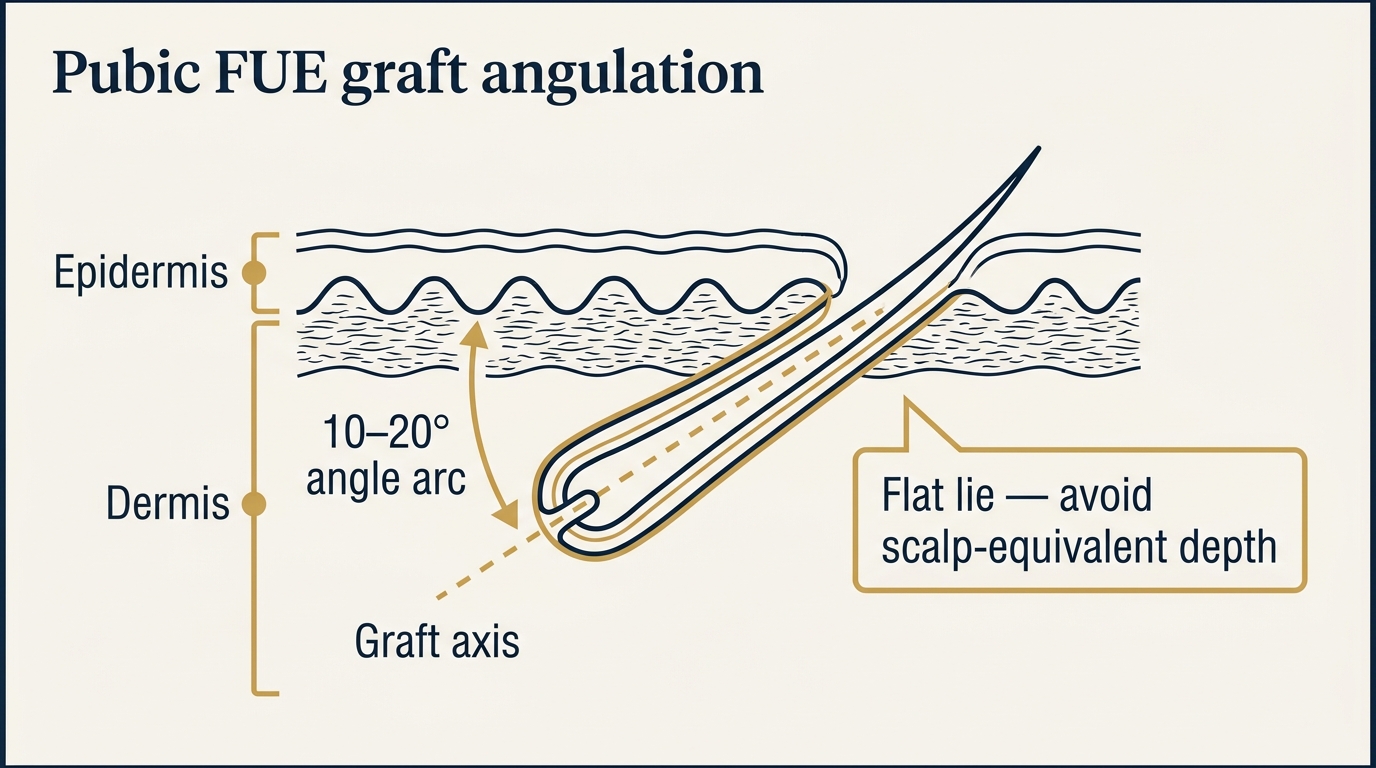
The technique was first formally described in the reconstructive surgery literature and has since been applied in aesthetic, oncological, and gender-affirming contexts. Unlike scalp transplantation, PHT demands precise depth and angulation control because the dermis of the mons pubis is thinner and more elastic, increasing the risk of graft protrusion or poor lie angle if technique is suboptimal.
What Is the Pubic Region?
The pubic region is the lower front part of the body between the abdomen and the genitals, centred on the mons pubis, the rounded pad of fatty tissue that sits over the pubic bone. In adult women, pubic hair usually forms an inverted triangle with a fairly flat upper border. In men, the hair more often rises in a diamond shape toward the navel. This natural outline is the reference we use when a transplant has to rebuild a pattern that never developed or was lost.
What Are the Common Female Pubic Hair Patterns and Styles?
Female pubic hair patterns fall into two groups: the natural distribution a woman is born with, and the grooming styles she chooses. A 2016 US survey published in JAMA Dermatology found that about 84% of women had groomed their pubic hair at some point, so most patients arrive with a style already in mind.
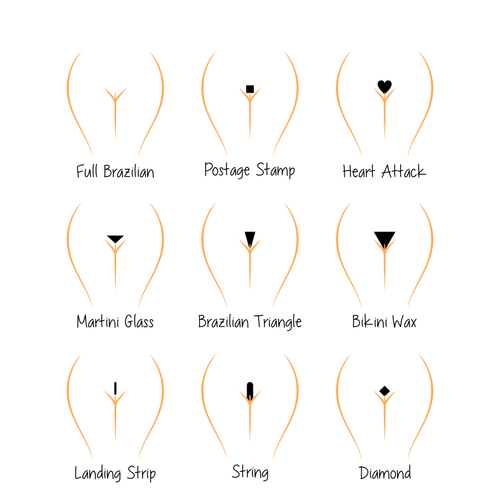
| Style | What it looks like | Relevance to pubic hair transplant |
|---|---|---|
| Natural | Full inverted triangle with a horizontal upper border | Main reference for rebuilding atrichosis or hypotrichosis |
| Bikini | Hair removed only outside the underwear line | The most requested transplant goal; the central triangle stays full |
| Brazilian triangle / Martini glass | A smaller triangle above the genitals | Tapered border, usually a lower graft count |
| Landing strip / String | A narrow vertical strip | Small area; precise edges matter more than density |
| Postage stamp / Diamond / Heart | A small shaped patch | Rarely a transplant goal; shapes are easier to trim from a fuller result |
| Full Brazilian | All hair removed | Not a transplant goal; years of repeated removal can scar follicles |
Style matters before surgery because transplanted hair is permanent and keeps the character of scalp hair: it grows longer and straighter than native pubic hair and needs regular trimming. It's easier to trim a fuller natural triangle into a smaller style later than to add grafts to a pattern that was designed too small. Laser hair removal over the area after a transplant can damage the new follicles, so we discuss future grooming plans at consultation.
How Much Pubic Hair Is Normal for a Woman?
There's no single normal amount of pubic hair. Density, colour, and coverage vary widely with genetics, ethnicity, and hormones. Pubic hair usually starts to appear between the ages of 8 and 13 and develops through the five Tanner stages: none before puberty, then sparse fine hair, then darker and coarser hair spreading over the mons pubis, and finally the adult inverted triangle that may extend to the inner thighs. Women of East Asian descent often have naturally sparser growth, and most published pubic hair transplant series come from Korea for that reason.
Sparse hair on its own isn't a disease. It becomes a medical question when hair never developed after puberty (atrichosis), stays patchy and very thin (hypotrichosis), or thins noticeably over a short time.
Why Is Pubic Hair Thinning or Falling Out in Women?
Pubic hair thinning in women usually has a hormonal, medical, or mechanical cause. The most common ones are:
- Menopause and ageing: falling oestrogen and androgen levels make pubic hair finer, greyer, and sparser over the years
- Endocrine conditions: thyroid disease and conditions that lower adrenal or pituitary hormones can reduce body hair
- Alopecia areata: an autoimmune condition that can cause round patches of loss on any hair-bearing skin
- Repeated hair removal: laser and electrolysis are designed to be permanent, and some women notice weaker regrowth after years of waxing
- Cancer treatment: chemotherapy usually causes temporary loss, while pelvic radiotherapy can cause permanent loss
Sudden or patchy loss should be checked by a physician first, since blood tests can reveal a treatable cause. Dr. Caymaz only plans a pubic hair transplant once the loss is stable and a medical cause has been ruled out or treated.
Medical Indications
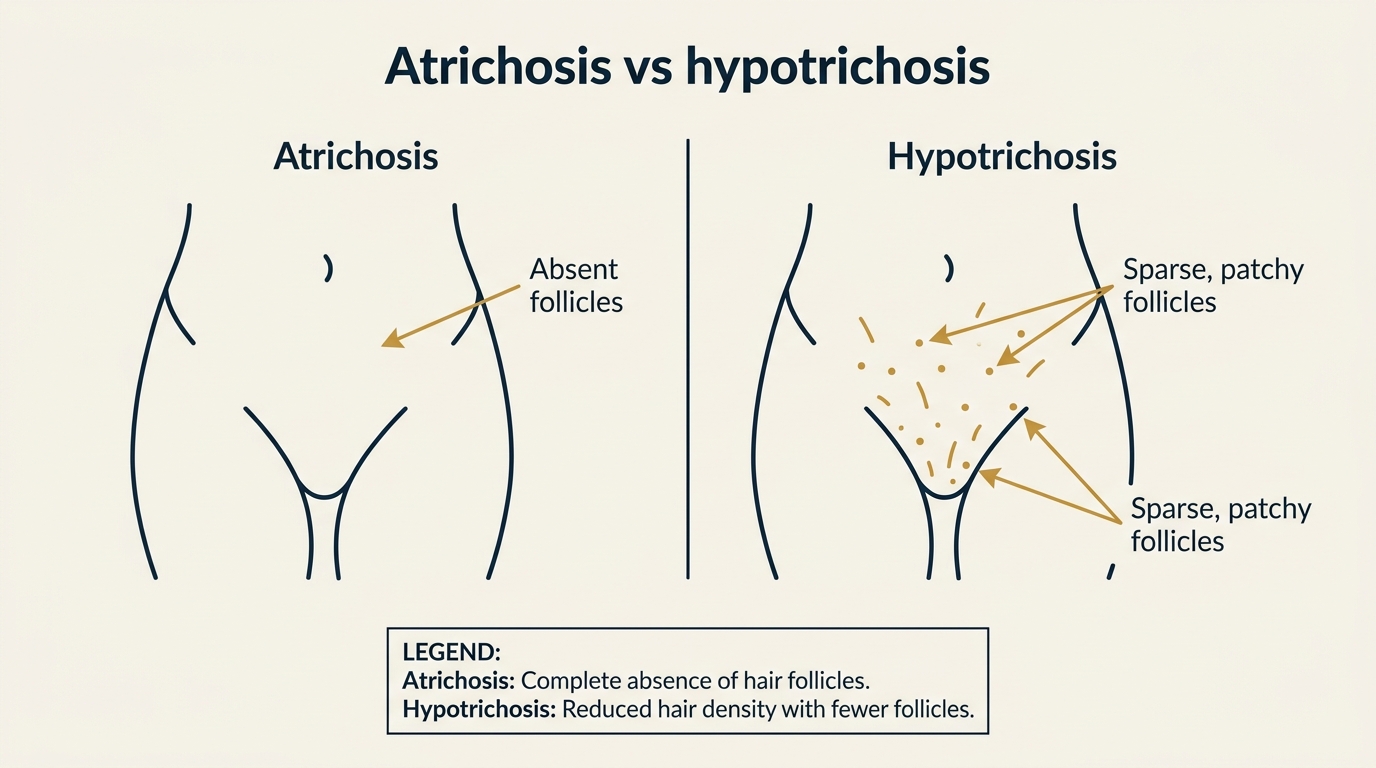
Clinically validated indications for pubic hair transplantation include:
- Pubic atrichosis, congenital complete absence of pubic hair, more prevalent in women of East Asian (Mongolian, Korean, Japanese) descent [Lee YR, Hair Transplantation, 5th ed., Unger et al., ch. 16-C]
- Pubic hypotrichosis, sparse or patchy pubic hair growth due to genetic, hormonal, or iatrogenic causes
- Post-radiation or chemotherapy alopecia, permanent follicular damage after pelvic radiotherapy or systemic chemotherapy
- Scarring alopecia, follicular loss secondary to repeated laser depilation, electrolysis, or thermal injury producing fibrotic dermis
- Gender-affirming restoration, creating or augmenting pubic hair distribution consistent with the patient’s gender identity following hormonal or surgical transition
- Post-surgical reconstruction, restoration after mons pubis procedures (abdominoplasty, vulvoplasty) that displace or excise hair-bearing skin
Candidate Assessment
Ideal candidates present with:
- Sufficient occipital scalp donor density (typically ≥60 FU/cm²) to supply 500 to 1,200 grafts without compromising donor aesthetics
- No active dermatological disease at the recipient site (lichen sclerosus, psoriasis, active folliculitis)
- Realistic expectations regarding distribution pattern and density, communicated during pre-operative consultation
- No systemic coagulopathy or anticoagulant therapy that cannot be temporarily interrupted
Pre-operative assessment includes a dermatoscopic examination of both donor and recipient zones, hormonal panel where indicated, and a detailed medical history covering prior depilation history, radiation exposure, and medication use.
Surgical Technique
Surgical Pattern Planning
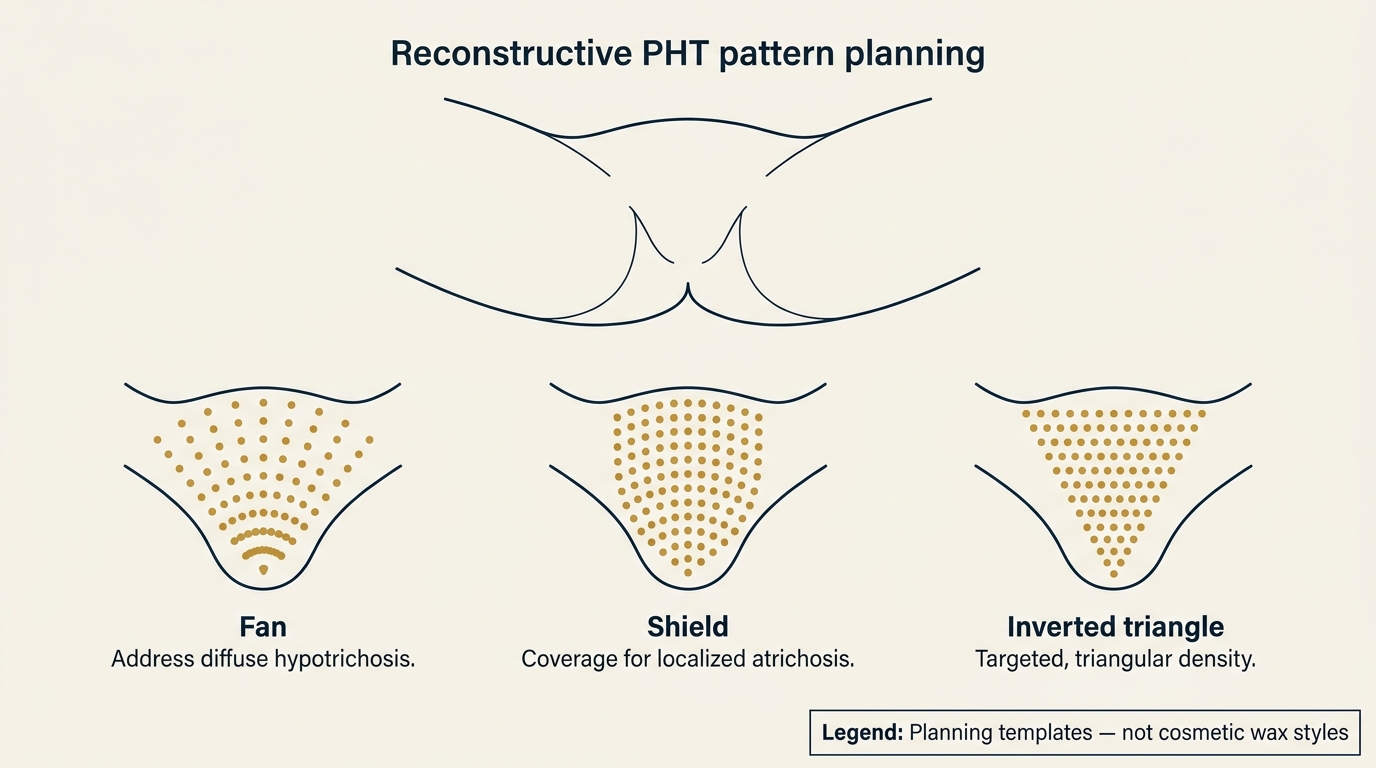
Distribution boundaries are mapped with the patient standing. Reconstructive templates (fan, shield, inverted triangle) guide graft placement density and silhouette. These are surgical planning patterns, not cosmetic wax menus.
The procedure is performed under tumescent local anesthesia and follows a standardised sequence:
- Design planning, the desired distribution boundary is mapped with the patient in the standing position, marking the natural anatomical perimeter of the mons pubis
- Donor extraction, follicular units are harvested from the occipital scalp using 0.8 to 0.9 mm FUE punches; single-hair and two-hair units are selected to replicate natural pubic follicular architecture
- Recipient site creation, micro-incisions are made at 10 to 20° angles following the natural anterior-to-superior growth vector of pubic hair; incision depth is calibrated to the thickness of the local dermis
- Implantation, grafts are placed individually with implanter pens or fine forceps, maintaining consistent angulation and avoiding vascular compromise between adjacent sites
Total operative time is approximately 2 to 3 hours. Graft counts range from 500 to 1,200 follicular units depending on recipient zone area and desired density. Sapphire-blade incisions are preferred at this clinic for their smaller channel diameter and reduced adjacent tissue trauma.
| Phase | Expected findings |
|---|---|
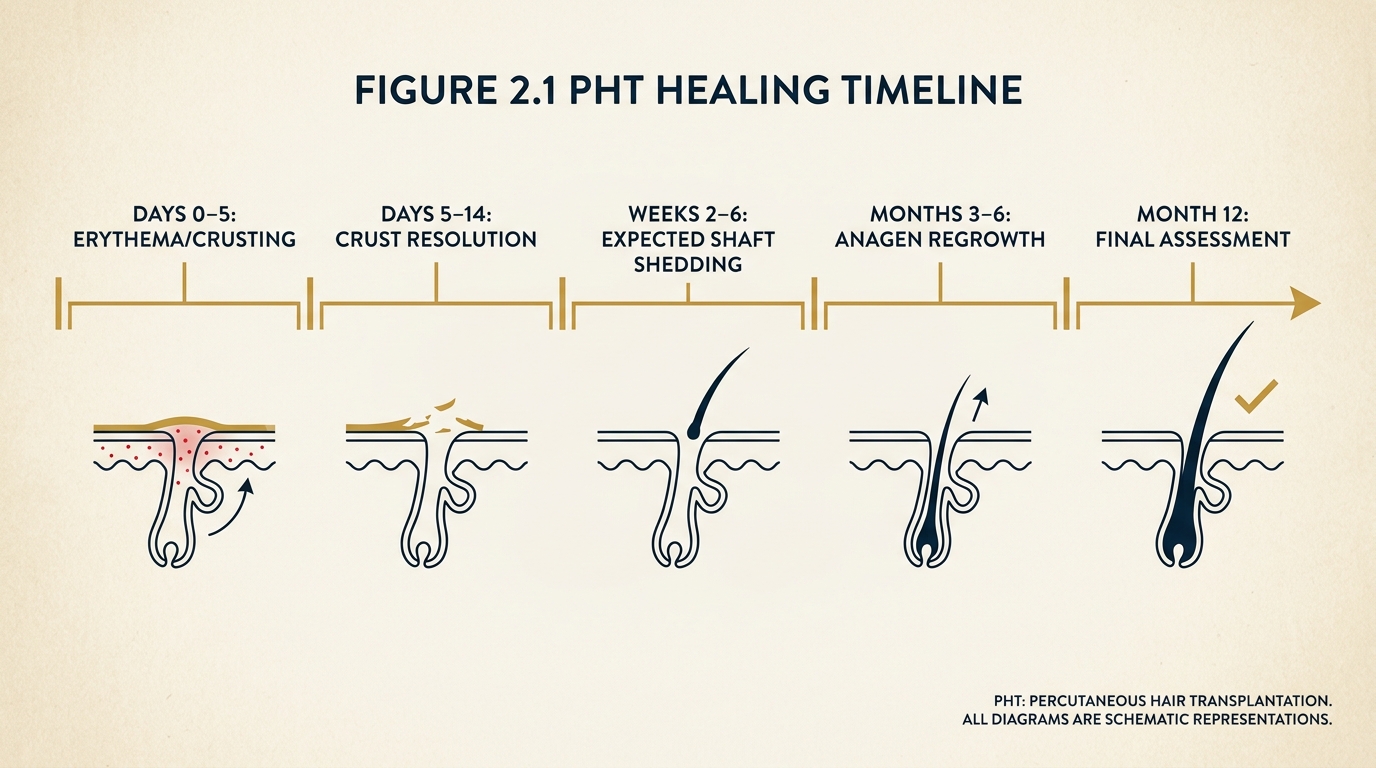
| Days 0 to 5 | Erythema, mild oedema, crusting at implantation sites; gentle saline compresses advised |
| Days 5 to 14 | Crust resolution; avoid mechanical friction and tight garments |
| Weeks 2 to 6 | Telogen effluvium of transplanted shafts (expected; follicle roots remain viable) |
| Months 3 to 6 | Anagen re-entry; visible regrowth begins, initially fine and lighter in calibre |
| Month 12 | Final density and distribution pattern assessed; revision grafting considered if coverage is insufficient |
Dr. Caymaz Insight
| PHT is microsurgery on elastic, thin-dermis skin. The most common technical error is implanting at scalp-equivalent depth and angle, which causes grafts to protrude rather than lie flat. I calibrate incision depth per-patient using dermoscopic thickness assessment before the procedure, not a fixed protocol. |
Post-Operative Instructions
- Loose-fitting underwear and clothing for a minimum of 14 days to eliminate friction on implantation sites
- Saline spray (isotonic, non-preserved) applied to the recipient zone three times daily for the first five days
- Oral antibiotic prophylaxis as prescribed; topical antimicrobial applied to the donor extraction zone
- Avoid submersion (bath, pool, sea) for four weeks
- Physical activity involving direct pressure or friction at the surgical site should be avoided for a minimum of 10 to 14 days; patients are advised to confirm resumption of specific activities with the surgeon at the two-week review
Risks and Complications
PHT carries the same general risks as any FUE procedure. Site-specific risks include:
- Angulation failure, grafts growing perpendicular to skin surface rather than flat; correctable with revision implantation at adjusted angles
- Suboptimal graft survival, as in all transplantation, partial non-take is possible; incidence is low when scalp-origin grafts are used in well-vascularised tissue
- Follicular inclusion cysts, rare; form when a graft is implanted too deeply; treated by expression or minor excision
- Hypopigmentation or hyperpigmentation at recipient micro-incision sites, typically transient
- Infection, minimised by prophylactic antibiotics and adherence to wound care protocol
Sources & clinical references
FAQ
It is FUE that harvests scalp follicles and implants them into the pubic region to restore hair density, shape, or cover scarring when stable candidacy is confirmed.
The most common styles are natural, bikini, Brazilian triangle, landing strip and full Brazilian, with smaller shapes such as the postage stamp, diamond or heart. For a transplant we plan a natural or bikini outline, because a fuller result can always be trimmed into a smaller style later.
The usual causes are menopause and ageing, thyroid or other hormonal conditions, alopecia areata, years of laser or repeated hair removal, and cancer treatment. Sudden or patchy loss should be checked by a physician first, because a treatable medical cause is often found with simple blood tests.
Adults with stable skin, realistic styling goals, and sufficient scalp donor, often women with atrichosis, patchiness after grooming injury, or desired aesthetic reshaping after consultation.
Initial healing takes about seven to ten days; transplanted shafts shed, then regrowth often begins around three to six months with maturation toward twelve months.
Yes, within biological limits. Templates like fan, triangle, or landing strip are planned pre-op so graft direction and density match the requested silhouette.
Poor angulation, cobblestoning, cysts, infection, or unnatural direction if implant depth and tension control are inadequate; choosing an experienced microsurgical team reduces these risks.
Clinics typically advise avoiding friction and pressure on the treated zone for at least seven to fourteen days; follow your surgeon’s written timeline.

Hair Transplant for the Crown Area: Everything You Need to Know
FUE crown before and after photos only compare fairly under the same overhead light, part line, and month markers…
Read More: Hair Transplant for the Crown Area: Everything You Need to Know
What is Finasteride and Minoxidil Mechanism of Action?
Finasteride blocks 5-alpha reductase type II, lowering scalp DHT and slowing miniaturization in androgenetic alopecia…
Read More: What is Finasteride and Minoxidil Mechanism of Action?
What Happens If I Have Necrotic Areas or Scalp, Graft Infection After Hair Transplant Operation?
Necrosis and graft infection are uncommon but high-priority complications that need rapid clinical triage. Early…
Read More: What Happens If I Have Necrotic Areas or Scalp, Graft Infection After Hair Transplant Operation?
What Happens During a FUE Hair Transplant Day?
A FUE hair transplant procedure typically spans 6 to 8 hours in a single day. The morning begins with blood work, scalp…
Read More: What Happens During a FUE Hair Transplant Day?Female Hair Transplant — Frequently Asked Questions
Expert Answers by Dr. Erkam Caymaz, Istanbul