


Quick answer
Sapphire FUE uses gemstone blades to open micro-channels for graft placement, enabling sharper angles and often faster crust healing than steel slit tools. It is still FUE harvest—the innovation is recipient-site incision quality, not a separate extraction method.
Quick Numbers
| Extraction tool | Motorized micro-punch (0.8–0.9 mm) — same as classic FUE |
|---|---|
| Channel tool | Sapphire blade (V-tip, ~1.0–1.5 mm) |
| Growth angle target | ~40–45° |
| Density ceiling | Natural angle beats raw graft count |
Key Takeaways
| Sapphire changes channel opening, not how grafts are harvested. |
| Smaller, smoother slits can support tighter spacing when angles stay natural. |
| Claims of 60–70 grafts/cm² usually sacrifice direction and look pluggy. |
| Surgeon-controlled channel design defines the hairline. |
Sapphire FUE is not a separate extraction method, follicles are harvested with a motorized micro-punch (typically 0.8–0.9 mm), exactly as in classic FUE. The "sapphire" distinction applies only to the recipient-site step: gemstone blades open micro-channels instead of steel slit tools. Smoother, harder sapphire edges can reduce vibration trauma and support tighter spacing when exit angles stay natural, which matters most at the hairline and temples.
Patients comparing implantation workflows often ask how sapphire slits differ from DHI hair transplant placement.
Our DHI vs Sapphire FUE guide maps when each fits donor quality and zone goals. This page focuses on channel opening, density limits, and surgeon-led angle control.
What sapphire blades change in FUE
Hair transplantation has evolved into a minimally invasive same-day procedure. The FUE method remains the most widely used harvest approach worldwide; sapphire blades refine how recipient sites are opened, not how follicles are extracted from the donor area.
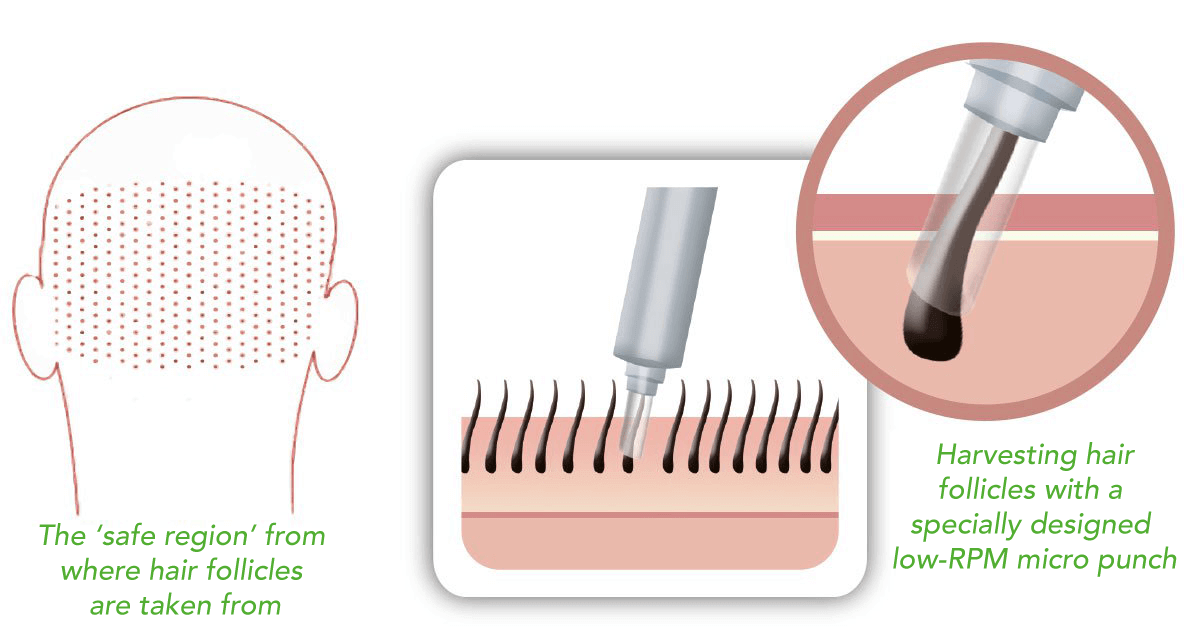
FUE with sapphire blades uses gemstone incisions instead of steel during recipient-site creation. The blades are designed to minimize scab formation and speed recovery by opening smaller micro-channels. After local anesthesia, grafts are extracted one by one with a motorized micro-punch typically 0.8–0.9 mm in diameter, the same harvest step as classic FUE. The sapphire blade plays no role in extraction; it is used exclusively to create recipient incisions after the donor harvest is complete.
Sapphire FUE versus classic steel slits
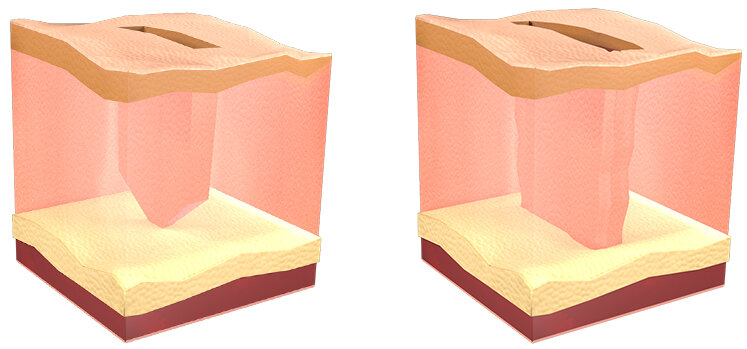
The difference between Sapphire FUE and classic FUE regarding micro-channel opening
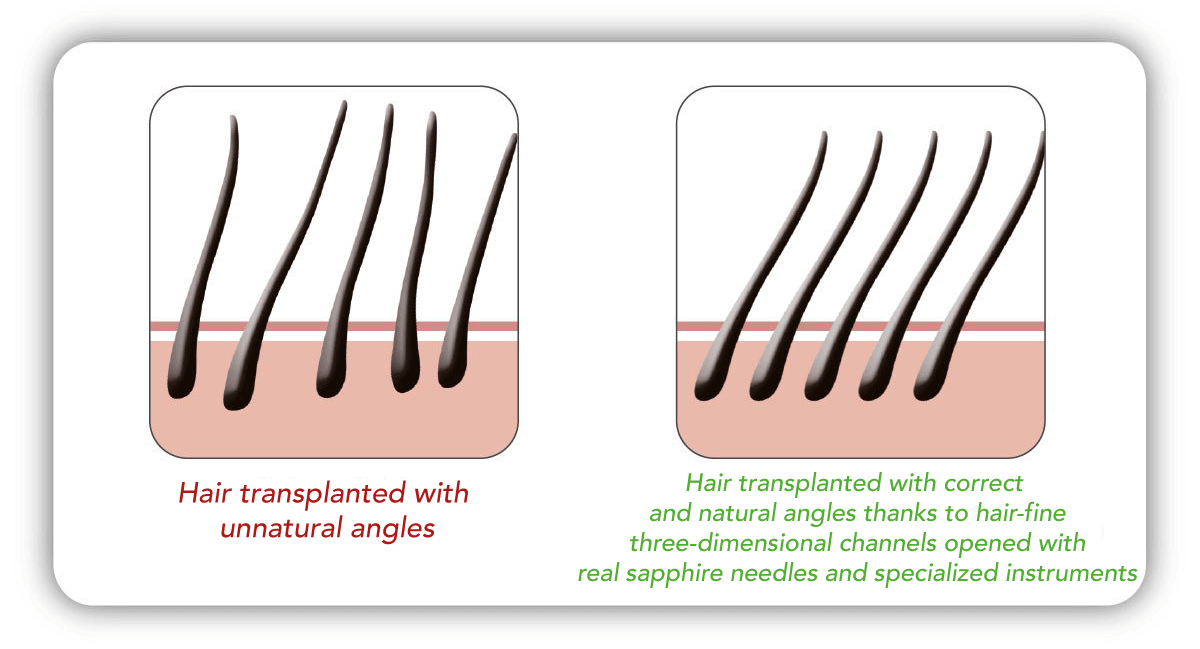
Extracted follicles are placed into incisions that control density, angle, and direction, determinants of a natural appearance. Channel opening is often the most consequential step for outcome quality. Sapphire blades create sharp, smooth slits commonly ranging from about 1.0–1.5 mm, enabling closer spacing when growth vectors remain disciplined.
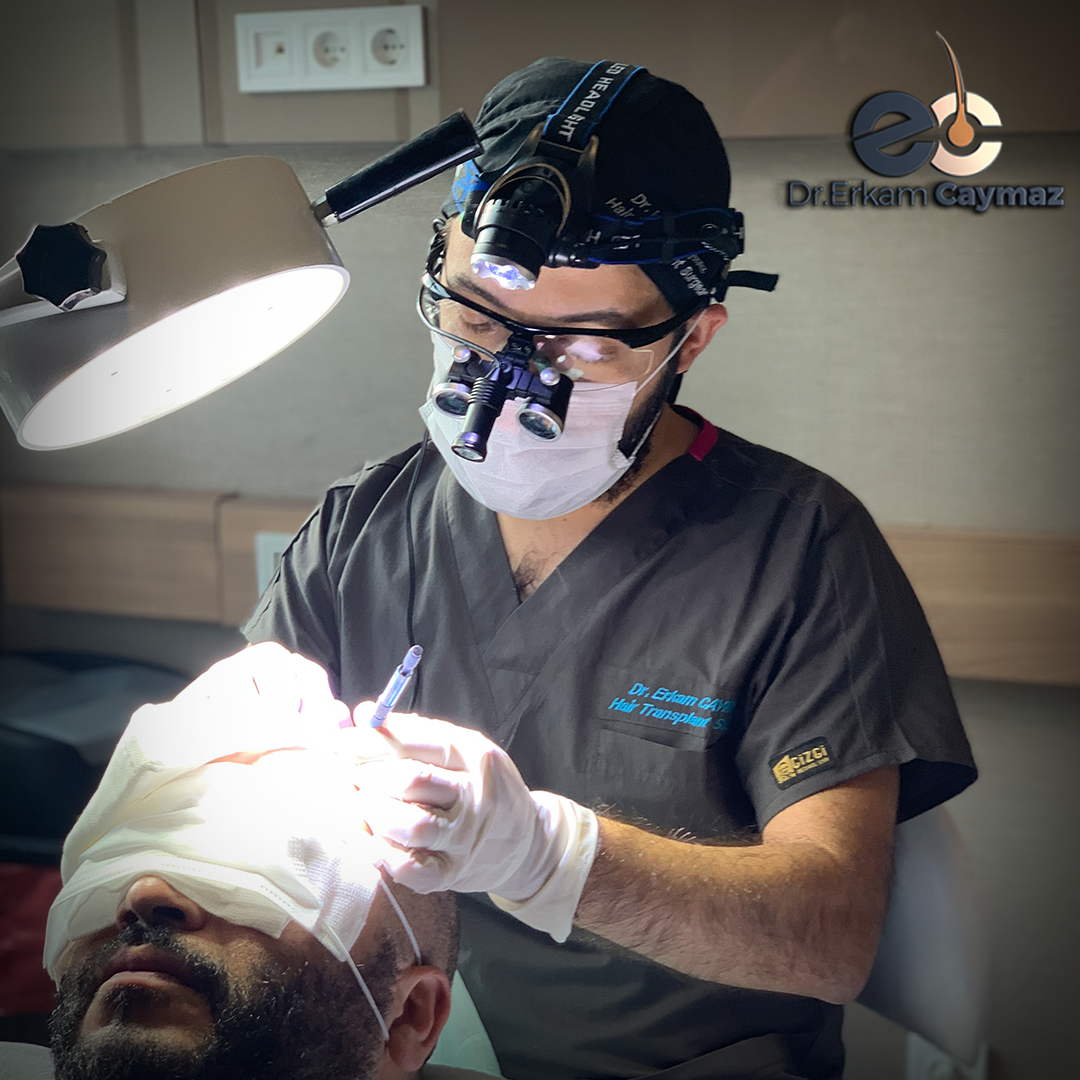
.png)
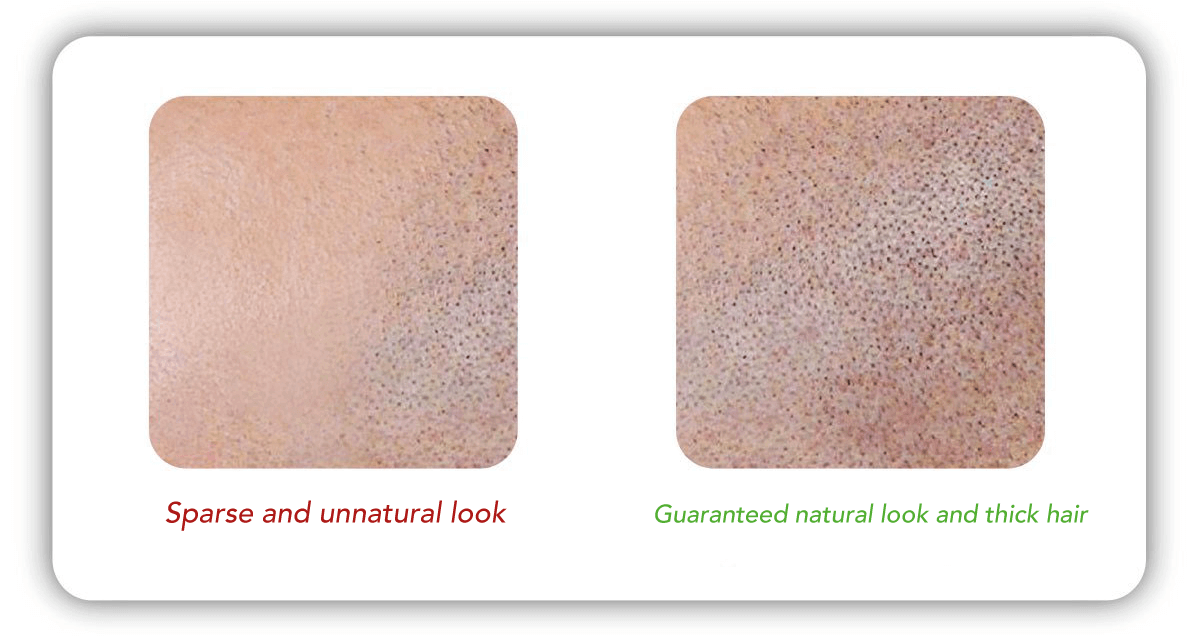
Some clinics advertise 60–70 follicular units per square centimeter as if density alone creates a natural look. Neither sapphire nor steel makes that safe at the hairline: if slits cannot follow proper growth direction, results look pluggy. Natural exit angle targets roughly 40–45 degrees; perpendicular placement trades realism for raw count.
Angle and density limits are explored in our article on lateral sapphire incisions and density, which explains why marketing graft counts can mislead planning conversations.
Dr. Caymaz Insight
| I open channels personally because angle and direction live there, not in the brochure word “sapphire.” The blade material helps, but a steel slit opened at the wrong vector still ages badly at the hairline. |
Advantages of sapphire blades over steel
- Smooth, hard sapphire surfaces can reduce vibration and trauma during micro-channel creation.
- Tighter slit geometry can support density in advanced patterns when angles stay natural, not by chasing impossible graft counts.
- Less tumescence fluid is sometimes needed before incisions, which may reduce post-op swelling comfort issues.
- Smaller channels can support faster crust shedding and smoother skin texture during early recovery.
- Slit depth matched to graft length helps keep follicle angle stable after placement.
Operation day and candidacy
FUE with sapphire blades has been in clinical use since the broader FUE adoption wave after 2004. At our Istanbul clinic, VIP packages pair sapphire channel work with surgeon-led hairline design; extraction and implantation are completed by trained technicians under direct supervision. Patients comparing surgeon credentials can review Dr. Erkam Caymaz's background and training before they book travel dates.
The sequence, consultation, harvest, channel creation, placement, is outlined in hair transplant procedure steps for patients who want a day-of timeline before they fly to Istanbul.
Donor zones, session length, jet-injection comfort options, and beard or chest donor rules are summarized on our hair transplant information pillar, which ties technique labels back to realistic calendar planning for international travelers.
When you are weighing sapphire slits against implanter pens, our DHI vs Sapphire FUE guide clarifies how implantation paths diverge after the same motorized-punch harvest step without treating either label as universally superior.
Clinical Intelligence. Sapphire FUE Hair Transplant
Clinical Context
Sapphire FUE opens recipient micro-channels with V-shaped sapphire blades before graft placement. Channel angle, depth, and direction define natural movement, not the extraction method alone.
Candidate Profile
Adults with adequate donor density who need broad frontal or mid-scalp coverage, often with full or partial shave. Norwood 2–5 patterns where surgeon-led slit design drives the aesthetic.
Key Risk
Technician-led channel work without surgeon mapping, channels cut too wide or deep for graft size, or mega-sessions that sacrifice donor preservation for graft headlines.
Expected Outcome
With surgeon-led channel design and atraumatic handling, overall success is about 90–95% and graft survival up to 98%; sapphire blades support crisp slit geometry when used correctly.
What does the sapphire blade change?
Who should open recipient channels?
Lateral slit or vertical, when?
How many grafts fit one safe session?
When is Sapphire FUE the default choice?
When might DHI be preferred instead?
Is Sapphire FUE better for coarse or curly hair?
Can beard or body grafts use sapphire channels?
What makes sapphire results look pluggy?
Why is blade marketing misleading?
What donor errors pair with aggressive channel work?
Does sapphire speed healing?
What survival rates are realistic?
When is the result mature?
What should you ask before booking Sapphire FUE?
How is the operation day structured?
What protects the result afterward?
Key Takeaway
Sapphire FUE succeeds when channel angle and direction are surgeon-mapped, the blade is a precision instrument, not a guarantee.
Clinical Pearl
Match blade width to graft calibre and zone: hairline singles need shallower, finer slits than mid-scalp multis.
Red Flag
A clinic that cannot name who opens channels, runs many same-day cases, or pushes mega-session graft counts regardless of donor quality.
Monitoring Point
Reassess direction and density at six and twelve months before planning a second session; shock loss is normal early on.
| Factor | Sapphire blade | Steel blade |
|---|---|---|
| Surface | Smoother, harder | Standard steel |
| Micro-channel size | Often smaller | Slightly wider |
| Crust / edema | Often lighter | Variable |
| Hairline control | Angle discipline required | Same surgeon skill need |
Sources & clinical references
No. Extraction uses the same motorized micro-punch as classic FUE. The only difference is the recipient-site step: sapphire crystal blades open channels instead of steel slit tools.
No. Natural angle and direction cap safe density; extreme graft counts per cm² often look pluggy.
Patients needing precise channel angles, especially hairline and temple work, when the surgical team is experienced with slit geometry.
Sapphire FUE opens slits then places grafts; DHI uses Choi implanter pens. Many clinics use both depending on zone.
Shock loss may occur months 1–4; cosmetic improvement typically builds from months 6–12.
The operating surgeon performs hairline design and recipient channel opening; extraction and implantation are technician-led under direct supervision.
Sapphire FUE Hair Transplant — Frequently Asked Questions
Expert Answers by Dr. Erkam Caymaz, Istanbul