


Quick Numbers
| Earliest safe start | 10â14 days post-op |
|---|---|
| Therapeutic wavelength | 630â670 nm (red) or 830â850 nm (near-infrared) |
| Session duration | 15â25 minutes per session |
| Typical protocol length | 12â26 weeks, 3 sessions per week |
| Reported benefit range | Modest reduction in shock loss duration; no guaranteed density gain |
Key Takeaways
| Starting red light therapy too early can irritate healing recipient sites and risk displacing grafts that haven't fully anchored. |
| LLLT works through photobiomodulation, stimulating mitochondrial activity in follicular cells, not by "growing" new hair from nothing. |
| No red light device can substitute for proper aftercare, gentle washing, and medical follow-up after a transplant. |
| Patients using both LLLT and minoxidil post-transplant should coordinate timing with their surgeon to avoid compounding scalp irritation. |
You've had your grafts placed, the scabs are starting to lift, and now you're scrolling through forums reading about red light therapy after hair transplant surgery. One post says to start immediately. Another warns you'll damage your grafts. A third claims it doubled someone's density. The confusion is understandable, because low-level laser therapy (LLLT) sits in a gray zone between legitimate photomedicine and consumer marketing hype. This article breaks down the actual clinical evidence, explains when and how to use red light safely after a Sapphire FUE procedure, and sets realistic expectations for what a $200 laser cap can and can't do for your results.
What Is Red Light Therapy and How Does It Affect Hair Follicles?
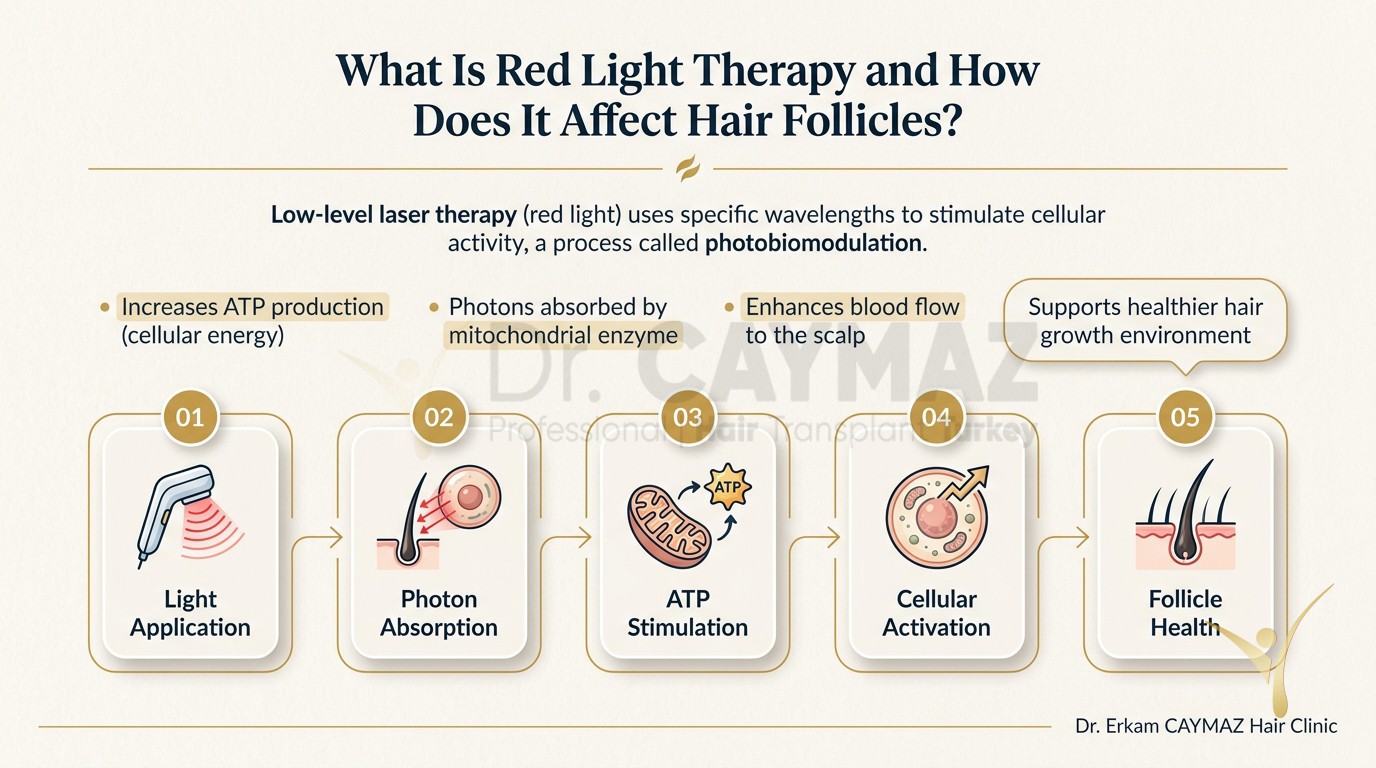
Low-level laser therapy, often marketed as red light therapy, uses specific wavelengths of visible red or near-infrared light to stimulate cellular activity. The mechanism is called photobiomodulation: photons are absorbed by cytochrome c oxidase, an enzyme in the mitochondrial electron transport chain, which increases adenosine triphosphate (ATP) production. In simpler terms, the light gives your cells a small energy boost.
For hair follicles specifically, this energy boost appears to prolong the anagen (active growth) phase and may increase blood flow to the dermal papilla, the tiny structure at the base of each follicle that feeds it nutrients. The FDA cleared several LLLT devices for treating androgenetic alopecia (pattern hair loss) back in 2007, based on studies showing a modest increase in hair count over 26 weeks of use. That clearance, though, was for non-surgical hair loss, not for post-transplant recovery.
The distinction matters. A transplanted graft goes through a very different biological process than a miniaturizing native follicle. After extraction and reimplantation, each graft must re-establish its blood supply through a process called neovascularization. During the first 5â7 days, grafts are held in place primarily by fibrin clots and the tight fit of the recipient incision. Any external stimulus applied too early, whether heat, pressure, or even light energy, carries a theoretical risk of disrupting this fragile anchoring period. Understanding the step-by-step transplant process helps clarify why timing is so important.
When Can You Safely Start LLLT After a Hair Transplant?
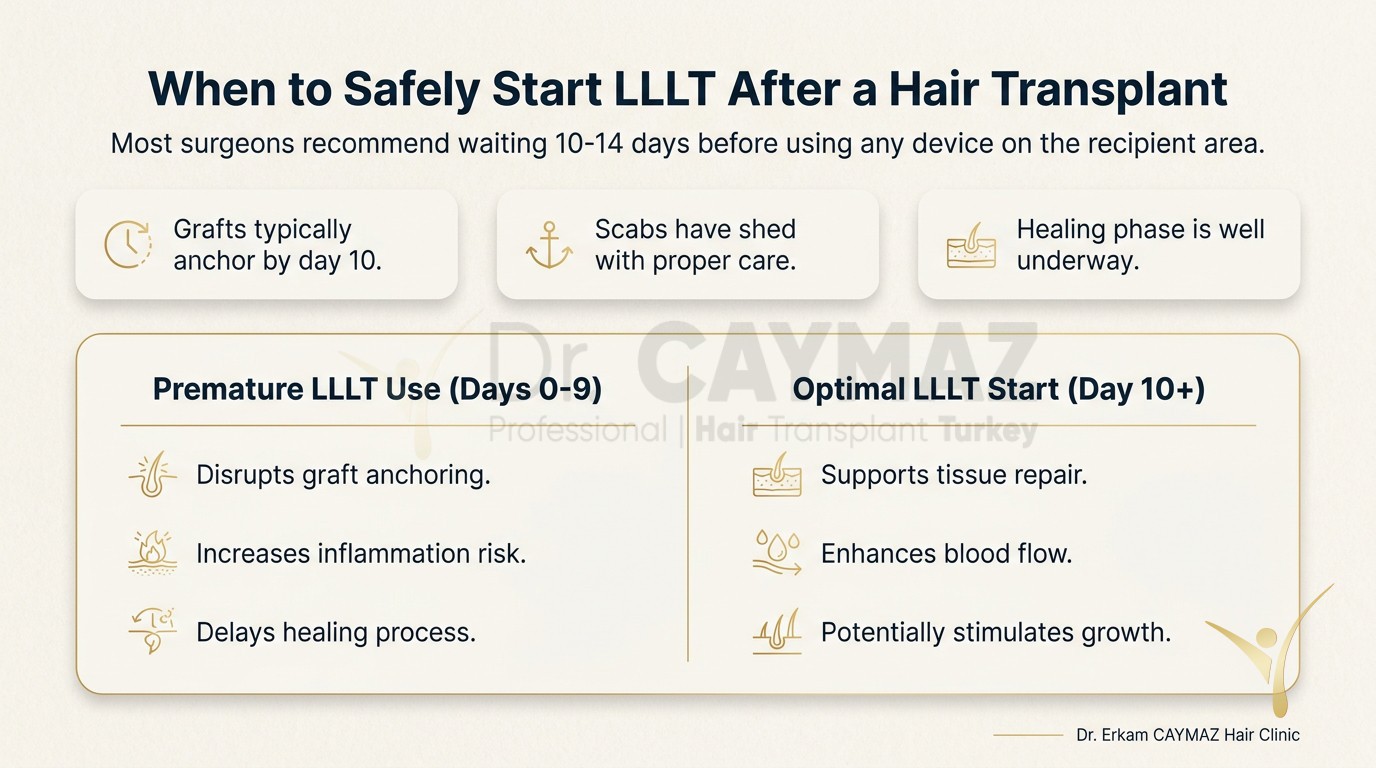
Most experienced surgeons recommend a minimum waiting period of 10 to 14 days before placing any device on or near the recipient area. By day 10, the transplanted grafts have typically anchored into the surrounding tissue, scabs have shed (especially if you've followed a proper post-transplant washing routine), and the superficial wounds have closed.
Some clinics push the start date to 3 or even 4 weeks. There's no published randomized trial that pinpoints the exact ideal day, so the conservative approach is reasonable. The risk of starting at day 7 versus day 14 isn't catastrophic, but there's no benefit to rushing. The grafts don't need photobiomodulation during their initial survival phase. They need blood supply, moisture, and protection from trauma.
For the donor area, the timeline is slightly more flexible. Donor site wounds from FUE (follicular unit extraction) are small circular punch sites that heal relatively quickly. Red light applied to the back of the scalp after day 7 is generally well tolerated, though you should confirm this with your surgeon. If you're curious about how the donor zone heals on its own, the donor area healing timeline covers that in detail.
Does Red Light Therapy Actually Improve Graft Survival?
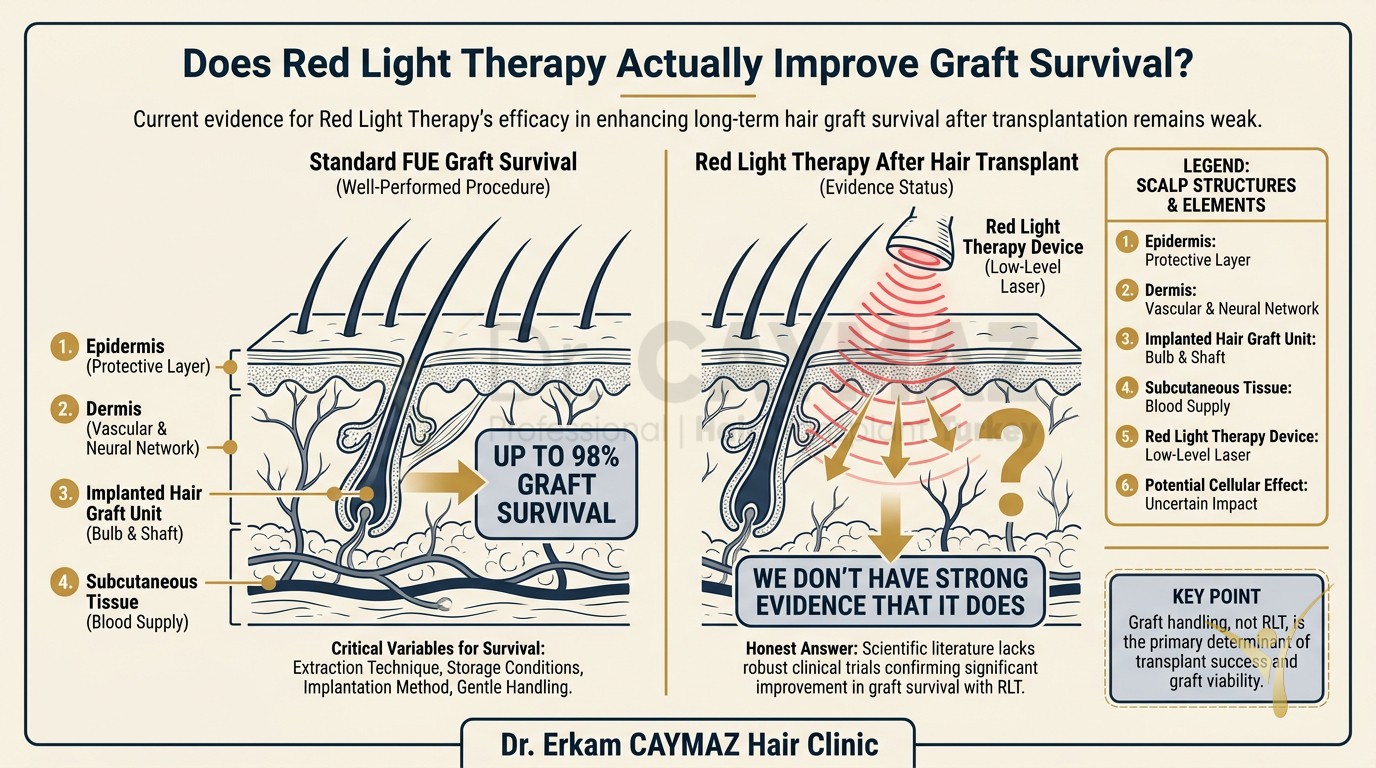
This is the question patients really want answered, and the honest answer is: we don't have strong evidence that it does. Graft survival after a well-performed FUE procedure can reach up to 98% when extraction, storage, and implantation are handled correctly. The variables that most influence survival are graft handling time outside the body, hydration of grafts during storage, incision depth and angle, and post-operative care. Red light therapy doesn't meaningfully alter any of those factors.
What LLLT may do is reduce the duration and severity of shock loss, the temporary shedding of transplanted and sometimes native hairs that occurs between weeks 2 and 8. Shock loss happens because the transplanted follicle enters a telogen (resting) phase after the trauma of extraction and reimplantation. A few small studies suggest that photobiomodulation can shorten this resting phase by a few weeks, meaning new growth may appear slightly earlier. But "slightly earlier" is not the same as "more grafts surviving." You can read more about the mechanics of shock loss to understand why this shedding is normal and temporary.
There's also a plausible anti-inflammatory effect. Red and near-infrared light have been shown to reduce pro-inflammatory cytokines in wound healing studies. After a transplant, some degree of inflammation is expected, and reducing it could theoretically create a friendlier environment for graft survival. But this remains theoretical in the hair transplant context. No peer-reviewed study has demonstrated a statistically significant improvement in final graft survival rates attributable to LLLT alone.
Which Wavelength and Device Type Should You Choose?
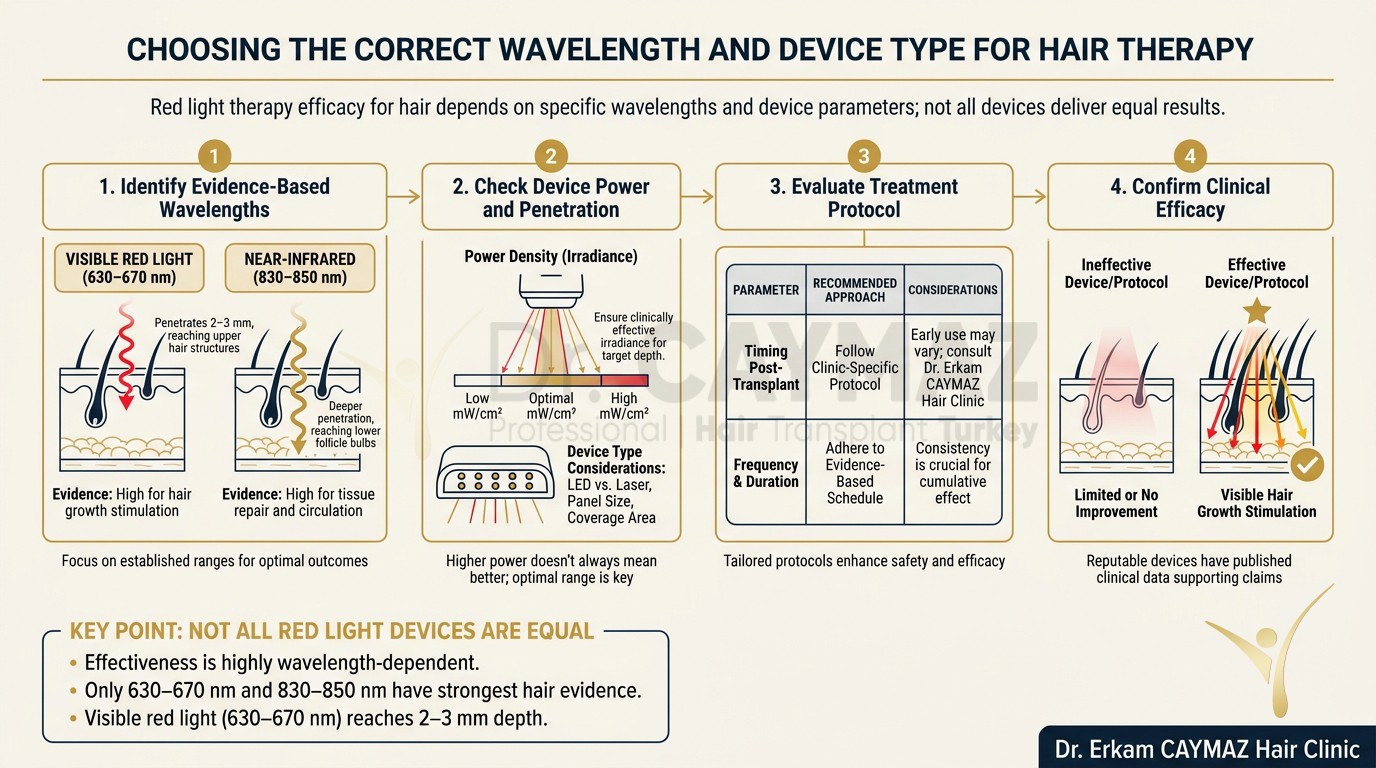
Not all red light devices are equal. The two wavelength ranges with the most published evidence for hair are 630â670 nm (visible red) and 830â850 nm (near-infrared). Visible red light penetrates the scalp to a depth of about 2â3 mm, which is enough to reach the upper portions of hair follicles. Near-infrared penetrates deeper, roughly 5â10 mm, and may affect the dermal papilla more directly.
| Device Type | Wavelength | Coverage Area | Typical Cost | Post-Transplant Suitability |
|---|---|---|---|---|
| Laser cap (diode array) | 650â670 nm | Full scalp | $600â$1,500 | Good: hands-free, even coverage, FDA-cleared models available |
| LED panel (handheld) | 630â850 nm (mixed) | Targeted zone | $100â$400 | Acceptable: requires manual positioning, less uniform dosing |
| Laser comb | 655 nm | Small strip | $200â$500 | Caution: combing motion can irritate healing scalp; avoid for first 4 weeks |
| In-clinic LED bed | 633 nm + 830 nm | Full body/scalp | Per session: $50â$150 | Good: controlled environment, professional dosing |
The key specification to look for is power density, measured in milliwatts per square centimeter (mW/cm²). Most studies showing positive results for hair used power densities between 3 and 5 mW/cm² at the scalp surface. Cheaper LED panels often deliver less than 1 mW/cm² at the recommended distance, which may fall below the therapeutic threshold. On the other hand, excessively high power densities above 50 mW/cm² can cause a biphasic response where the light actually inhibits cellular activity. More is not better.
Laser caps with medical-grade diodes tend to deliver the most consistent dosing. If you're investing in a device, check whether it has FDA 510(k) clearance for hair growth. That clearance doesn't guarantee post-transplant efficacy, but it does confirm the device meets basic safety and output standards.
What Does a Realistic Post-Transplant LLLT Protocol Look Like?
A typical home protocol involves 3 sessions per week, each lasting 15â25 minutes, starting no earlier than day 14. Sessions are spaced at least one day apart to allow cellular recovery. Most published protocols run for 16 to 26 weeks, which conveniently overlaps with the period when transplanted follicles are transitioning from telogen back into anagen.
Here's what a practical weekly schedule might look like during months 1 through 6 after surgery:
Weeks 1â2: No LLLT. Focus entirely on standard aftercare protocols, gentle washing, prescribed medications, and avoiding sun exposure.
Weeks 3â4: Begin LLLT at 3 sessions per week, 15 minutes per session. Use a hands-free device to avoid pressing on the scalp.
Weeks 5â12: Continue 3 sessions per week, increasing to 20 minutes if tolerated. This period overlaps with peak shock loss, so don't panic if shedding continues despite treatment.
Weeks 13â26: Maintain protocol. New growth typically becomes visible around month 4. LLLT may support the quality and speed of emerging hairs during this window.
After 6 months, many patients reduce to a maintenance schedule of 1â2 sessions per week. There's no established endpoint. Some patients continue indefinitely as part of their long-term hair care routine, while others stop once they're satisfied with growth and see no further benefit.
Dr. Caymaz Insight
| I tell my patients that red light therapy is a reasonable add-on, not a substitute for surgical precision or disciplined aftercare. In my experience over 15 years of performing hair transplants, the factors that determine your final result are graft handling, incision quality, and how carefully you follow post-operative instructions during the first two weeks. If you want to add LLLT after that initial healing window, I have no objection, but I don't want patients skipping their washing protocol or their medications because they believe a laser cap will compensate. It won't. Think of it as a supplement to a good plan, never the plan itself. |
Can Red Light Therapy Cause Any Harm After Surgery?
At the wavelengths and power densities used in consumer LLLT devices, the risk of direct tissue damage is extremely low. Red light at 630â670 nm doesn't generate significant heat at standard therapeutic doses. It won't burn your scalp, and it won't "cook" your grafts. That said, a few practical concerns still matter.
First, contact pressure. Some laser combs and handheld devices require you to press them against the scalp. During the first month after surgery, any mechanical pressure on the recipient area can irritate healing tissue or, in rare cases, dislodge a graft that hasn't fully integrated. Hands-free caps eliminate this risk entirely.
Second, heat accumulation. Cheap LED panels with poor ventilation can warm up during extended sessions. If the device surface temperature exceeds 41°C (about 106°F), it can cause mild thermal discomfort and potentially increase local inflammation rather than reduce it. A simple test: if the device feels uncomfortably warm against your forearm after 10 minutes, it's producing too much heat for post-surgical scalp use.
Third, photosensitizing medications. Some antibiotics and anti-inflammatory drugs prescribed after surgery can increase skin sensitivity to light. If you're taking doxycycline or certain other medications prescribed during the transplant process, ask your surgeon whether LLLT could cause an exaggerated skin response. This is uncommon but worth checking.
Patients sometimes ask about potential side effects of the transplant itself and whether LLLT could worsen them. In general, redness, mild swelling, and itching are normal post-operative findings that resolve on their own. LLLT at appropriate doses shouldn't worsen these symptoms and may modestly reduce them.
How Does LLLT Compare to PRP and Mesotherapy After Transplant?
Patients often weigh red light therapy against other adjunctive treatments like platelet-rich plasma (PRP) and mesotherapy. These are fundamentally different interventions. PRP involves drawing your blood, concentrating the platelet fraction, and injecting it into the scalp. The growth factors in PRP (PDGF, VEGF, TGF-beta) directly stimulate follicular stem cells and promote angiogenesis. PRP treatment for hair loss has a stronger evidence base for post-transplant use than LLLT, with several controlled trials showing improved graft density at 6 and 12 months.
Hair mesotherapy delivers vitamins, minerals, and sometimes minoxidil directly into the scalp via microinjections. It's less standardized than PRP but widely used in Turkish clinics as a supportive treatment during the growth phase.
Red light therapy has one clear advantage over both: it's non-invasive and home-based. You don't need clinic visits, needles, or blood draws. For patients who've traveled internationally for their transplant and won't have easy access to follow-up PRP sessions, a laser cap offers a convenient way to do something proactive during the waiting months. The trade-off is that the evidence for LLLT is weaker than for PRP, and the effect size is smaller.
These treatments aren't mutually exclusive. Some patients use all three: PRP at months 1, 3, and 6; mesotherapy between PRP sessions; and LLLT at home three times a week. If you're considering this combination approach, discuss it during your initial consultation so your surgeon can coordinate the timeline.
What Results Can You Realistically Expect from Post-Transplant LLLT?
Set your expectations carefully. Red light therapy will not double your density, regrow hair in areas where no grafts were placed, or compensate for a poorly executed surgery. What it may do, based on the available evidence, is:
Shorten the shock loss phase by 2â4 weeks, meaning you might see new sprouts at month 3 instead of month 4. Reduce post-operative scalp redness and inflammation during the first 6 weeks. Potentially improve the caliber (thickness) of emerging hairs during the anagen re-entry phase, though this is the least well-documented benefit.
The patients who benefit most from LLLT tend to be those who also have ongoing native hair miniaturization. If you're losing existing hair to androgenetic alopecia while waiting for transplanted grafts to grow, LLLT may help slow that native loss. This is actually the original FDA-cleared indication for these devices. In that sense, the therapy serves double duty: supporting transplanted grafts and stabilizing surrounding native hair.
For patients who had a well-planned procedure with proper graft counts, the final result at 12â18 months is primarily determined by surgical technique and biological healing capacity. LLLT is a marginal optimizer, not a substitute for sound surgical technique. If you're concerned about whether your results are progressing normally, reviewing how transplanted hair growth unfolds over time will give you a more grounded perspective than any device manufacturer's marketing page.
Should You Invest in a Laser Cap Before Your Transplant?
If you're still in the planning stages, buying a laser cap before surgery has one practical advantage: you can start using it on your native hair immediately and then transition to post-transplant use after the healing window. This gives you a baseline sense of whether your scalp tolerates the device well and whether you'll actually stick with the protocol. Compliance is the biggest variable in LLLT outcomes. A $1,200 laser cap sitting in a drawer does nothing.
Before committing to any adjunctive therapy, make sure the fundamentals are covered. That means choosing a surgeon who personally designs your hairline and oversees the procedure, understanding the full transplant process from consultation through recovery, and having a realistic graft plan based on your donor capacity and long-term hair loss pattern.
Red light therapy after a hair transplant is a reasonable, low-risk addition to a well-structured aftercare plan. It isn't a miracle device, and it isn't snake oil. It sits somewhere in between: a modest biological stimulus that may shave a few weeks off your waiting period and keep your native hair in better shape while your transplanted follicles wake up. Start no earlier than day 14, choose a device with verified power output in the 630â670 nm range, and don't let it replace the aftercare steps that actually determine your outcome.
Sources
FAQ
Most surgeons recommend waiting at least 10â14 days after surgery before starting red light therapy. By this point, transplanted grafts have anchored into the tissue and superficial wounds have closed. Starting earlier risks irritating the healing scalp or, in rare cases, disturbing grafts that haven't fully stabilized.
There is no strong clinical evidence that LLLT directly increases graft survival rates. Graft survival after a well-performed FUE procedure can reach up to 98% and is primarily determined by surgical technique, graft handling, and post-operative care. LLLT may modestly reduce inflammation and shorten the shock loss phase, but it should not be relied upon to improve survival numbers.
The most studied wavelengths are 630â670 nm (visible red) and 830â850 nm (near-infrared). Visible red light penetrates about 2â3 mm into the scalp, while near-infrared reaches 5â10 mm. Look for devices with a power density of 3â5 mW/cm² at the scalp surface for therapeutic effect.
Laser combs require direct contact and a combing motion across the scalp, which can irritate healing tissue during the first month. If you want to use LLLT after a transplant, a hands-free laser cap is a safer choice because it delivers light without mechanical pressure on the recipient area.
PRP (platelet-rich plasma) has a stronger evidence base for post-transplant use, with controlled trials showing improved graft density at 6 and 12 months. Red light therapy is non-invasive and convenient for home use but has a smaller documented effect size. The two treatments are not mutually exclusive and can be used together under a surgeon's guidance.
Most protocols run for 16 to 26 weeks at 3 sessions per week, each lasting 15â25 minutes. After 6 months, many patients reduce to 1â2 maintenance sessions per week. There is no established mandatory endpoint; some patients continue indefinitely as part of their long-term hair care routine.

Spironolactone and Minoxidil Together for Hair Loss
Spironolactone blocks androgen-driven follicle miniaturization while minoxidil stimulates regrowth through vasodilation…
Read More: Spironolactone and Minoxidil Together for Hair Loss
Pubic Hair Transplantation for Female
Pubic hair transplant (PHT) moves scalp follicles to the bikini zone to restore density, shape, or scars after waxing…
Read More: Pubic Hair Transplantation for Female
The Critical Role of Sterilization in Safe and Successful Hair Transplants
Sterilization in hair transplant surgery is non-negotiable. Follicular units leave the donor under punch incisions and…
Read More: The Critical Role of Sterilization in Safe and Successful Hair Transplants
Beard Transplantation
Beard transplantation uses FUE grafts from the scalp (or selected body areas) to fill cheeks, jawline, mustache…
Read More: Beard TransplantationFrequently Asked Questions
Professional Hair Transplant Insights by Dr. Erkam Caymaz