


Quick Numbers
| Normal hemoglobin (male) | 13.5–17.5 g/dL |
|---|---|
| Normal hematocrit (male) | 38.3–48.6 % |
| Polycythemia vera threshold | Hb > 16.5 g/dL (male) or Hct > 49 % |
| Graft survival (well-managed cases) | Up to 98 % |
| Pre-op blood work timing | Within 30 days of surgery |
Key Takeaways
| High hemoglobin or hematocrit alone doesn't disqualify you from a hair transplant, but it must be investigated before surgery. |
| Dehydration is the most common reversible cause of elevated hematocrit in hair transplant candidates. |
| Smoking raises hemoglobin by increasing carboxyhemoglobin, and quitting at least two weeks before surgery helps normalize values. |
| Polycythemia vera is a rare but serious condition that requires hematologist clearance before any elective procedure. |
| Proper hemostasis during surgery, including epinephrine in local anesthetic and firm gauze pressure, keeps the operative field safe even in borderline-high patients. |
You've submitted your pre-operative blood work, and the clinic calls back with a question: your hemoglobin is 18.1 g/dL and your hematocrit sits at 52%. The reference range on the lab printout is highlighted in red. Does this mean your hair transplant is canceled? Not necessarily. Elevated red blood cell markers are surprisingly common among men seeking hair restoration, especially those who smoke, live at high altitude, or simply didn't drink enough water the morning of the blood draw. The key is understanding why the numbers are high and whether the cause can be corrected before surgery day. This guide explains exactly what high hemoglobin and hematocrit mean for your hair transplant eligibility, what your surgeon looks for, and how the surgical team manages bleeding risk in the operating room.
What Do Hemoglobin and Hematocrit Actually Measure?
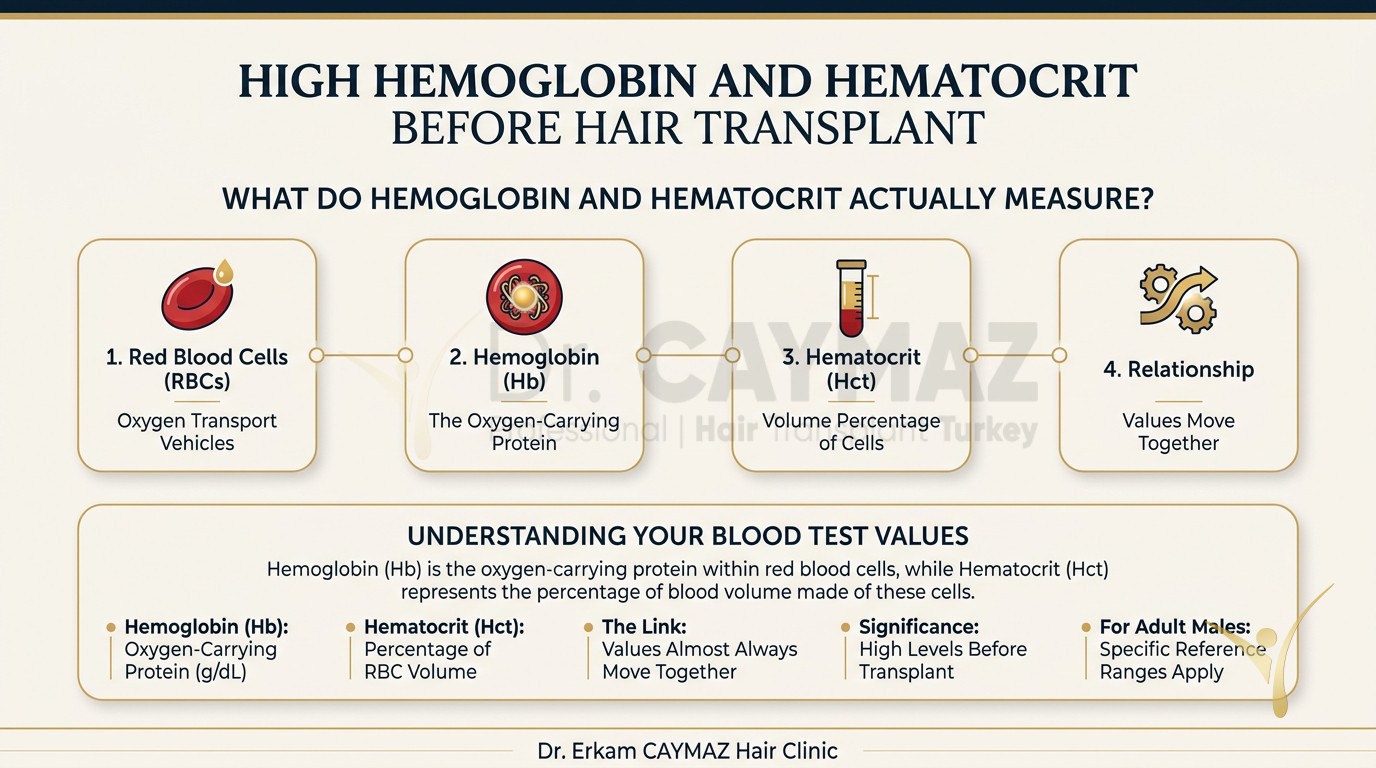
Hemoglobin (Hb) is the oxygen-carrying protein inside each red blood cell. It's reported in grams per deciliter (g/dL). Hematocrit (Hct) is the percentage of your total blood volume occupied by red blood cells. The two values move together: when one is high, the other almost always follows.
For adult males, normal hemoglobin ranges from about 13.5 to 17.5 g/dL, and normal hematocrit falls between roughly 38% and 49%. For adult females, the ranges are slightly lower, typically 12.0 to 15.5 g/dL for hemoglobin and 36% to 44% for hematocrit. These reference intervals can shift slightly between laboratories, so always compare your result to the specific lab's printed range.
A hair transplant is an elective surgical procedure performed under local anesthesia. It involves thousands of tiny puncture wounds across the donor and recipient areas. While blood loss during a well-performed Sapphire FUE procedure is modest, typically under 50 mL in total, the surgeon still needs your clotting system and blood viscosity to be within a safe window. That's why a complete blood count (CBC) is part of every responsible pre-operative workup.
Why Would Hemoglobin or Hematocrit Be Elevated?
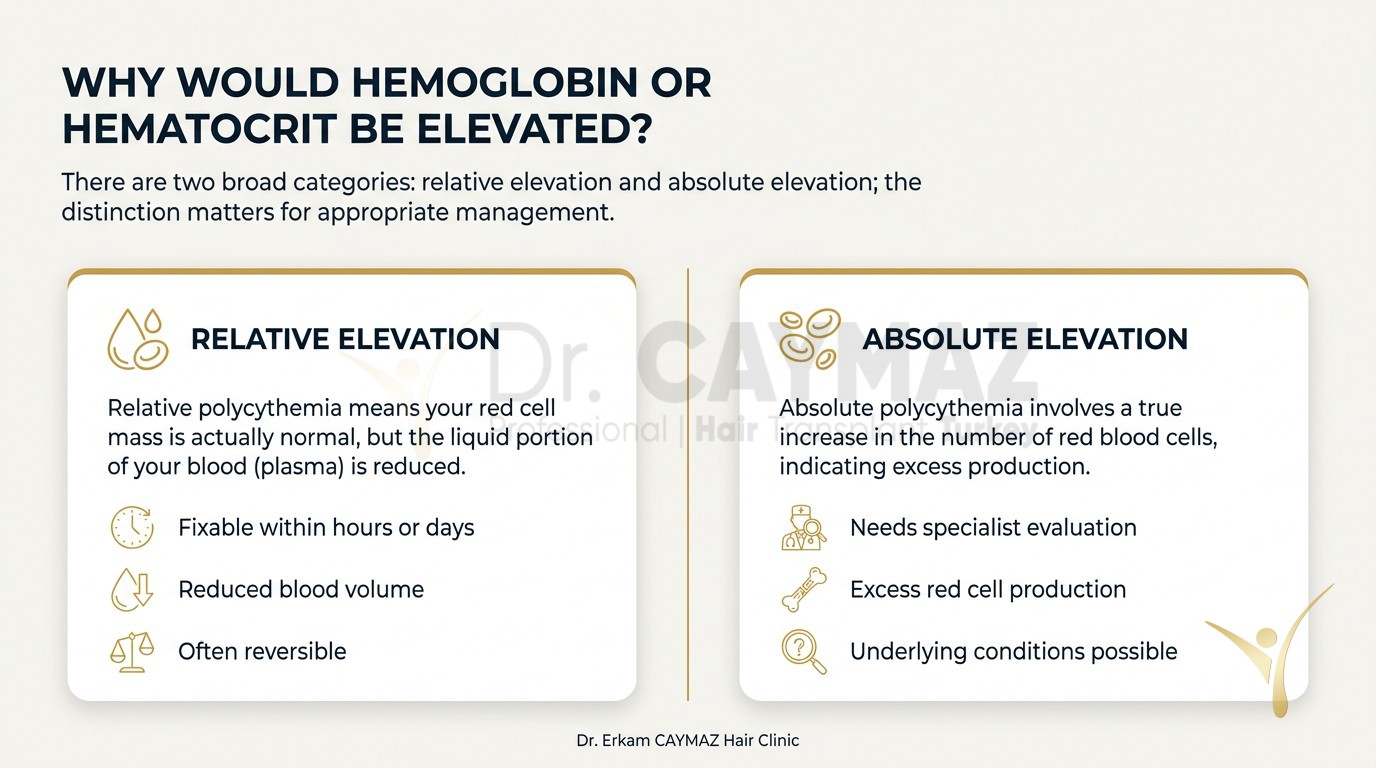
There are two broad categories: relative elevation and absolute elevation. The distinction matters because relative causes are often fixable within hours or days, while absolute causes may need specialist evaluation.
Relative polycythemia means your red cell mass is actually normal, but the liquid portion of your blood (plasma) is reduced. The most common culprit is simple dehydration. If you fasted overnight, skipped water, or flew a long-haul flight before your blood draw, your hematocrit can jump 2 to 4 percentage points above your true baseline. Diuretic medications and heavy caffeine intake can produce the same effect. The fix is straightforward: rehydrate and repeat the test.
Absolute polycythemia means your body is genuinely producing more red blood cells than normal. Causes include:
- Chronic smoking, which elevates carboxyhemoglobin and triggers compensatory red cell production. Smokers frequently present with hemoglobin values 1 to 2 g/dL above non-smokers.
- Obstructive sleep apnea (OSA), where intermittent nighttime hypoxia stimulates erythropoietin release from the kidneys.
- High-altitude residence, a normal physiological adaptation in people living above 1,500 meters.
- Testosterone replacement therapy (TRT), one of the most common iatrogenic causes in male hair transplant candidates. Exogenous testosterone directly stimulates erythropoiesis, and hematocrit above 50% is a well-documented side effect.
- Polycythemia vera (PV), a rare myeloproliferative neoplasm driven by a JAK2 gene mutation. PV carries a real risk of thrombosis and requires hematologist management before any elective surgery.
Understanding the underlying cause is the first step. Your surgeon can't simply look at a number and say "too high" or "fine." Context determines the clinical decision. Patients considering surgery should review the full pre-operative preparation steps well in advance.
How Does the Surgical Team Evaluate Your Blood Work?

When Dr. Caymaz reviews a patient's pre-operative labs, the CBC is never read in isolation. A hemoglobin of 17.8 g/dL in a 28-year-old non-smoker living at sea level raises different questions than the same value in a 45-year-old who lives in Denver and uses testosterone gel. The clinical picture, not a single number, drives the decision.
Here's the typical evaluation pathway for elevated values:
- Repeat the test after proper hydration. The patient is asked to drink at least 2 liters of water the day before and have the blood drawn in a non-fasting, well-hydrated state. If hematocrit drops below 50%, dehydration was likely the main factor.
- Review medication and lifestyle history. TRT, anabolic steroids, smoking status, and altitude of residence are all documented. Patients on TRT may be asked to consult their prescribing physician about a temporary dose reduction or a brief hold before surgery.
- Check additional markers. Erythropoietin (EPO) level, iron studies, and a peripheral blood smear can help distinguish reactive polycythemia from a primary bone marrow disorder. A JAK2 V617F mutation test is ordered if polycythemia vera is suspected.
- Obtain specialist clearance when needed. If the hematocrit remains persistently above 52% after hydration correction and lifestyle modification, a hematologist's written clearance is required before scheduling the procedure.
This stepwise approach means most patients with mildly elevated values aren't turned away. They're simply asked to correct the reversible factor and retest. The full consultation process covers these lab reviews in detail before any surgical date is confirmed.
Does High Hematocrit Increase Bleeding During Surgery?

This is the question patients ask most often, and the answer is somewhat counterintuitive. High hematocrit doesn't cause more bleeding. In fact, the primary surgical risk of elevated hematocrit is the opposite: increased blood viscosity raises the chance of thrombotic events such as deep vein thrombosis (DVT) or, very rarely, stroke. Thicker blood flows more slowly through small vessels, and the risk of clot formation rises.
During a Sapphire FUE hair transplant, the operative field involves the superficial scalp, which has a rich blood supply. Bleeding is managed through epinephrine mixed into the local anesthetic solution, which causes vasoconstriction and significantly reduces capillary oozing. When a small vessel does bleed, firm gauze pressure applied for 30 to 60 seconds is the standard hemostatic technique. The surgical team also paces the procedure, working in zones so that previously treated areas have time to achieve hemostasis naturally.
For patients with borderline-high hematocrit, say 49 to 51%, these standard measures are usually sufficient. The real concern isn't intraoperative bleeding but rather the systemic thrombotic risk during and after surgery, particularly if the patient will be sitting or lying relatively still for 6 to 8 hours. That's why adequate hydration on surgery day is emphasized so strongly. You can read more about medications used during the operation to understand the full anesthetic and hemostatic protocol.
| Cause | Mechanism | Typical Hb Elevation | Pre-Op Management | Surgery Eligibility |
|---|---|---|---|---|
| Dehydration | Reduced plasma volume | +1 to 2 g/dL above true baseline | Oral rehydration, repeat CBC | Usually eligible after correction |
| Smoking | Carboxyhemoglobin, chronic hypoxia | +1 to 2 g/dL | Quit 2+ weeks pre-op, repeat CBC | Eligible if Hct normalizes |
| Testosterone therapy | Direct erythropoietic stimulation | +1 to 3 g/dL | Dose reduction or hold per prescriber | Eligible with physician clearance |
| Obstructive sleep apnea | Nocturnal hypoxia, EPO release | +1 to 2 g/dL | CPAP compliance, repeat CBC | Eligible with controlled OSA |
| High-altitude residence | Physiological adaptation | +1 to 3 g/dL | Acclimatize at sea level 3+ days | Usually eligible (physiological) |
| Polycythemia vera | JAK2 mutation, marrow overproduction | Variable, often > 18 g/dL | Hematologist clearance, phlebotomy | Case-by-case, specialist decision |
Can Smoking and Testosterone Therapy Be Managed Before Surgery?
These two factors deserve their own discussion because they're so common among male hair transplant candidates. Roughly 20 to 25% of men in the typical hair transplant age bracket (25 to 45 years) either smoke or use some form of testosterone supplementation.
Smoking affects hemoglobin through carbon monoxide binding. Each cigarette introduces carbon monoxide that binds to hemoglobin 200 times more avidly than oxygen. The body compensates by producing more red blood cells, pushing hematocrit upward. Quitting smoking at least two weeks before surgery allows carboxyhemoglobin levels to drop substantially. Within 48 hours of the last cigarette, carbon monoxide clears the bloodstream. Within two weeks, the compensatory red cell overproduction begins to normalize. Patients who smoke should also review the broader effects of smoking on hair transplant outcomes, which extend well beyond blood counts to include wound healing and graft survival.
Testosterone replacement therapy is trickier. Men on TRT often have hematocrit values between 50% and 54%. The prescribing physician typically monitors this with periodic blood draws and may recommend therapeutic phlebotomy (blood donation) when hematocrit exceeds 50%. Before a hair transplant, the surgical team will coordinate with the TRT prescriber. In some cases, a brief hold of 2 to 4 weeks is recommended. In others, a single phlebotomy session 1 to 2 weeks before surgery is enough to bring hematocrit into a safer range. Patients should never stop TRT on their own without medical guidance, as abrupt cessation can cause fatigue, mood changes, and hormonal rebound effects.
Dr. Caymaz Insight
| In my experience over 15 years of performing hair transplants, I've seen elevated hematocrit far more often from dehydration and smoking than from any serious blood disorder. When a patient's pre-op labs come back high, I don't panic, and neither should they. We rehydrate, retest, and investigate. About 80% of the time, the repeat value falls within an acceptable range. For the remaining cases, I coordinate directly with the patient's physician or a hematologist before confirming the surgical date. I personally review every set of pre-operative labs during the consultation and planning phase, because safe surgery starts long before the first incision. |
What Happens If Your Values Don't Normalize?
A small percentage of patients will have persistently elevated hemoglobin or hematocrit even after hydration, smoking cessation, and medication adjustment. This group needs a more thorough workup.
If the hematocrit remains above 52% on two separate well-hydrated draws, the next step is measuring the serum erythropoietin (EPO) level. A low EPO with high hematocrit strongly suggests polycythemia vera, which is confirmed by testing for the JAK2 V617F mutation (present in about 95% of PV cases). A high EPO with high hematocrit points toward a secondary cause: sleep apnea, chronic lung disease, or an EPO-secreting tumor, all of which need their own workup.
Patients diagnosed with polycythemia vera aren't permanently excluded from hair transplant surgery, but they need their condition managed first. Hematologists typically use phlebotomy to keep hematocrit below 45%, and some patients take hydroxyurea or other cytoreductive agents. Once the hematocrit is controlled and the hematologist provides written clearance, elective surgery can proceed. The overall contraindications for hair transplant surgery are worth reviewing if you have any chronic medical condition.
For patients with secondary polycythemia from sleep apnea, consistent CPAP use for 4 to 6 weeks often brings hematocrit down by 2 to 4 percentage points. That alone can move a patient from the "postpone" category into the "proceed with monitoring" category.
How Does the Surgical Team Protect You on the Day of Surgery?
Even when pre-operative values are within an acceptable range, the surgical team takes specific precautions for patients whose baseline hematocrit runs on the higher end of normal.
Hydration protocol: Patients are asked to drink 500 mL of water in the hour before arriving at the clinic. An additional 1 to 1.5 liters of oral fluids are encouraged throughout the procedure. This keeps plasma volume adequate and counteracts the mild dehydrating effect of sitting in an air-conditioned operating room for several hours.
Hemostasis during extraction and implantation: The local anesthetic solution contains epinephrine, which constricts small blood vessels in the scalp and reduces bleeding at every puncture site. When a vessel does ooze, the team applies firm gauze or sponge pressure for 30 to 60 seconds. The procedure is paced so that the surgical team works in defined zones, giving each area time to achieve natural hemostasis before moving on. The step-by-step procedure guide explains how each phase is managed.
Mobility breaks: For patients with hematocrit in the upper-normal range, brief standing and walking breaks every 90 to 120 minutes help maintain venous return in the legs and reduce the already-low risk of deep vein thrombosis. This is standard practice in our clinic, where only 1 to 2 VIP operations are performed per day, allowing the team to pace the surgery without time pressure.
What Should You Do If Your Blood Work Shows High Values?
If you've already received your pre-operative lab results and noticed elevated hemoglobin or hematocrit, here's a practical checklist:
- Don't assume the worst. Mild elevations (hemoglobin 17.5 to 18.5 g/dL in men) are common and usually benign.
- Check your hydration. Were you fasting or dehydrated when the blood was drawn? If so, drink 2 to 3 liters of water over the next 24 hours and ask your clinic about repeating the test.
- Disclose all medications and supplements. Testosterone, anabolic steroids, EPO (used by some athletes), and even high-dose iron supplements can raise red cell counts. Share this information during your pre-surgical information review.
- Stop smoking as early as possible. Two weeks minimum before surgery. Four weeks is better.
- Follow up with your primary care physician if the elevation persists after hydration. They can order EPO levels, iron studies, and a JAK2 test if warranted.
- Bring all clearance letters to your surgical appointment. If a hematologist or internist has evaluated you, their written clearance should accompany you on surgery day.
Patients who follow these steps almost always proceed to surgery without complications. The overall success rate for hair transplant procedures remains 90 to 95%, with graft survival reaching up to 98% when pre-operative preparation and surgical technique are both optimized. For a broader look at what determines outcomes, the guide on hair transplant candidate eligibility covers the full spectrum of factors.
Long-Term Considerations After Surgery
Patients with chronically elevated hematocrit, whether from TRT, altitude, or a managed myeloproliferative condition, should continue monitoring their blood counts after surgery. The transplanted grafts themselves aren't affected by high hematocrit once they've successfully revascularized, which typically happens within 7 to 10 days. But your general cardiovascular health matters for long-term scalp circulation and hair quality.
If you're on testosterone therapy, your prescribing physician will likely resume regular hematocrit monitoring every 3 to 6 months. Keeping hematocrit below 50% is the standard safety target recommended by most endocrinology guidelines. Therapeutic phlebotomy, essentially donating a unit of blood, is the simplest intervention when values creep up.
For smokers who quit before surgery, staying smoke-free improves both your blood counts and your long-term graft survival and hair quality. Nicotine constricts dermal blood vessels, reducing nutrient delivery to hair follicles. The benefits of quitting extend well beyond the surgical window. Patients interested in supporting their grafts through the recovery period can explore the post-operative aftercare protocol for detailed guidance on the weeks and months following surgery.
High hemoglobin and hematocrit are flags, not stop signs. With proper evaluation, correction of reversible causes, and a surgical team experienced in managing medically complex patients, the vast majority of candidates with elevated red cell markers go on to have safe, successful procedures with excellent cosmetic results.
Sources
FAQ
A hemoglobin above 18 g/dL requires investigation before surgery can be scheduled. The most common causes are dehydration, smoking, and testosterone therapy. If the value normalizes after hydration and lifestyle correction, most patients are cleared for surgery. Persistent elevation above 18 g/dL typically requires hematologist evaluation and written clearance.
No. High hematocrit actually increases blood viscosity, meaning the blood is thicker and flows more slowly. The primary risk is not excessive bleeding but rather an increased chance of blood clot formation. Bleeding during hair transplant surgery is managed with epinephrine in the local anesthetic and firm gauze pressure.
You should never stop testosterone therapy on your own. If your hematocrit is elevated due to TRT, your hair transplant surgeon will coordinate with your prescribing physician. Options may include a temporary dose reduction, a brief hold period, or a therapeutic phlebotomy session 1 to 2 weeks before surgery.
Carbon monoxide clears the bloodstream within 48 hours of your last cigarette, but the compensatory red blood cell overproduction takes about 2 weeks to begin normalizing. Quitting at least 2 weeks before surgery is the minimum recommendation; 4 weeks is preferable for both blood count normalization and improved wound healing.
Polycythemia vera is a rare bone marrow disorder caused by a JAK2 gene mutation that leads to overproduction of red blood cells. It doesn't permanently prevent hair transplant surgery, but the condition must be managed by a hematologist first. Once hematocrit is controlled, usually below 45% through phlebotomy or medication, elective surgery can be considered with specialist clearance.
Yes. Dehydration reduces plasma volume, which concentrates the red blood cells and artificially raises hematocrit by 2 to 4 percentage points. Fasting, long flights, heavy caffeine intake, and diuretic medications can all contribute. Drinking at least 2 liters of water the day before your blood draw and repeating the test usually resolves the issue.

Hair Transplantation Technology: A Review of Recent Advances
Hair-transplant technology has evolved in tools, workflow precision, and planning support, but innovation claims should…
Read More: Hair Transplantation Technology: A Review of Recent Advances
Famous African Americans Who Had Hair Transplants in the USA
Several well-known African American figures have discussed or visibly benefited from hair restoration, highlighting…
Read More: Famous African Americans Who Had Hair Transplants in the USA
Male Pattern Baldness Stages: Medication vs Surgery Thresholds
Male pattern baldness follows a predictable Norwood staging pattern. Early stages (Norwood 2–3) often respond well to…
Read More: Male Pattern Baldness Stages: Medication vs Surgery Thresholds
Compliance To Hair Transplantation Criteria
Before booking grafts, clinics assess whether you meet compliance criteria for hair transplantation, medical safety…
Read More: Compliance To Hair Transplantation CriteriaFrequently Asked Questions
Professional Hair Transplant Insights by Dr. Erkam Caymaz