


Quick Numbers
| Decision axis | Surgery vs meds |
|---|---|
| Native hair | May still miniaturize |
| Grafts | DHT-resistant when safe donor |
| Timeline | Stabilize then plan |
Key Takeaways
| Transplanted grafts and native hair need different plans. |
| Medication may protect non-transplanted zones. |
| Surgery without stabilization can look isolated later. |
| Shared decision-making improves long-term balance. |
Key Takeaways
| Medication treats ongoing miniaturization; surgery relocates permanent follicles to restore lost areas. |
| If you have a lot of thinning hair that could still be saved, medical therapy often improves the final look, even if you later choose surgery. |
| If your hairline or crown has clear, established gaps, a hair transplant may be the fastest route to visible coverage. |
| Many long-term “best results” plans combine surgery with finasteride or dutasteride and minoxidil. |
| Technique choice (such as Sapphire FUE vs DHI) should match your scalp biology, donor capacity, styling goals, and future hair-loss risk. |
Patients often ask a direct question: should I start medication first, or should I proceed with hair transplantation now? The safest answer depends on diagnosis, pattern and speed of hair loss, donor supply, expectations, and tolerance for long-term medical therapy. This article explains the decision in clinical terms, using the medications most commonly discussed for androgenetic alopecia (finasteride, dutasteride, and minoxidil) and the modern transplant options patients search for (Sapphire FUE and DHI).
The goal is not to “pick a winner.” You'll still need a plan that still looks good years from now. Hair loss is progressive for many people, while donor hair is limited. Good planning protects both your appearance and your donor area.
What does “medical or surgery for hair transplantation” mean in real life?
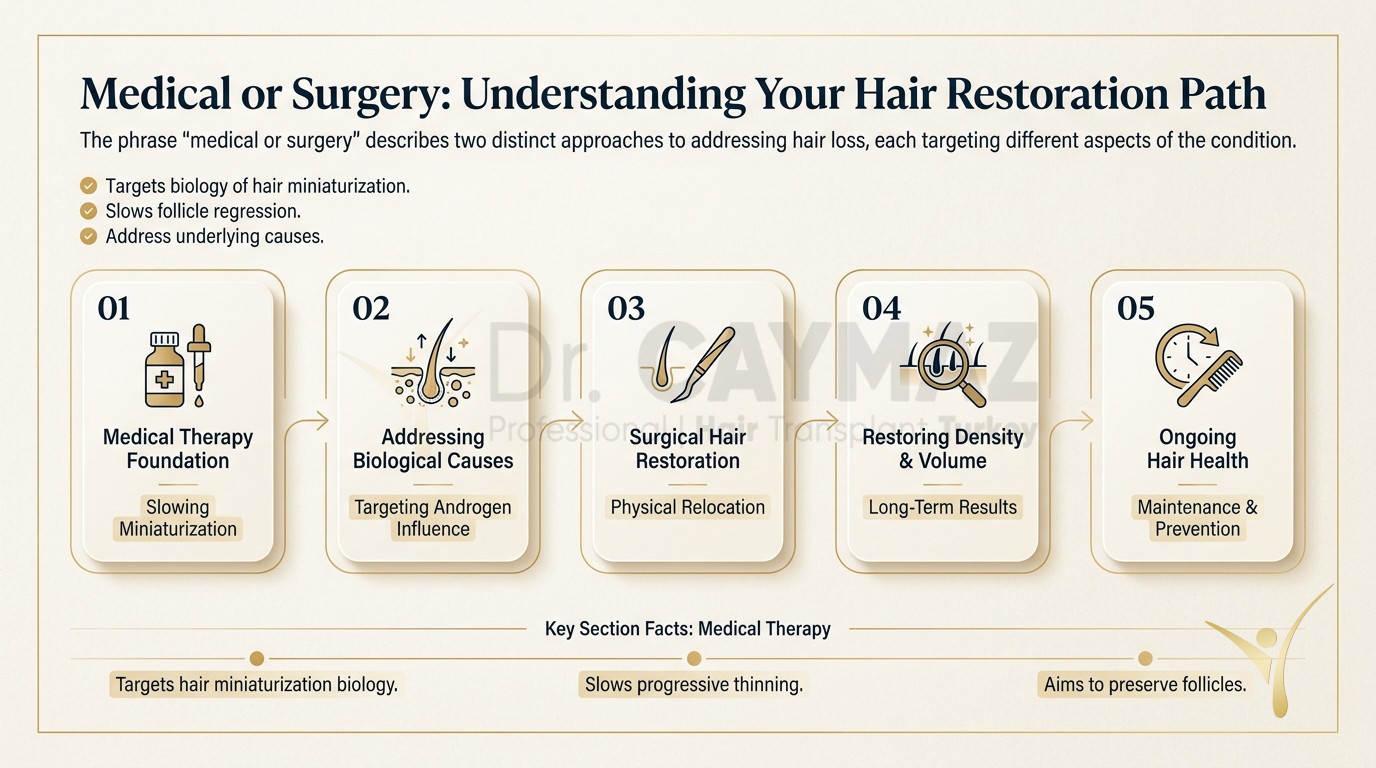
The phrase medical or surgery for hair transplantation describes two different ways of addressing hair loss:
- Medical therapy targets the biology of hair miniaturization. In androgenetic alopecia, follicles become progressively smaller under androgen influence, resulting in thinner, shorter hairs, and eventually little to no visible hair. Medications aim to slow or reverse some miniaturization.
- Surgical hair restoration (hair transplantation) redistributes follicles that are genetically more resistant to miniaturization, usually from the occipital and parietal scalp (donor zone) to areas of loss (recipient zone). Surgery does not stop androgenetic progression in the surrounding native hair.
This distinction matters because it frames the decision correctly:
- Medication can improve native hair you still have.
- Surgery replaces hair in areas where follicles are already gone or cosmetically insufficient.
Many unsatisfactory long-term outcomes occur when one option is used as if it can do the job of the other. A transplant cannot fully protect the non-transplanted hairs from future miniaturization. Medication cannot create a dense hairline in a completely bald area, because it cannot manufacture new follicles.
Surgical planning is inseparable from medication planning, so it helps to understand the full hair transplant process and the step-by-step hair transplant procedure steps before you commit to either path.
Should I try hair transplantation or medication first?
| Signal | Typical lean |
|---|---|
| Early miniaturization | Medical trial first |
| Stable pattern + low donor need | Surgery may proceed |
| Rapid progression | Delay until stable |
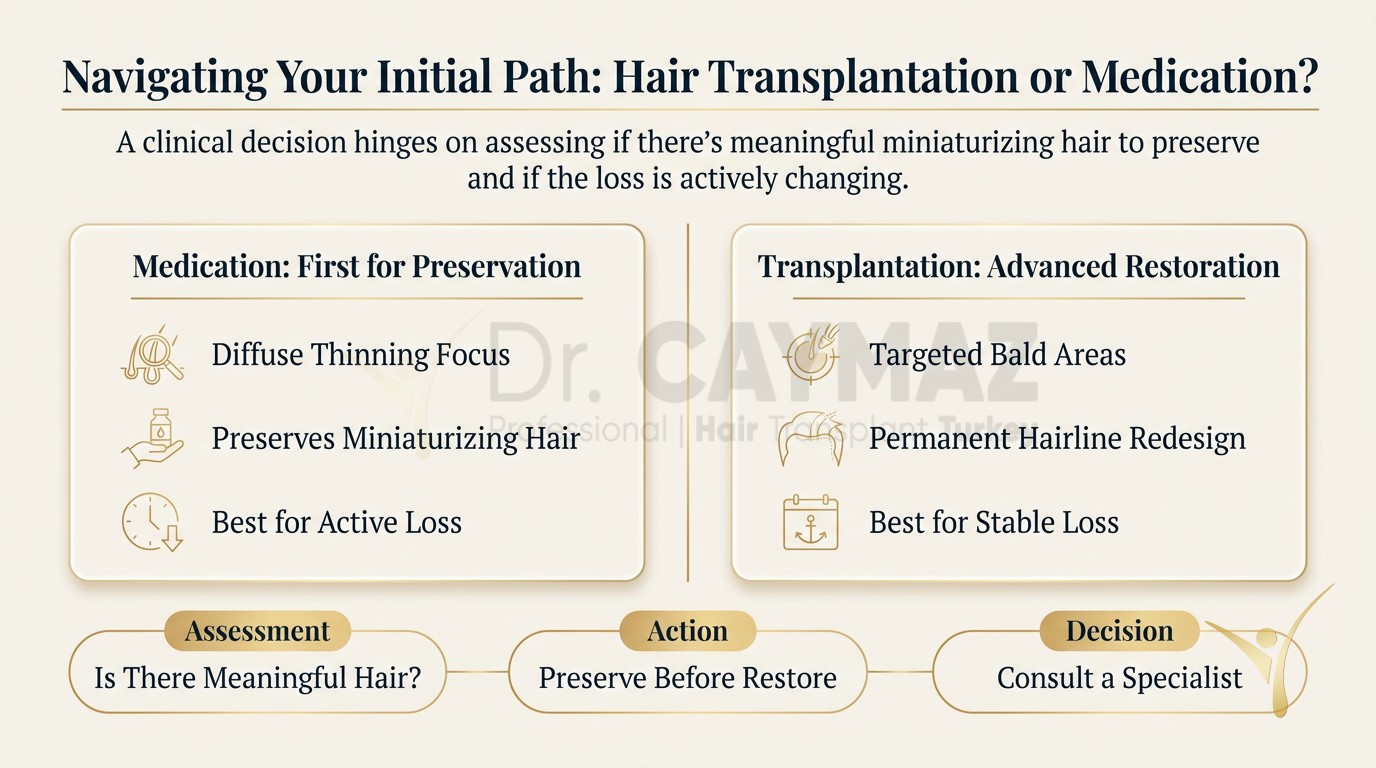
A clinically practical way to answer is to ask: Is there meaningful miniaturizing hair to preserve, and is the loss still actively changing?
Medication first is often the best initial decision when:
- You have diffuse thinning (especially in the mid-scalp or crown) where many follicles are still alive but miniaturizing.
- You are young and your pattern is not yet established, or you have a strong family history suggesting progression.
- You can accept daily or near-daily treatment, follow-up photos, and a 6–12 month evaluation period.
- You want to reduce the risk of “chasing” ongoing loss with repeated surgeries.
Hair transplant now is often a strong first step when:
- You have stable, well-defined recession or an established bald area where medication is unlikely to provide cosmetic coverage.
- You already used medication consistently for a sufficient trial and still have a cosmetic gap you want to close.
- You have a mature pattern with realistic planning for future loss and donor limits.
- You need a structural change in the hairline framing of the face and do not want to wait many months for uncertain medical response.
Combination planning is common in clinical practice because it addresses both “present-day appearance” and “future stability.” Surgery restores, and medication supports what remains. A structured hair transplant consultation helps align medication timing, graft numbers, and long-term expectations before you choose a sequence.
Dr. Caymaz Insight
| The right sequence is not universal. I map how fast native hair is changing, then decide whether today is a surgery day or a stabilization year. |
What diagnosis must be confirmed before choosing medication or surgery?
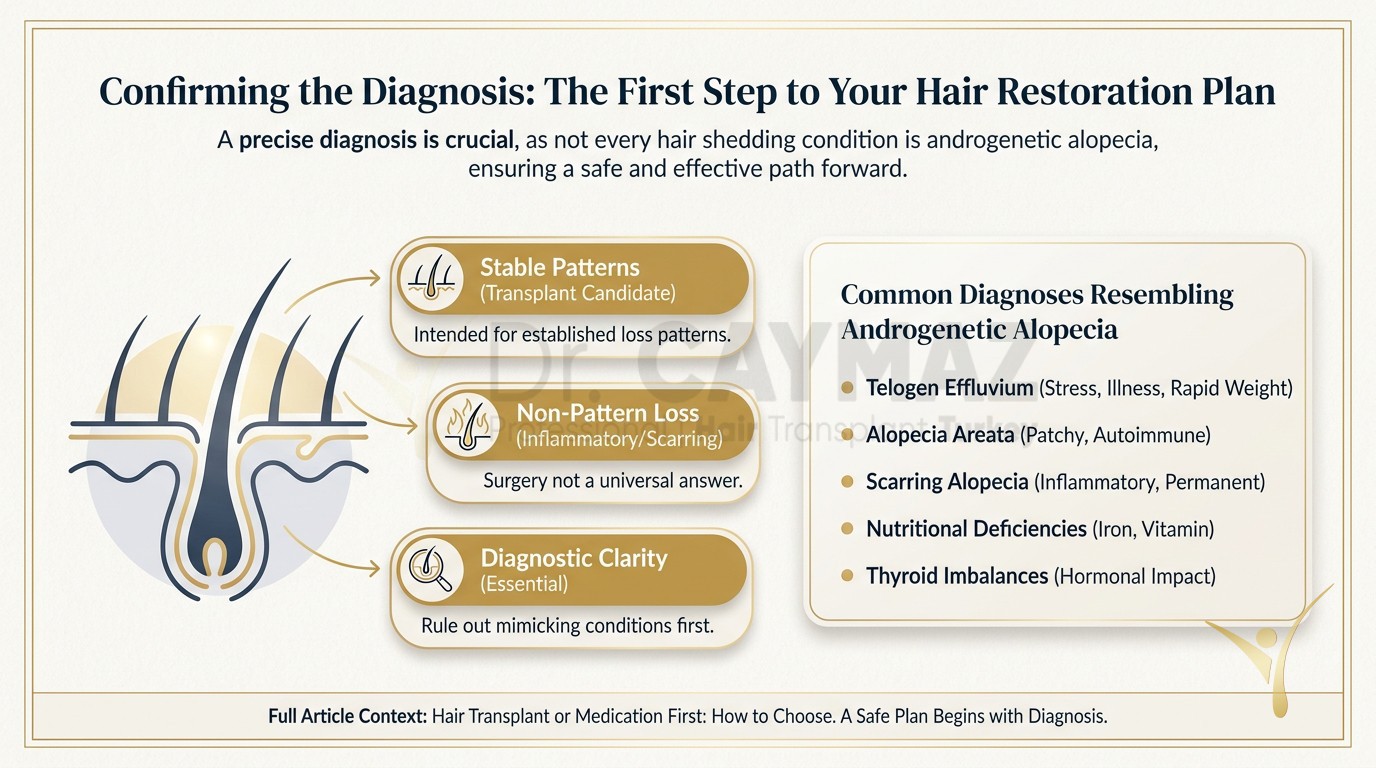
Not every patient shedding hair has androgenetic alopecia. A safe plan begins with diagnosis. Hair transplantation is generally intended for stable hair loss patterns, and it is not a universal answer for inflammatory or scarring conditions.
Common diagnoses that may resemble androgenetic alopecia include:
- Telogen effluvium (stress, illness, rapid weight change, postpartum state, iron deficiency, thyroid disorders, medications). This can create diffuse shedding that improves when the trigger resolves.
- Alopecia areata (autoimmune). Transplanting into active alopecia areata is usually avoided because the disease can attack follicles.
- Traction alopecia (tight hairstyles, extensions, chronic tension). Early disease may improve with behavior change; advanced disease can scar.
- Scarring alopecias (lichen planopilaris, frontal fibrosing alopecia, discoid lupus, folliculitis decalvans). Surgery may fail if the inflammatory process is active.
- Female pattern hair loss and diffuse unpatterned alopecia (DUPA). Some diffuse patterns can make donor supply unreliable for surgery.
Diagnosis uses history, examination, pull test, scalp microscopy or dermoscopy, and, in some cases, blood tests or scalp biopsy. For patients planning surgery, this evaluation aligns with the criteria described in hair transplant information, because donor quality and recipient stability determine long-term results.
What problem do finasteride, dutasteride, and minoxidil actually solve?
Patients often hear these medications presented as “hair growth pills” or “hair regrowth sprays.” The more accurate clinical explanation is that they target different parts of the follicle environment:
- Finasteride reduces conversion of testosterone to dihydrotestosterone (DHT) by inhibiting the type II 5α-reductase enzyme. Lower scalp DHT can slow miniaturization and, in some patients, partially reverse it.
- Dutasteride inhibits both type I and type II 5α-reductase, typically producing a stronger suppression of DHT. This can translate into stronger stabilization in some patients, with the tradeoff that side effects and persistence in the body can be a greater concern for some individuals.
- Minoxidil is a vasodilator with follicle effects that can prolong the anagen phase and increase hair caliber. Topical minoxidil is commonly used. Oral minoxidil is used off-label in some settings and requires careful medical oversight, especially in patients with cardiovascular considerations.
These drugs are mainly relevant for androgenetic alopecia. They do not treat every form of hair loss, and they do not replace the need for correct diagnosis.
Finasteride and minoxidil act through different pathways, which is why some patients use both; the mechanism of action explains why response takes months rather than weeks.
How do I know whether I am still losing hair actively?
Patients often judge activity by shower shedding or hair on a pillow. Those signs can matter, but clinical assessment should be more objective because normal shedding varies and anxiety can distort perception.
Ways clinicians assess activity include:
- Standardized photos under consistent lighting, distance, and styling. Monthly photos are often helpful for 6–12 months.
- Dermoscopy showing variation in hair shaft diameter, miniaturized hairs, yellow dots, peripilar signs, and density changes.
- Pattern analysis such as Norwood scale in men and Ludwig or Sinclair scale in women, including family history and age of onset.
- Donor zone check for signs of miniaturization in areas expected to be stable, which can affect candidacy for transplantation.
Why this matters for the “transplant now” choice: if a patient is actively thinning around the planned recipient zone and does not use medical therapy, the new grafts may grow well, but the surrounding native hairs may continue to miniaturize. This can create a cosmetic pattern of “islands” of stronger hairs among weaker hairs, especially in the mid-scalp and crown, where progression is common. Tracking the hair loss process with photos makes that activity visible before surgery is scheduled.
What results can I realistically expect from finasteride?
Finasteride is often used as a first-line systemic therapy for male androgenetic alopecia. Patients usually want to know two things: “Will it regrow hair?” and “How long does it take?”
Clinically realistic expectations:
- Stabilization is often the primary objective. Many patients benefit even without dramatic regrowth because keeping existing hair changes the final appearance and reduces the required graft numbers for surgery.
- Regrowth can occur, usually noticed as improved thickness, reduced scalp show, and better styling ability. The crown area often responds better than a long-established hairline recession, though individual response varies.
- Time course: changes are assessed in months, not weeks. A reasonable evaluation often occurs at 6 months and again at 12 months, using photos and clinical examination.
Finasteride and surgery timing often intersects in two ways:
- Some patients begin finasteride first, then proceed with surgery after 6–12 months once the baseline is clearer and graft needs can be planned more accurately.
- Some patients have surgery first because of an established cosmetic defect, then start or continue finasteride to support long-term stability and reduce further native hair loss.
Patients considering post-surgical use often ask if medication is “required.” A useful way to think about it is this: a transplant can be permanent, yet the pattern of hair loss may not be. That is why many plans include finasteride after hair transplantation to protect native hair around the restored zones.
Is dutasteride stronger than finasteride, and does that affect my decision?
Dutasteride is often discussed when patients have aggressive androgenetic alopecia or an insufficient response to finasteride. Since dutasteride suppresses DHT more broadly, some patients experience improved stabilization or density compared with finasteride. This can make a difference in surgical planning because stable native hair reduces the graft burden needed to maintain a natural look over time.
From a clinical standpoint, the decision often centers on:
- Severity and speed of progression: faster progression can justify stronger medical suppression if appropriate for the patient.
- Risk tolerance: some patients prefer the longest safety track record and lower systemic persistence, and some patients prioritize stronger DHT suppression because the hair loss is advancing.
- Reproductive planning: patients trying to conceive, or those with specific fertility concerns, should discuss timing and options with their physician.
- Side-effect history: prior issues on finasteride do not automatically predict issues on dutasteride, yet it is a relevant part of counseling.
Dutasteride can be a valuable tool, but it is not a “shortcut” that replaces proper surgical design, donor conservation, and expectation management. When it is considered after surgery, timing and rationale should follow the same logic as dutasteride after hair transplantation planning.
Where does minoxidil fit if I am choosing hair transplantation or medication?
Minoxidil is often used as a topical therapy for both men and women, and it can also be used as a supportive therapy around the time of surgery under physician direction. Patients sometimes misunderstand minoxidil as “only for regrowth,” then stop it when they do not see quick results. A better framing is that minoxidil supports the hair cycle and increases hair diameter in responders.
Clinically, minoxidil may be helpful when:
- You have diffuse thinning and want thicker caliber across a broader area.
- You are using a 5α-reductase inhibitor and want a second mechanism to improve cosmetic density.
- You have female pattern hair loss, where minoxidil is often a mainstay of therapy; selected cases also consider female hair transplant when donor stability and a localized deficit support surgery.
- You are considering surgery and want to optimize the condition of miniaturizing hairs around the recipient zone.
Minoxidil does not stop DHT-driven miniaturization by itself. That is why many male patients with androgenetic alopecia use minoxidil together with finasteride or dutasteride. For patients who are not candidates for systemic antiandrogens, minoxidil can still offer visible benefit, but expectations should be realistic and individualized.
Patients often ask about “shedding” after starting minoxidil. A temporary increase in shedding can occur early as follicles transition through the cycle. This is one reason consistent tracking is better than reacting to week-to-week changes.
What are the real advantages and limits of medication-only plans?
Medication-only plans can be excellent for the right patient, especially early in androgenetic alopecia. They are also a rational choice for patients who want to avoid surgery or who are not candidates for surgery.
Advantages:
- Protects native hair, which is the hair that is easiest to keep looking natural because it already follows your natural direction and density distribution.
- Non-surgical and usually compatible with normal life routines.
- Scales across the whole scalp, which is useful for diffuse thinning.
- Improves future surgical efficiency by reducing graft numbers needed for coverage, in many patients.
Limits:
- Not a replacement for follicles that are gone. A bald hairline or a shiny crown is usually not restored to dense coverage by medication alone.
- Requires consistency. Stopping therapy often results in gradual loss of the maintained benefit over time, because the underlying condition continues.
- Variable response. Some patients respond strongly, some moderately, and some minimally.
- Side effects and contraindications matter and can limit options.
Patients who want medication-only should still think in timelines: evaluate at 6 months and 12 months, then decide whether the cosmetic improvement is enough. If the goal is a hairline transformation, medication-only plans commonly fall short, while they can still support the overall look. Consistent daily scalp hygiene and inflammation control also support medication response.
When is a hair transplant the best first step?
Hair transplantation is most valuable when it creates a structural improvement that medication cannot create. This typically means filling established gaps with new follicular units and designing a hairline or density pattern that frames the face naturally.
Situations where surgery can be an appropriate first step include:
- Mature hairline recession with stable temples where the main issue is frontal framing.
- Advanced Norwood patterns where there are large bald areas and the patient’s expectations are realistic about coverage and density limitations.
- Scarring from trauma or surgery when the scar is stable, and the scalp has adequate blood supply.
- Patients who cannot or will not take long-term medication and understand that native hair may still progress.
A transplant is not only a technical procedure. It is long-term resource management. The donor area is limited. The surgeon must balance today’s priorities with tomorrow’s likely needs, starting with whether good candidate for hair transplantation.
If you are evaluating surgery as your first step, it helps to understand the clinic’s standards, team approach, and sterilization protocols. Patients often review our clinic to understand how a controlled medical environment supports safe outcomes.
What are Sapphire FUE and DHI, and do they change the medication vs surgery decision?
Patients often treat Sapphire FUE and DHI as competing brands. In reality, both are methods within modern follicular unit extraction workflows. The decision between them is usually about recipient-site creation, implantation strategy, hair direction control, and practical considerations like shaving, session design, and density planning.
Sapphire FUE generally refers to FUE extraction combined with recipient incisions made using sapphire blades. This can allow very precise, consistent slit creation and may support dense packing when used appropriately in the right patient. Technique details are covered under Sapphire FUE hair transplant.
DHI commonly refers to implantation using a Choi implanter pen, allowing placement of grafts directly with a pen-based technique. DHI can be useful for certain density goals, angle control, and sometimes for limited shaving strategies, depending on surgeon preference and patient factors. See DHI hair transplant for how implantation strategy differs from standard slit creation.
Do these methods change whether you should use medication first? Usually, no. The medication vs surgery decision is primarily about disease activity and what hair can still be preserved. Technique selection comes after that. A patient who is rapidly miniaturizing across the top may still benefit from stabilizing medically even if the plan is to use DHI or Sapphire FUE for the frontal zone.
Technique selection does affect how we plan density and how we protect blood supply, which matters in patients with diffuse thinning. If the scalp already has many fragile miniaturized hairs, implantation strategy should aim to reduce trauma and reduce the risk of temporary shock shedding.
How do you compare medication, transplant, and combined plans side by side?
This table reflects a principle we use in clinic: medication protects the investment, and surgery spends donor supply wisely. Patients often do poorly when donor supply is spent aggressively in a young patient with uncontrolled progression. Patients also do poorly when medication is used alone to chase an advanced structural deficit that requires follicles. The baseline facts in hair transplant information help set realistic expectations for each column before you compare options.
How does donor supply limit the “hair transplant now” option?
Donor supply is one of the most misunderstood aspects of hair restoration. Many patients assume that because the scalp has a lot of hair in the back, it is “unlimited.” Clinically, it is limited by several factors:
- Donor density: follicles per square centimeter vary among patients.
- Hair caliber and curl: thicker and curlier hair can create better visual coverage per graft. Fine, straight hair often requires more grafts for the same visual effect.
- Safe donor zone boundaries: harvesting outside safe zones increases risk of future thinning of transplanted hair.
- Extraction pattern: overharvesting in concentrated areas can create visible donor thinning. Good planning spreads extractions and respects a maximum safe extraction percentage.
- Future needs: if hair loss progresses, you may need donor reserve to address the crown or mid-scalp later.
When donor is limited, medication becomes even more valuable because keeping native hair reduces dependence on grafts. The donor area in hair transplant surgery defines how much graft reserve you actually have for today and for future sessions.
For patients with diffuse thinning, donor assessment is especially important. If the donor is also miniaturizing, a standard transplant plan can fail long-term because the transplanted follicles may not be as resistant as assumed. That is one reason diagnosis and dermoscopic assessment are not optional steps.
How long should I stabilize hair loss before surgery?
There is no universal number that fits every patient, yet there are clinically common timelines used for planning.
Many patients benefit from a 6–12 month medical stabilization window before elective surgery when:
- The pattern is still emerging, especially in younger men with early recession plus diffuse thinning.
- The crown is actively changing, and crown work is being considered.
- The patient has diffuse miniaturization and we want to separate “recoverable” hair from “non-recoverable” zones.
Shorter stabilization windows may be reasonable when:
- There is a clearly defined, long-standing frontal recession that medication is unlikely to reverse.
- The patient has already been stable on medication for a period and wants a structural change.
- There is a scar correction case where timing is driven by scar maturation, not androgenetic progression.
In practice, many plans are staged: front first, crown hair transplant later. This is not because surgeons want multiple sessions. It is because the crown is often a “moving target,” and excessive graft use in the crown can compromise the long-term distribution needed for a natural appearance.
Staging decisions follow the same logic as the time factor in hair transplantation process: front first, crown later, and donor reserve preserved for what may still progress.
If I choose surgery first, do I still need finasteride or dutasteride?
Some patients assume that transplanted hair makes medication unnecessary. The more accurate clinical answer is: transplanted hair may be permanent, yet your non-transplanted hair remains biologically exposed to androgenetic miniaturization.
Medication after surgery is considered for these reasons:
- Protecting the “bridge” hairs between transplanted zones and donor zones, especially mid-scalp hairs that support natural transitions.
- Protecting crown and vertex hair, where loss often continues over time.
- Reducing the likelihood of secondary surgery by slowing progression that would otherwise create new gaps.
Patients who do not use medication can still have successful transplants, particularly if they have a mature, stable pattern and realistic density goals. Yet the risk profile is different. The surgeon must design with the assumption that further loss may occur. That often means a conservative hairline height, conservative temple work, and careful donor reserve, paired with the same finasteride after hair transplantation logic when native miniaturization is still active.
What happens if I stop medication after a hair transplant?
Stopping medication does not cause transplanted follicles to fall out simply because you stopped. The transplanted follicles typically behave like they did in the donor zone. The concern is what happens to native hair that was being supported by therapy.
Common outcomes after stopping medication include:
- Gradual return of the pre-treatment trajectory over months. The timeline varies by individual, drug, and duration of use.
- Increasing contrast between transplanted density and thinning native density, which can make styling harder and can create a less blended look.
- Newly visible gaps in the mid-scalp or crown, which may lead patients to consider another surgery that might have been avoidable with stabilization.
Some patients stop because of side effects, cost, or preference to avoid long-term medication. That choice is valid, yet it should be made with full planning. If a patient knows they do not want medication long term, the surgical design should be adapted to a higher-progression assumption, and post-transplant aftercare should still protect grafts while native hair follows its natural trajectory.
How do side effects and contraindications affect the choice?
The decision between hair transplantation or medication is not only about efficacy. It is also about safety, tolerance, and personal medical history. A responsible plan reviews medication suitability, surgical suitability, and patient priorities.
Finasteride and dutasteride considerations
Systemic 5α-reductase inhibitors can cause sexual side effects in some patients, and they can also affect mood in some individuals. Most patients tolerate them well, yet counseling should be individualized. Patients should disclose:
- History of depression or anxiety.
- Prior medication sensitivity.
- Fertility goals and family planning timeline.
- Any baseline sexual health concerns.
Minoxidil considerations
Topical minoxidil can cause scalp irritation, contact dermatitis, or unwanted facial hair growth from transfer. Oral minoxidil is used off-label by some clinicians, with attention to blood pressure, heart rate, edema risk, and patient-specific cardiovascular history.
Surgical considerations
Hair transplantation has its own risk profile, including temporary swelling, infection risk, folliculitis, shock loss, donor discomfort, and scarring (even in FUE, there are dot scars). Patients benefit from reviewing expected aftercare in hair transplant aftercare and the approach to early hygiene in hair wash after hair transplant, because compliance affects outcome quality.
Patients with uncontrolled diabetes, bleeding disorders, severe scalp inflammation, or unrealistic expectations may not be ideal candidates for immediate surgery. For medically complex patients, the safest path may include stabilizing systemic health before proceeding.
Can medication improve my hair enough to avoid surgery?
Yes, for some patients, medication can produce a cosmetic improvement that makes surgery unnecessary, at least for a period of time. This is most common when:
- Hair loss is early and the main complaint is thinning, not a bald gap.
- The patient responds strongly to a 5α-reductase inhibitor and minoxidil, with improved caliber and density.
- The patient’s styling goals are modest, and their hair characteristics (curl, thickness) provide good visual coverage.
Medication can also “postpone” surgery while improving the starting point. Postponing can be beneficial because it allows a clearer view of how much hair is truly being lost and how much is recoverable.
There is also a psychological benefit for many patients: a structured medical plan provides a sense of control and avoids rushing into a surgical decision that may be difficult to reverse if done too aggressively. Non-surgical options such as proven hair growth methods can be part of that trial before surgery is considered.
Can surgery improve my result even if medication is working?
Yes. Medical therapy can stabilize and thicken hair yet still leave a patient unhappy with their hairline shape, temple recession, or crown show. Medication may not restore a juvenile hairline, and it may not correct asymmetry. Surgery can address those structural deficits.
A common clinical pattern is:
- Medication improves mid-scalp density and reduces shedding.
- The hairline remains recessed, especially in the temporal points and front.
- A focused transplant session improves frontal framing, while medication keeps the rest stable.
This approach can reduce the number of grafts needed because medication has already improved density behind the hairline. It can also allow a more conservative donor harvest, which supports future flexibility, especially when hairline design keeps the leading edge single-hair and age-appropriate.
How does age influence the medication-first vs transplant-now decision?
Age matters because it correlates with how predictable the hair-loss pattern is, not because younger patients cannot have surgery. The question is whether we can design a hairline that will still fit the face and remain natural if loss progresses.
Younger patients (often in their early 20s) are more likely to have:
- An incomplete pattern that can progress dramatically.
- Strong desire for a very low hairline.
- High risk of needing multiple surgeries if donor is spent early.
For these patients, medication-first often works as a diagnostic and stabilization step. It can slow progression and clarify what needs to be restored surgically versus what can be preserved medically. If surgery is chosen, conservative design is central, and eligibility criteria in the hair transplant candidates medical guide apply with extra weight to donor reserve.
Older patients often have a more established pattern, making long-term planning easier. They may still benefit from medication, especially for crown stabilization, yet the decision can be more confidently based on visible deficits and donor capacity.
How does crown thinning change the strategy?
The crown, also called the vertex, is a high-demand, high-risk area for surgery because it consumes grafts quickly and it is often the area that continues to thin. The crown also has a whirl pattern that requires careful angle and direction work to look natural.
Clinically, crown thinning often favors medication-first for several reasons:
- Crown hair frequently responds to finasteride or dutasteride and minoxidil.
- Stabilizing the crown can reduce the graft requirement dramatically.
- If crown loss progresses, a crown transplant performed too early can leave the patient with a “ring” effect where the center continues to thin around transplanted areas.
That said, some patients have an established crown bald spot that is stable and cosmetically distressing. In those cases, surgery can be reasonable, especially if the frontal zone is already addressed or stable. The decision is individualized based on pattern, donor capacity, and how the patient styles their hair.
Crown work consumes grafts quickly, so the planning principles in crown vertex area hair transplantation matter before you commit to surgery in the vertex.
How does diffuse thinning affect technique choice and the role of medication?
Diffuse thinning means many follicles are still present, yet they are miniaturizing across a broad region. This is often where medication is most valuable because it can thicken miniaturized hairs throughout the area.
Diffuse thinning also raises surgical considerations:
- Shock loss risk: implanting grafts among fragile hairs can trigger temporary shedding of existing hairs, as explained in shock hair loss. Some of those hairs may recover, and some may not if miniaturization is advanced.
- Recipient trauma management: incision creation and implantation should be planned to minimize unnecessary injury to existing follicles.
- Density illusion vs true density: a patient with diffuse thinning may look “thin everywhere,” yet may not need extreme graft counts if medication thickens existing hairs and surgery strategically increases density in key visual zones.
For these patients, “hair transplantation or medication” is often not a binary decision. A combined plan is common: medication first to strengthen the field, then selective transplantation to improve framing and part-line density if needed.
How do you prevent an unnatural hairline if I decide on a transplant now?
The most common patient fear is an obvious, pluggy, or too-straight hairline. A natural hairline result comes from design principles and graft selection, not from a single device.
Key principles include:
- Appropriate height and age-appropriate recession: a very low hairline may look appealing today but can look unnatural if surrounding hair continues to recede with time.
- Micro-irregularity: natural hairlines are not perfectly straight. Small, controlled irregularities mimic nature.
- Single-hair graft placement at the edge: the leading edge should use single follicular units to avoid a harsh line. Density can increase behind it with doubles and triples.
- Correct angle and direction: this affects how hair lays, how it reflects light, and how it looks in photos.
- Temple and transition zone planning: the hairline is not only the front. Temporal triangles and forelock integration matter.
Hairline planning is where surgical artistry and long-term medical planning meet; best hairline design principles help keep a conservative line natural if loss continues.
Does starting medication change how many grafts I might need?
Yes, it can. If medication thickens miniaturizing hairs behind the hairline, the transplant can often be smaller and more focused. This is not guaranteed, but it is common enough that we plan for it.
Examples of how medication can influence graft planning:
- Crown: stabilization may reduce the need for large crown sessions or postpone them.
- Mid-scalp: improved caliber can make the mid-scalp act as a stronger “bridge,” reducing the need to transplant densely across a wide area.
- Hairline zone: the hairline itself often still needs grafts for structure, but the area just behind it may need fewer grafts if existing hairs thicken.
Patients sometimes ask whether they can “take medication for a few weeks to boost graft survival.” Graft survival is mainly determined by surgical technique, graft handling, blood supply, and post-operative care. Medication is more about long-term environment and native hair stability than short-term graft survival. Surgical outcomes still depend on proper operative standards described in the hair transplant category and a disciplined post-operative plan.
What is the safest way to sequence medication and surgery?
Sequencing should be individualized, yet several patterns are commonly safe and effective in clinical practice.
Sequence A: Medication first, then surgery
This is common for younger patients, diffuse thinners, and patients with active crown change. Typical steps include:
- Confirm diagnosis and baseline pattern.
- Start medical therapy suitable for the patient (often finasteride or dutasteride for men, and topical minoxidil for many women, with individualized considerations).
- Track response with standardized photos for 6–12 months.
- Design surgery based on stabilized baseline and donor assessment.
Sequence B: Surgery first, then medication
This can be reasonable when a patient has a stable structural deficit, such as frontal recession, and wants a visible change. Typical steps include:
- Confirm candidacy and donor adequacy.
- Perform conservative, future-proof hairline design.
- Begin or continue medical therapy as needed to protect native hair.
Sequence C: Combined from the start
Some patients begin medication and proceed with a planned surgery within a shorter window, especially if there is a clear frontal defect while diffuse thinning is also present. This approach depends on careful counseling and realistic expectations because the final look will evolve over time.
Sequencing also interacts with practical preparation steps, including review of medications used around surgery such as antibiotics, analgesics, and anti-inflammatory regimens. Patients can review the clinic’s typical perioperative approach at medications given during the operation to understand how surgical safety is managed.
Can I combine finasteride or dutasteride with Sapphire FUE or DHI safely?
In many patients, yes, under physician supervision. The key is timing, side effect monitoring, and understanding the difference between “hair-loss medications” and “perioperative medications.”
Practical clinical considerations include:
- Consistency matters more than micro-timing: long-term stabilization is the goal. Starting and stopping repeatedly can create confusion about what is causing shedding changes.
- Manage scalp irritation: if topical minoxidil causes irritation, this should be controlled well before surgery. Irritated scalp skin is not an ideal surgical surface.
- Blood pressure and swelling: in patients using oral minoxidil, clinicians evaluate cardiovascular status and perioperative considerations case by case.
- Follow a clinic-specific plan: each surgical team has protocols for what to continue or pause around surgery. This supports safe healing and reduces avoidable complications.
From a patient perspective, it also helps to understand how healing and graft care affects outcomes. Topics such as early graft protection and washing technique are covered in hair washing after surgery, and longer-term maintenance strategies are discussed in long-term hair care after operation.
What is shock loss, and does medication reduce the risk?
Shock loss is temporary shedding of existing hairs after hair transplantation. It may occur in the recipient area, donor area, or both. It is more likely when pre-existing hairs are weak or miniaturized, which is common in diffuse thinning or active androgenetic alopecia.
Medication can sometimes reduce the long-term impact of shock loss by strengthening miniaturizing hairs and supporting recovery. It is not a guarantee, and it is not an instant protective shield. The primary reduction in shock loss risk comes from careful surgical technique, minimizing trauma, managing recipient density appropriately, and choosing a plan that respects the biology of thin hair.
Shock loss is temporary shedding of existing hairs after transplantation; understanding shock hair loss reduces panic during the early shedding months.
How do I decide between Sapphire FUE and DHI if I am also using medication?
Patients often ask which method “works better,” but the better clinical question is: which method best fits your scalp, graft characteristics, and design goals?
Decision points include:
- Hairline density goals: both methods can produce natural hairlines when performed correctly. The surgical team’s experience with the chosen method often matters more than marketing labels.
- Existing hair in recipient zone: if there is significant native hair that we want to protect, the implantation approach may be adapted to reduce trauma.
- Shaving preferences: some patients prefer limited shaving. This can influence method selection depending on clinic protocols.
- Graft out-of-body time: efficient workflow helps protect graft viability. Each method has workflow differences.
- Scalp characteristics: skin thickness, vascularity, and elasticity can affect incision planning and implantation strategy.
For method comparison from a patient education standpoint, see differences between the FUE and the DHI method. This supports a more meaningful discussion than “Which is newer?” or “Which is more expensive?”
What is a realistic timeline for visible change with medication vs transplant?
Timelines help patients avoid two common problems: quitting medication too early and judging transplant outcomes too soon.
Medication timeline
- Weeks 0–8: you may notice reduced shedding, no change, or temporary increased shedding. Scalp comfort and irritation should be monitored.
- Months 3–6: early improvement in thickness and styling may appear, especially with minoxidil responders.
- Months 6–12: stabilization and peak visible improvement often become clearer, especially with finasteride or dutasteride.
Surgery timeline
- Days 0–10: scabs form and resolve; swelling can occur; grafts are delicate early on.
- Weeks 2–8: transplanted hairs often shed, which is expected.
- Months 3–4: early growth begins.
- Months 6–9: noticeable cosmetic improvement for many patients.
- Months 12–18: maturation, texture change, and final density refinement.
Hair transplantation requires patience, and so does medical therapy. Patients who want to manage recovery properly often review post-operative aftercare as part of their planning, because aftercare influences the early healing environment that supports graft growth.
How do cost and commitment differ between medication and surgery?
Patients often compare cost as “one-time surgery” versus “ongoing medication.” A better comparison includes both financial and behavioral commitment.
Medication commitment includes:
- Regular use for years to maintain benefit.
- Follow-up monitoring and adjustment based on response and side effects.
- Long-term budgeting for prescriptions and supportive products.
Surgery commitment includes:
- Short-term downtime and visible healing period.
- Strict adherence to early graft care instructions.
- Understanding that one session may not address all future needs if hair loss progresses.
From a planning standpoint, a patient who refuses long-term medication should expect that their surgical plan will be more conservative to remain natural in the face of future loss. A patient who accepts medication may be able to preserve more native hair and reduce the need for future sessions. Transparent hair transplant pricing should reflect staged planning rather than maximum graft counts in one session.
What questions should I ask during a clinical evaluation?
A high-quality consultation should feel like medical planning, not a sales conversation. It should define the diagnosis, the donor limits, the realistic density, and the long-term plan.
Useful clinical questions include:
- What is my diagnosis, and what features support it?
- Is my donor zone stable, and do I show signs of donor miniaturization?
- What Norwood or pattern stage am I, and what progression do you anticipate?
- How many grafts are planned, and how does that relate to donor reserve?
- What is the plan for the crown, if any?
- Do you recommend finasteride, dutasteride, and/or minoxidil for my case, and why?
- If I choose not to use medication, how will you adapt the hairline design and graft distribution?
- What is the aftercare plan, and what problems should I watch for?
Patients preparing for surgery also benefit from reviewing before the operation starts, because preoperative behavior influences bleeding risk, swelling, and healing.
Which plan is “best” for common patient profiles?
Patients often want a simple rule. Clinical reality is more nuanced, yet we can describe common profiles and the plan that frequently makes sense.
Profile 1: Early recession with mild diffuse thinning
- Common plan: medication first for 6–12 months to stabilize diffuse thinning, then consider a small, conservative hairline session if desired.
- Reason: protecting the broader area reduces the risk of needing repeated surgeries.
Profile 2: Established hairline recession, minimal crown loss
- Common plan: transplant now for frontal framing, then consider medication to protect mid-scalp and crown for the long term.
- Reason: medication rarely recreates a mature hairline; surgery provides structural improvement.
Profile 3: Crown-dominant thinning
- Common plan: medication first because the crown can respond and because crown surgery consumes grafts quickly.
- Reason: stabilizing the crown protects donor reserve.
Profile 4: Advanced Norwood pattern
- Common plan: surgery is often required for meaningful coverage, paired with realistic density goals and donor-conscious distribution. Medication may still be recommended to preserve remaining hair.
- Reason: medication alone is unlikely to deliver sufficient coverage; surgery must be staged and planned long term.
Profile 5: Female pattern hair loss
- Common plan: medical evaluation and therapy first, often with topical minoxidil as a baseline. Surgery can be considered for selected cases with stable donor and a clear, localized deficit; see female hair transplant when candidacy and donor mapping support a focused session.
- Reason: women often have diffuse patterns that require careful donor assessment, and medical therapy is often the foundation.
How do you avoid overharvesting if I choose surgery now?
Overharvesting is when too many follicular units are extracted from the donor area, creating visible thinning, patchiness, or scarring patterns. This can be difficult to correct. Avoiding overharvesting is both a technical and ethical commitment.
Clinical methods to reduce risk include:
- Accurate donor mapping to define safe zones and estimate total harvestable grafts.
- Spread extraction pattern to avoid “moth-eaten” appearance.
- Conservative graft count when future loss is likely.
- Respect for donor density variation across the scalp.
- Staged planning rather than attempting maximum graft numbers without long-term rationale.
Donor protection depends on avoiding overharvesting in hair transplantation, because visible donor thinning is difficult to correct once extraction limits are exceeded.
Does PRP or mesotherapy replace finasteride, dutasteride, or minoxidil?
Many patients ask whether procedures like PRP (platelet-rich plasma) or mesotherapy can replace medications. In clinical practice, these treatments may be used as supportive options for selected patients, but they are not a direct substitute for proven androgenetic therapies in patients who tolerate them.
PRP may help some patients with hair caliber and shedding patterns, yet response varies. Mesotherapy protocols vary widely, and outcomes depend on the agents used and the underlying diagnosis.
If you are considering supportive therapies, it is better to frame them as adjuncts to a plan rather than replacements. Patients can review PRP treatment for hair loss and hair mesotherapy for an overview of how clinics present these options.
How do I protect my result long term after choosing medication, surgery, or both?
Long-term success is not only about the day of surgery or the first month of medication. It is about steady behaviors and realistic monitoring.
Long-term strategies include:
- Standardized tracking: photos every 1–3 months in the first year, then every 6–12 months. This helps detect changes early.
- Medication adherence: consistent use matters. If side effects occur, discuss alternatives rather than stopping abruptly without a plan.
- Scalp health: manage dandruff, dermatitis, and inflammation. Chronic inflammation can worsen shedding and affect comfort.
- Realistic styling: hair length, haircut strategy, and product choice can improve perceived density and reduce stress on the scalp.
- Clinic follow-up: professional evaluation supports early intervention if problems arise.
For patients after surgery, structured recovery support is part of maintaining outcomes. The articles on aftercare and long-term care align with how we counsel patients about protecting grafts and maintaining scalp comfort while the new hair matures.
How should I make the final choice between hair transplantation or medication?
A safe final decision uses three layers: biology, aesthetics, and lifestyle.
- Biology: Confirm diagnosis, assess activity, evaluate donor stability, and identify any medical factors that affect medication safety or surgical eligibility.
- Aesthetics: Decide whether your goal is primarily “stopping progression,” “thickening what I have,” or “rebuilding a hairline or filling a bald area.” Medication is strongest for the first two goals, while surgery is strongest for the third.
- Lifestyle: Decide whether you can commit to long-term therapy, accept a surgical healing window, and maintain follow-up.
Many patients are relieved to hear that the decision is rarely permanent. You can begin with medical therapy, then add surgery later if needed. You can have a transplant to correct a structural deficit, then use medication to reduce future loss. The key is to avoid rushed, irreversible design decisions that ignore the progressive nature of androgenetic alopecia and the limits of donor supply.
Good outcomes come from coordinated preoperative planning, careful surgery, and disciplined recovery; the patient guide outlines how those phases connect.
Sources & clinical references
FAQ
No. Medication is not mandatory for every patient, but it is often recommended when there is active miniaturization that can be preserved. A transplant restores missing hair, while medication helps protect surrounding native hair from future thinning.
A typical clinical trial is 6–12 months, using standardized photos to judge stabilization and thickness changes. Some patients proceed sooner if they have an established hairline defect that medication is unlikely to correct.
Many patients can use 5α-reductase inhibitors alongside modern transplant methods under physician supervision. The key is individualized timing, side effect monitoring, and a clinic protocol for perioperative medication management.
Minoxidil can thicken miniaturizing hairs and reduce scalp show in responders, but it rarely rebuilds a significantly receded hairline to dense coverage. Hairline restoration typically requires transplantation if follicles are already absent.
Transplanted follicles usually remain long term because they retain donor-zone characteristics. The bigger risk is progressive loss of native, non-transplanted hair, which can create new gaps around transplanted areas over time.
For many patients, medication is the first choice for crown thinning because crown hair often responds and because crown transplantation can consume many grafts. Surgery can be appropriate for stable, established crown bald areas with adequate donor supply.

Hair Transplant Surgery in The Summer
Hair transplant can be performed in summer when aftercare rules are followed. The season itself is not the main risk…
Read More: Hair Transplant Surgery in The Summer
Hair Transplant Cost in the US: What Drives the Price?
A hair transplant in the US typically costs $10,000 to $30,000 or more, depending on graft count, technique, surgeon…
Read More: Hair Transplant Cost in the US: What Drives the Price?
Afro-American Hair Transplantation from Hair Upload
Afro-textured hair transplants need curved-follicle extraction, slower punch work, and donor-safe density planning…
Read More: Afro-American Hair Transplantation from Hair UploadFrequently Asked Questions
Professional Hair Transplant Insights by Dr. Erkam Caymaz