


Quick Numbers
| Recommended cessation window | 7–10 days before surgery |
|---|---|
| Bleeding increase (cannabis users) | Up to 20–30 % more intraoperative oozing |
| THC half-life in blood | ~1–3 days (single use); up to 30 days (chronic) |
| Anesthesia resistance reports | Up to 2 x higher lidocaine requirement |
| Expected graft survival (ideal conditions) | 90–95 % |
Key Takeaways
| THC raises heart rate and can cause unpredictable blood pressure swings during a hair transplant, increasing bleeding at the recipient site. |
| Cannabis users often require higher doses of local anesthesia, which raises the risk of lidocaine toxicity. |
| Excess bleeding during graft placement dilutes the platelet-rich environment that newly transplanted follicles need to anchor and survive. |
| Stopping cannabis at least 7 to 10 days before surgery, and disclosing use honestly to your surgeon, directly protects graft survival and anesthesia safety. |
A 34-year-old patient from Amsterdam once told our team he'd smoked a joint "just to relax" the night before his scheduled FUE session. Within the first hour of extraction, his scalp bled noticeably more than expected, the local anesthetic wore off faster than normal, and the surgical team had to pause repeatedly to manage hemostasis. His case isn't unusual. Roughly 15 to 20 percent of international patients who travel for a hair transplant in Turkey report some form of recent cannabis use during their pre-operative screening. The question "Does cannabis before a hair transplant affect my results?" comes up often, and the clinical answer is unambiguous: yes, it does, and the effects are measurable.
Why Does THC Affect Surgical Bleeding?
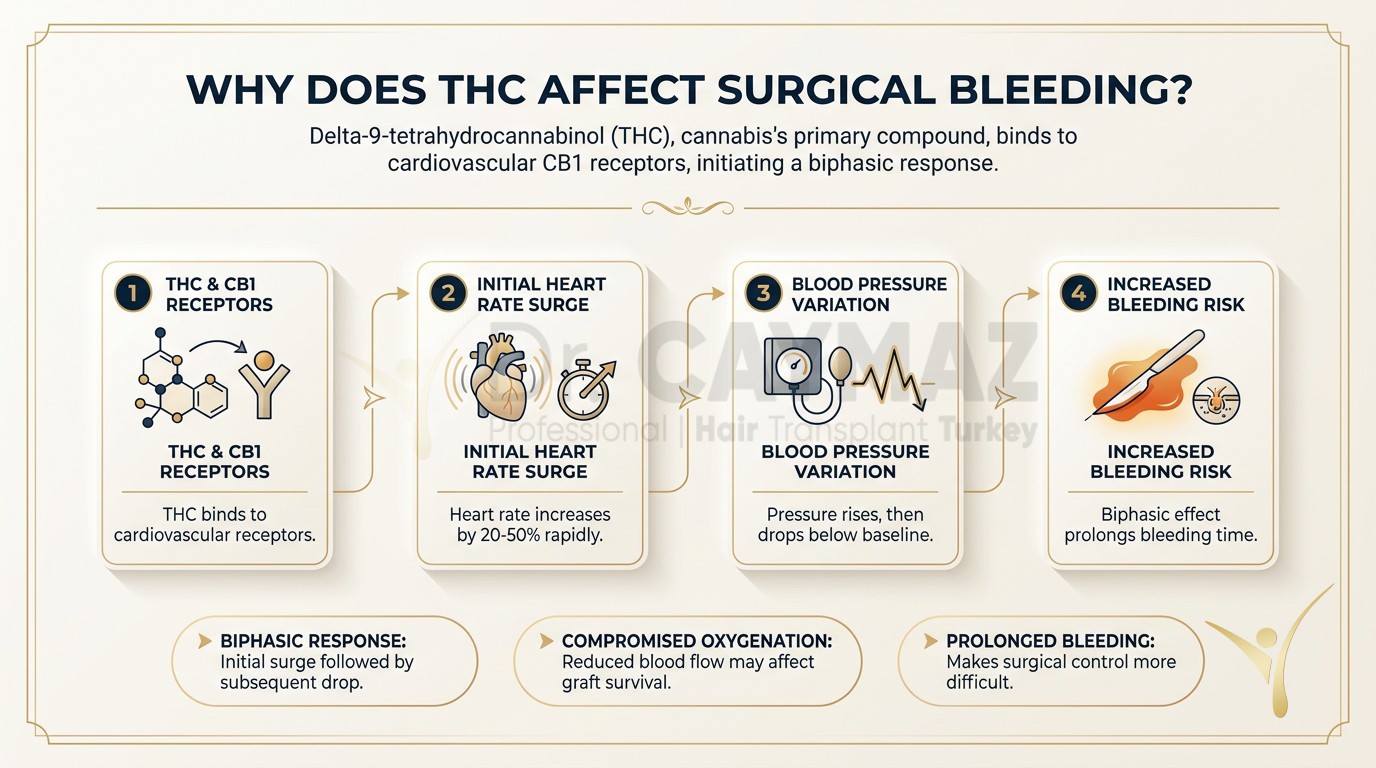
Delta-9-tetrahydrocannabinol (THC), the primary psychoactive compound in cannabis, binds to CB1 receptors in the cardiovascular system. This binding triggers a biphasic response. In the first few minutes after consumption, heart rate increases by 20 to 50 percent. Blood pressure initially rises, then drops below baseline as the body compensates. For a patient lying in a surgical chair for six to eight hours, these fluctuations translate into a scalp that bleeds more freely at every micro-incision site.
Hair transplant surgery involves thousands of tiny channel openings, typically 0.6 to 1.0 mm in diameter. Each channel must hold a freshly extracted graft in place while a fibrin clot forms around it. When bleeding is excessive, the clot either doesn't form properly or gets washed away before the graft can anchor. The result: grafts "pop" out of their channels, or they sit in a pool of blood that blocks oxygen delivery to the follicle's dermal papilla. Both scenarios lower graft survival.
Smoking cannabis, specifically, adds another layer of harm. Combustion products, including carbon monoxide, bind to hemoglobin and reduce the blood's oxygen-carrying capacity by 5 to 15 percent for several hours. Transplanted follicles are already in a state of ischemic stress after being removed from the donor area. Reducing their oxygen supply even slightly during the first 24 to 48 hours can tip marginal grafts toward necrosis. Oxygenation is a recurring theme in every graft care protocol, and smoking cannabis undermines it during the most vulnerable window.
Can Cannabis Make Local Anesthesia Less Effective?
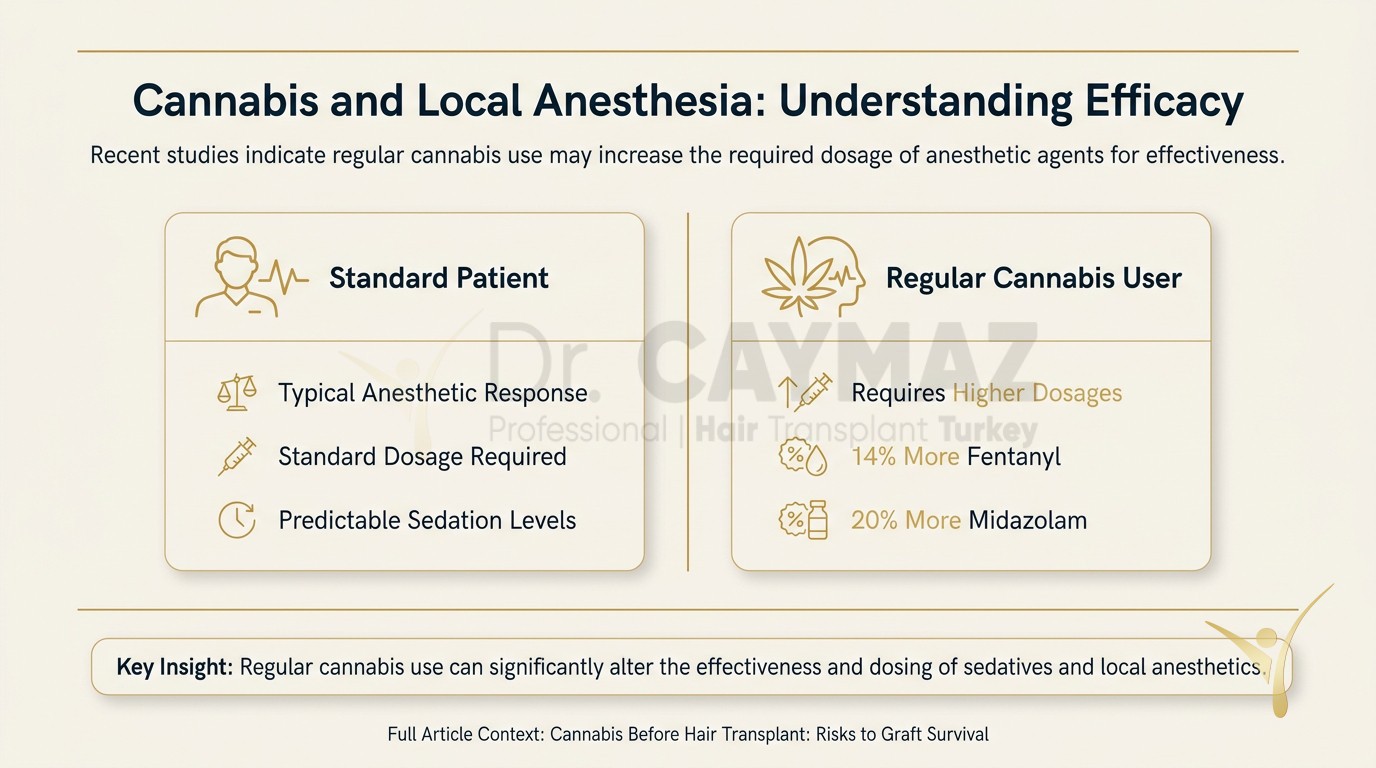
One of the most clinically significant findings in recent anesthesiology literature is that regular cannabis users require higher doses of sedative and local anesthetic agents. A 2019 retrospective study at the University of Colorado found that cannabis users needed 14 percent more fentanyl, 20 percent more midazolam, and 18 percent more propofol to achieve the same level of sedation as non-users. While hair transplant procedures rely on local anesthesia rather than general sedation, the principle extends to lidocaine and similar agents used in scalp nerve blocks.
When lidocaine wears off faster or doesn't penetrate as deeply, the patient experiences more pain. Pain triggers a sympathetic nervous system response: blood pressure rises, the scalp vasodilates, and bleeding increases again. The surgeon may need to inject additional anesthetic, but lidocaine has a maximum safe dose of approximately 4.5 mg/kg as plain lidocaine, or about 7 mg/kg when epinephrine is added to the local anesthetic. Exceeding these thresholds risks lidocaine toxicity, which can cause seizures, cardiac arrhythmia, or worse. Our anesthesia protocol page explains how dosing is calculated for each patient, and honest disclosure of cannabis use is what allows the team to adjust safely.
Patients sometimes ask whether edibles are "safer" than smoking before surgery. From an anesthesia-interaction standpoint, the route of consumption doesn't matter much. THC is THC. Edibles actually produce a longer-lasting metabolite, 11-hydroxy-THC, which is more potent and stays active for 6 to 10 hours. If you eat a cannabis edible the evening before your procedure, active metabolites will still be circulating when surgery begins the next morning.
How Does Cannabis Affect Graft Survival Rates?
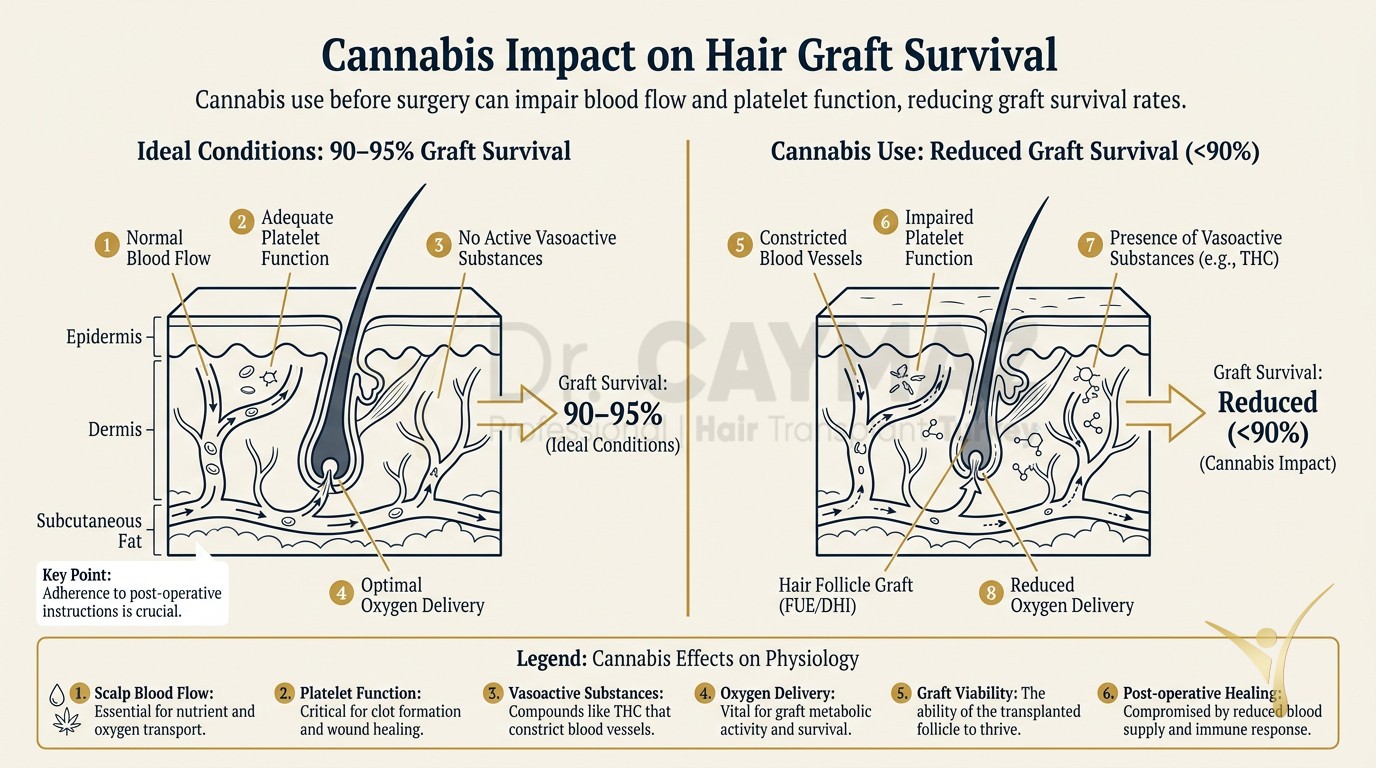
Graft survival in a well-performed FUE or DHI procedure typically falls between 90 and 95 percent under ideal conditions. "Ideal conditions" means the patient has normal blood pressure, adequate platelet function, no active vasoactive substances in their system, and follows post-operative instructions carefully. Cannabis use before surgery erodes several of these conditions simultaneously.
Here's the chain of events. THC causes vasodilation in peripheral tissues, including the scalp. More blood flows to the surface. Each recipient channel fills with blood faster than the clotting cascade can seal it. The graft, which is a delicate structure containing 1 to 4 hair follicles, sits in a wet environment instead of a stable fibrin matrix. Over the next 48 to 72 hours, when neovascularization (the formation of new blood vessels connecting the graft to the recipient bed) should be occurring, the graft may not have a secure enough attachment to receive nutrients.
There's no large-scale randomized controlled trial measuring graft survival in cannabis users versus non-users, because such a study would be ethically difficult to design. But clinical observation across thousands of procedures tells a consistent story: patients who use cannabis within a week of surgery tend to have more post-operative swelling, more crusting, and, in some cases, visibly lower density at the 12-month mark. Bleeding, anesthesia resistance, and poor oxygenation are the same factors we outline in our article on reasons for suboptimal hair transplant results, and cannabis can affect all three at once.
| Factor | Non-User (Baseline) | Cannabis User (Within 7 Days) |
|---|---|---|
| Intraoperative bleeding | Normal, controlled with epinephrine | 20–30 % increase; longer gauze-pressure pauses to control oozing |
| Local anesthesia duration | Standard lidocaine effect ~90–120 min per injection | Reduced to ~60–80 min; re-dosing often required |
| Heart rate during surgery | 60–80 bpm resting | 80–110 bpm; spikes possible |
| Blood pressure stability | Stable with mild fluctuations | Biphasic swings; harder to manage |
| Graft survival estimate | 90–95 % | Potentially 75–85 % (clinical observation) |
| Post-op swelling severity | Mild, resolves in 3–5 days | Moderate to severe, may last 5–7 days |
| Oxygen delivery to grafts | Normal hemoglobin saturation | Reduced 5–15 % (smoked cannabis) |
Is Cannabis Use Forbidden Before Surgery?
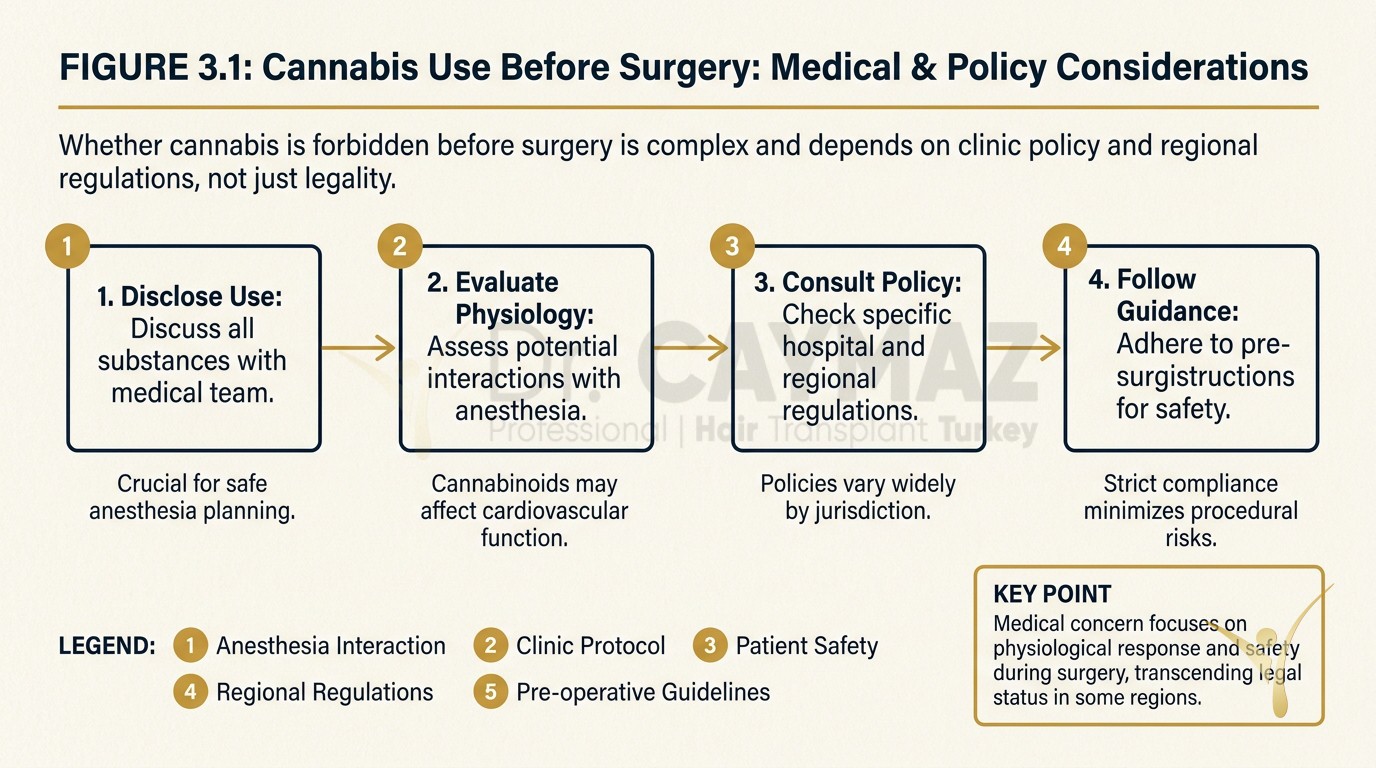
"Forbidden" is a strong word, and the answer depends on where you live and what your clinic's policy states. In Turkey, cannabis is illegal, so patients should not bring any cannabis products into the country. But the medical concern isn't about legality. It's about physiology. Even in jurisdictions where cannabis is fully legal, every reputable surgical team will ask you to stop using it before an elective procedure.
The standard recommendation at our clinic is to cease all cannabis products, whether smoked, vaped, eaten, or applied topically, at least 7 to 10 days before your scheduled operation. This window allows THC and its active metabolites to clear from your system sufficiently for your cardiovascular and hemostatic functions to return to baseline. Chronic daily users may need a longer cessation period, sometimes up to 3 weeks, because THC accumulates in fat tissue and releases slowly.
During your consultation, you'll be asked directly about cannabis use. This isn't a moral judgment. It's a clinical data point that affects how the anesthesia team prepares, how the surgeon plans the session length, and whether any additional hemostatic measures are needed. Patients who conceal their use put themselves at risk. Pre-operative preparation guidelines exist specifically to minimize every controllable variable before surgery day.
What About CBD Products Without THC?
Cannabidiol (CBD) is a non-psychoactive cannabinoid that many patients use for anxiety, pain, or sleep. Pure CBD isolate, with verified 0.0 percent THC content, doesn't produce the same cardiovascular effects as THC. It doesn't raise heart rate or cause the biphasic blood pressure response. In theory, it should be less problematic before surgery.
In practice, the situation is murkier. Most commercially available CBD products are "full-spectrum" or "broad-spectrum," meaning they contain trace amounts of THC, sometimes more than the label claims. A 2020 study published in the Journal of the American Medical Association found that only 31 percent of CBD products tested contained the amount of CBD stated on the label, and 21 percent contained detectable THC. If you're using a full-spectrum CBD oil in the weeks before surgery, you may be ingesting enough THC to affect your procedure without realizing it.
There's another concern with CBD specifically: it inhibits certain cytochrome P450 liver enzymes, particularly CYP3A4 and CYP2D6. These enzymes metabolize lidocaine. If CBD slows lidocaine metabolism, the drug stays in your bloodstream longer, which could theoretically increase the risk of toxicity when multiple injections are given over a long surgical session. The clinical data on this interaction in the context of hair transplant surgery is limited, but the pharmacological mechanism is well established.
Our recommendation: stop all CBD products at least 5 to 7 days before surgery. If you're using CBD for a medical condition like epilepsy, discuss this with your prescribing physician and your surgical team well in advance. Understanding medications used during the operation will help you see why drug interactions matter.
Dr. Caymaz Insight
| I've operated on patients who disclosed cannabis use honestly and on patients who didn't. The difference is visible on the operating table within the first thirty minutes. When a patient's scalp won't stop oozing despite proper epinephrine dosing, I know something is off. Excessive bleeding forces me to slow down, hold gauze pressure longer at each site, and sometimes makes us race against time to protect quality, because keeping grafts from sitting outside the body too long is one of our top priorities. Speed matters in hair transplant surgery. I'd rather a patient tell me they smoked last week so I can adjust the plan than discover it mid-surgery when extraction is already underway. A ten-day break from cannabis is a small sacrifice for a procedure you'll live with for decades. |
Does Cannabis After Surgery Also Pose Risks?
Patients often ask, can I smoke weed after hair transplant surgery? The short clinical answer is not during the early healing window. The risks don't vanish the moment surgery ends. The first 10 to 14 days after a hair transplant are the most vulnerable period for graft survival. During this window, transplanted follicles are establishing new blood supply connections. Anything that disrupts blood flow, oxygen delivery, or clotting can still damage grafts.
Smoking cannabis after surgery introduces carbon monoxide and particulate matter into the lungs, reducing oxygen saturation. It also triggers coughing, which raises intracranial pressure and can increase scalp swelling. Edibles avoid the respiratory issue but still deliver THC, which causes the same cardiovascular instability described earlier. Substance avoidance is not optional during post-transplant aftercare; it sits alongside washing schedules, sleep position, and sun protection as part of the standard protocol.
The minimum post-operative abstinence period we recommend is 14 days for smoked or vaped cannabis and 10 days for edibles or tinctures. After that, occasional use is unlikely to affect established grafts, though we always encourage patients to minimize smoking of any kind during the first three months. The comparison with tobacco is relevant here: our article on smoking and hair transplant outcomes covers nicotine-specific risks, and many of the vascular concerns overlap with cannabis.
How Should You Prepare If You're a Regular User?
If you use cannabis daily or near-daily, your body needs more time to clear THC than an occasional user's does. Fat-soluble THC metabolites can be detected in blood for up to 30 days in heavy users, though the pharmacologically active window is shorter. For surgical purposes, the goal isn't to pass a drug test. It's to restore normal cardiovascular and hemostatic function.
Here's a practical timeline for regular cannabis users preparing for a hair transplant:
3 weeks before surgery: Begin tapering your use. If you smoke multiple times per day, reduce to once daily, then every other day. This gradual reduction minimizes withdrawal symptoms like irritability, insomnia, and appetite changes, all of which can affect your physical readiness for surgery.
10 days before surgery: Stop completely. No smoking, vaping, edibles, tinctures, or topical THC products. Switch to non-cannabinoid sleep aids if needed, such as melatonin or magnesium glycinate, after confirming with your doctor.
Day of surgery: Disclose your full usage history during the pre-operative interview. Mention the last date of use, the form (smoked, edible, etc.), and the approximate frequency. This information helps the anesthesia team calibrate dosing.
Post-surgery: Maintain abstinence for at least 14 days. Focus on the post-transplant washing protocol and follow all aftercare instructions precisely. Your grafts are most vulnerable during this period, and every controllable risk factor you eliminate improves your odds.
What Happens If You Don't Disclose Cannabis Use?
Some patients worry about judgment or legal consequences and choose not to mention their cannabis use. This is a medical mistake with tangible consequences. When the surgical team doesn't know about THC in your system, they can't anticipate the increased bleeding, the anesthesia resistance, or the blood pressure instability. The result is a reactive rather than proactive surgical approach.
In a reactive scenario, the surgeon notices excessive bleeding partway through the procedure. They may need to reduce the number of grafts placed because each channel takes longer to prepare and the session can't safely extend beyond a certain duration. The anesthesiologist may need to administer additional lidocaine doses, pushing closer to toxicity thresholds. Post-operative swelling may be more severe, and the patient may experience more discomfort during recovery.
None of these outcomes are inevitable, but all of them are preventable with honest communication. The pre-operative screening exists to protect you, not to police your lifestyle. Our pre-operational instructions list substance disclosure alongside blood thinners, supplements, and chronic medications because each item changes how we manage anesthesia and bleeding risk.
Cannabis vs. Alcohol vs. Tobacco: Which Is Worst Before Surgery?
Patients sometimes frame the question as a comparison: "I don't drink, but I smoke weed. Is that better or worse?" Each substance affects the body differently, and none of them are helpful before surgery.
Alcohol thins the blood by inhibiting platelet aggregation. Even moderate drinking 48 hours before surgery measurably increases bleeding. It also dehydrates tissues, which can make the scalp less elastic and harder to work with during extraction.
Tobacco constricts blood vessels through nicotine's action on alpha-adrenergic receptors. This reduces blood flow to the scalp and impairs wound healing. Chronic smokers have lower graft survival rates, with some studies suggesting a 10 to 15 percent reduction compared to non-smokers.
Cannabis sits in a unique position. It causes vasodilation (the opposite of nicotine), increases bleeding, interferes with anesthesia, and, when smoked, delivers carbon monoxide that reduces oxygen transport. In terms of acute surgical risk, cannabis before a hair transplant may actually be more problematic than tobacco on the day of surgery, though tobacco's long-term vascular damage is worse for healing over weeks and months.
The bottom line: stop all three. If you can only prioritize one, cannabis and alcohol should be eliminated first because their acute effects on bleeding and anesthesia are the most immediately dangerous during the procedure itself. Cannabis is one controllable factor among several covered on our page about potential side effects of hair transplant surgery and how to minimize them.
The Clinical Bottom Line on Cannabis and Hair Transplants
Cannabis before a hair transplant is not a trivial concern. It affects three pillars of surgical success simultaneously: hemostasis (your body's ability to stop bleeding), anesthesia efficacy (how well pain control works), and graft oxygenation (how much oxygen reaches transplanted follicles in the first critical hours). Each of these factors independently influences graft survival, and when all three are compromised at once, the cumulative effect on your results can be significant.
The good news is that this is entirely within your control. A 7 to 10 day cessation window before surgery, combined with 14 days of abstinence afterward, is a short commitment relative to the months and years you'll spend enjoying your results. Be honest with your surgical team, follow the preparation timeline, and treat your body like the biological system it is: one that performs best when it isn't fighting the effects of a psychoactive substance during a precision microsurgical procedure.
Sources & clinical references
FAQ
No. THC remains pharmacologically active for many hours after consumption, and edibles can stay active for 6 to 10 hours. Using cannabis the night before surgery means active metabolites will still be circulating during your procedure, increasing bleeding and reducing anesthesia effectiveness. Stop all cannabis products at least 7 to 10 days before your scheduled operation.
Most surgeons won't cancel if you used cannabis weeks ago and have stopped in time. However, if you used cannabis within the last 48 to 72 hours, the surgeon may postpone the procedure for safety reasons. Honest disclosure allows the team to adjust the anesthesia plan and take extra hemostatic precautions rather than discovering problems mid-surgery.
Pure CBD isolate with verified 0.0% THC content is less risky than THC-containing products, but it still inhibits liver enzymes that metabolize lidocaine. Most commercial CBD products also contain trace THC. We recommend stopping all CBD products at least 5 to 7 days before surgery to avoid any drug interactions.
We recommend at least 14 days of abstinence after surgery for smoked or vaped cannabis, and at least 10 days for edibles. During this period, transplanted grafts are establishing new blood supply connections, and THC-related cardiovascular effects can still interfere with healing.
Yes. Cannabis increases intraoperative bleeding, which can wash grafts out of their channels or prevent proper fibrin clot formation. It also reduces oxygen delivery to transplanted follicles when smoked. Clinical observation suggests that cannabis users who don't stop in time may see graft survival drop from the expected 90 to 95 percent range to approximately 75 to 85 percent.
Both are problematic, but in different ways. Smoking delivers carbon monoxide that reduces blood oxygen levels by 5 to 15 percent. Edibles produce 11-hydroxy-THC, a more potent metabolite that stays active longer. Neither form is safe within the 7 to 10 day pre-operative window.
Not during early healing. We recommend at least 14 days of abstinence for smoked or vaped cannabis and at least 10 days for edibles or tinctures. Smoking adds carbon monoxide and coughing risk, while THC still affects blood pressure and oxygen delivery while grafts are establishing blood supply. After that window, occasional use is less likely to affect established grafts, but minimizing any smoking for the first three months is safer.

Thinking About a Hair Transplant in Turkey? Try These Proven Hair Growth Methods First
Before a hair transplant in Turkey or elsewhere, review evidence-based options such as finasteride and minoxidil, and…
Read More: Thinking About a Hair Transplant in Turkey? Try These Proven Hair Growth Methods First
Hair Follicle Transplant: How Many Hairs Does 1 Graft Contain?
Patients see “3,000 grafts” in quotes and assume 3,000 hairs. In reality, one graft contains variable hair numbers…
Read More: Hair Follicle Transplant: How Many Hairs Does 1 Graft Contain?
Pubic Hair Transplantation for Female
Pubic hair transplant (PHT) moves scalp follicles to the bikini zone to restore density, shape, or scars after waxing…
Read More: Pubic Hair Transplantation for FemaleFrequently Asked Questions
Professional Hair Transplant Insights by Dr. Erkam Caymaz