


Quick answer
Natural hairline design uses a soft irregular front edge, ~15–20° angles at the hairline rising to ~30–45° in mid-scalp, and golden-ratio facial proportions when donor reserve allows. Single-graft placement at the leading edge avoids a straight “drawn-on” line.
Quick Numbers
| Hairline edge | Soft wave, not straight |
|---|---|
| Frontal angle | ~15–20° |
| Mid-scalp angle | ~30–45° |
| Proportion tool | Facial thirds / golden ratio |
Key Takeaways
| A straight hairline reads as surgical immediately. |
| Single grafts belong on the leading edge. |
| Temple points frame the face, do not skip them. |
| Laser mapping helps; surgeon judgment still decides density. |
- What should a beautiful hairline look like?
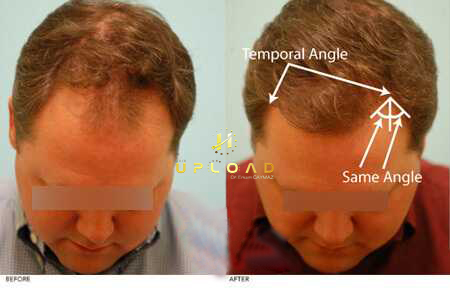
- 2 stages are very important in hair transplantation. 1) Front hairline 2) Opening of hair channels (Angle, Direction)
- How should male and female front hair transplantation be done? How many degrees should the channels be opened?
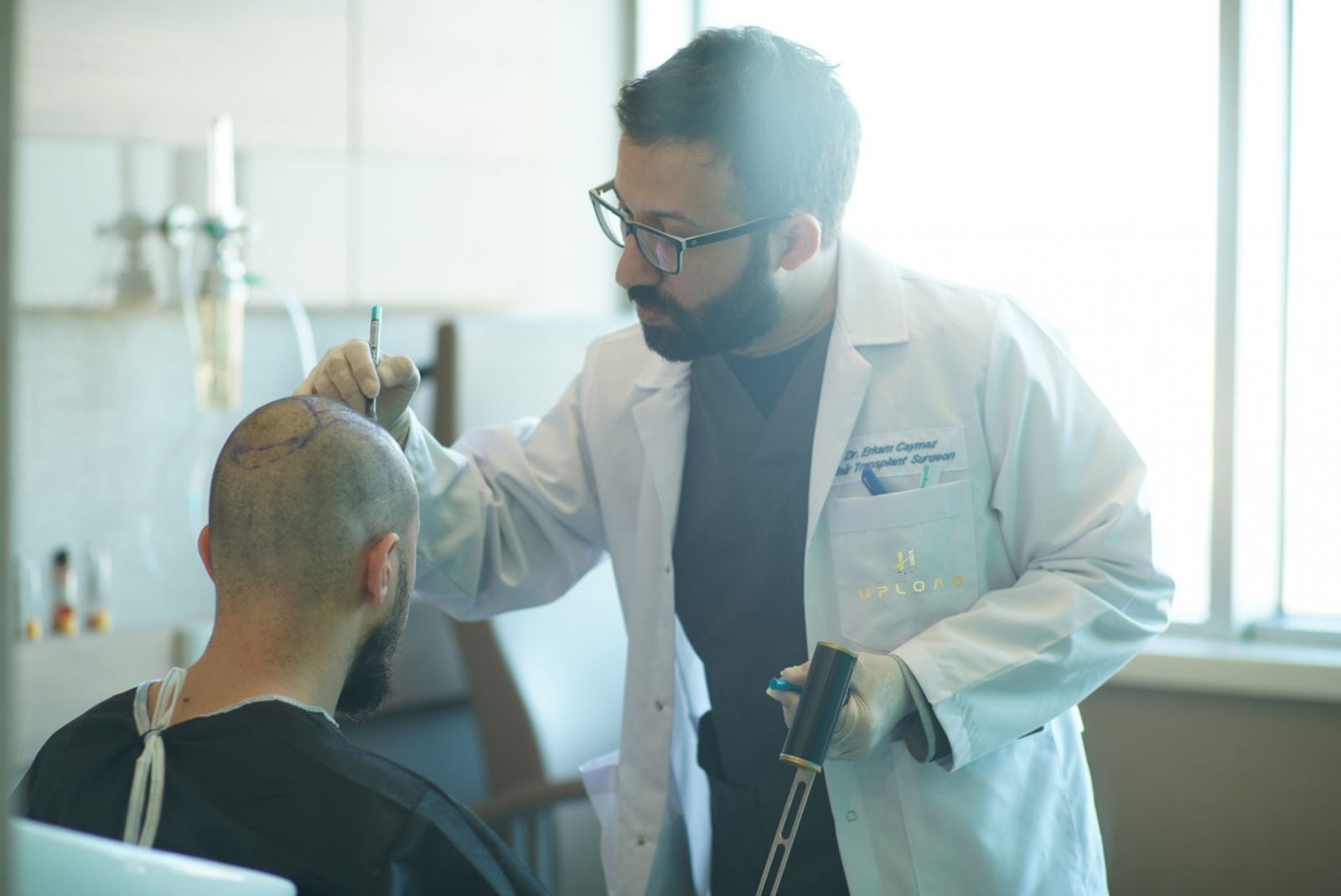
Best Hair Line Process with Laser – Dr.Erkam CAYMAZ
Hairline design is key for a natural looking appearance. See our frontal hair transplant pillar for zone planning.
Dr. Caymaz Insight
| I draw the hairline with the patient upright, not lying flat, gravity and facial expression change where a natural border should sit. Density without correct angle still fails the mirror test. |
The hairline looks clear on a person's forehead and it is a part of everyone’s hair. It is also a major part of our personality, that’s why we always look in the mirror every day.
If the hairline does not look natural, then there is a bad sign of a hair transplant.
Why Does a Good Hairline Matter?
If you have undergone a hair transplant, surely you would not want it to be noticed. It should look natural. Any form of a hair transplant treatment can result in an unnatural look, if the surgery has been performed by inexperienced hands.
.jpg)
- The hair line, despite being called a “line” should not be straight. The natural hairline has peaks and valleys and is never straight. So, the newly designed hair line should also not be straight. It should have a minimal wave.
- In the mid scalp, hair usually exits at 30° to 45° and points forward toward the nose.
- As one reaches the frontal hairline, the angle becomes more acute at 15° to 20°, and the direction usually remains pointing forward. On occasion, hair in this area may bend slightly to the left or right.
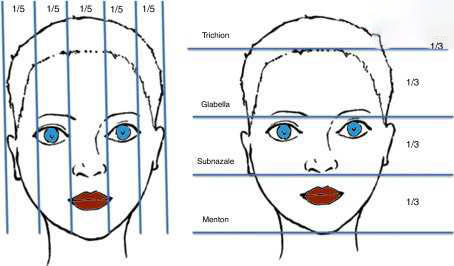
What Is the Golden Ratio in Hairline Design?

1/3-1/3-1/3 Golden Rate on your Face – This is a Miracle!
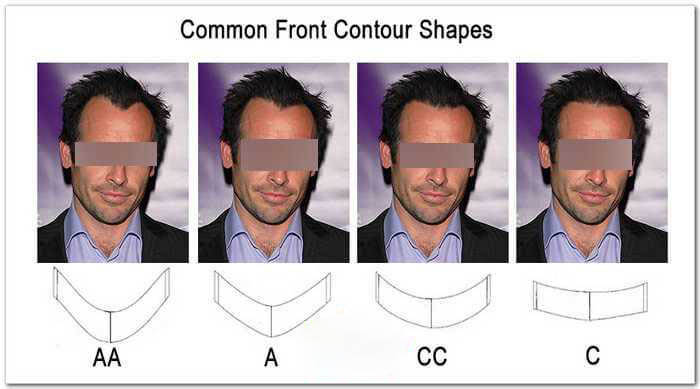
What Are the Main Men's Hairline Types?
Men's hairlines are usually grouped into six types. The juvenile hairline sits low and straight across the forehead. A mature hairline has moved back about 1 to 1.5 cm at the temples, which is normal after the late teens and isn't a sign of balding on its own. A widow's peak forms a V-shaped point in the centre. Rounded or bell-shaped hairlines curve evenly, while straight or rectangular hairlines run almost flat with sharper corners. The M-shaped hairline has deeper temple recession on both sides and is the pattern most men notice first when androgenetic alopecia starts.
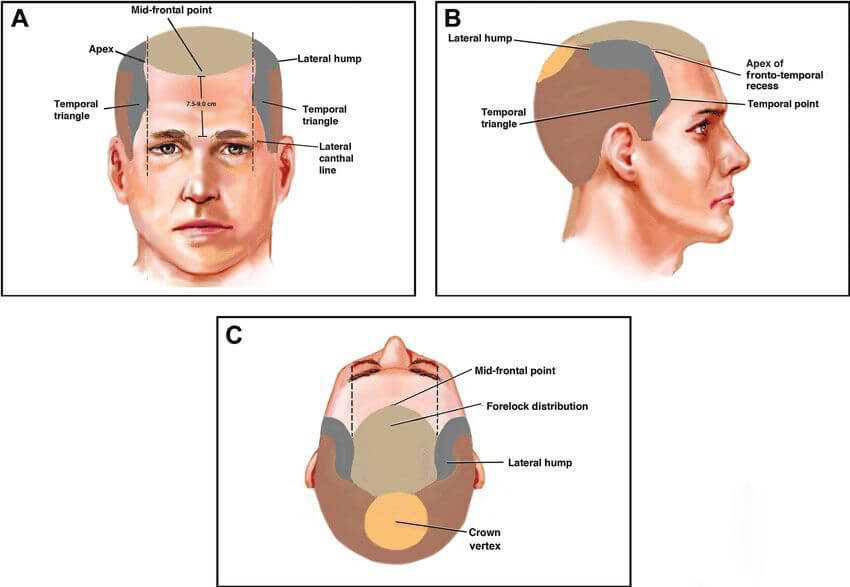
Head’s Anatomy
What Are the Main Women's Hairline Types?
Women's hairlines are usually lower, rounder and softer than men's, with temple points that rarely recede. The common types are round or oval (the most frequent), widow's peak, bell-shaped, triangular, and M-shaped or uneven. A high forehead can be natural or the result of traction alopecia, and female hairline lowering plans differ from male frontal restoration.
| Hairline type | Typical in | Design note |
|---|---|---|
| Juvenile (low, straight) | Teenage men, many women | Rarely recreated in adult men; looks unnatural with age |
| Mature | Adult men | Usual target for men: slight temple recession kept |
| Widow's peak | Men and women | Central point kept soft, never sharp |
| Round / bell-shaped | Women, some men | Even curve, rounded temple transition |
| Straight / rectangular | Men | Needs an irregular micro-wave to avoid a drawn-on look |
| M-shaped | Men with early hair loss | Temple recession planned with long-term loss in mind |

Various frontal hairline in women

How High Should a Hairline Be?
The height of the hairline can be determined in several ways:

The central hairline can be placed typically 7-8 centimeters (approximately 3 inches above the top of the eyebrows.)

The central hairline is placed 2 fingers above the highest forehead wrinkle.

The central hairline is placed 4 fingers above the top of the eyebrows.
Hairline Calculating with Dr. Erkam CAYMAZ
Hairline Design Before a Hair Transplant
Something needed to be considered when designing the hair transplant:
- Age of Patient – Design according to the age hairline should be designed as it is important and it looks more natural. As the example given above, if a 50-year-old patient having an advanced level of hair loss wants to gain the hairline as when he was 25. This will look unnatural.
- Gender – A male hairline is different from a female.
- Hair Types – Different types of hair like thick, coarse or curly usually takes more space than any normal layout of the hairline. A patient who has a finer hairline needs more hair than other people who have thick hair. So different hair types required different planning.
- Face Shape and size– For a surgeon, the design of a hairline must be based on the patient’s face. Even if it shows you some shapes, it is most logical for everyone to have a different hairline.
- Hair Loss Types – When any patient suffers from hair loss which is caused by traction alopecia then a major difference of hairline design will show. So the important thing is that surgeons consider the cause of hair loss and create a hairline design that works.
- Hair Loss Level – The early stage of hair loss is different while comparing with an advanced hairline design. In this hair density is one of the factors. The thinness of the hairline shows itself in the appearance of the hair transplant. If someone has a lot of hair loss, it would be useful to stretch the hairline a little more backwards.
What Makes a Hairline Look Natural?
- Need Planning – Surgeon only planned the hairline design.
- No Straight Lines– Surgeon mostly avoids the straight line in the scalp as it does not look natural. So they avoid the placing of hair grafts in a straight line. A surgeon has the ability to create a natural look and it reflects on the appearance.
- Feathering Zone– It is the zone where a bald head and denser area show transition. Small peaks and a feathering of hairs using smaller follicular units which are placed in the front which gives a natural appearance and the larger units are placed behind the feathering zone.
1. Doctor CAYMAZ decides the hairline together with the patient. The operation does not start without the consent of the patient.
2. These are your muscles, and there is no way to implant over your muscles. This is the lowest that your hairline can be. Its something from God.
Even if we implant over your muscles, when your faces moves up and down, your hairs will also move.
| Zone | Target |
|---|---|
| Leading edge | Irregular micro-wave, singles |
| Transition zone | Finer caliber, lower density |
| Temples | Matched angle to mid-scalp |
| Face balance | Thirds / golden ratio when possible |
Sources & clinical references
No, a natural hairline has subtle peaks and valleys; a ruler-straight line looks operated.
Often ~15–20° at the leading hairline, steepening toward ~30–45° in the mid-scalp forward of the crown.
Facial proportion guides where the hairline sits relative to brow and chin, used when donor reserve supports the plan.
Female hairlines are typically lower and softer with different recession patterns, planning must be sex-specific.
Hairline repair usually softens the leading edge with single-hair grafts and corrects the angle of existing grafts. Donor reserve decides how much can be done.
Men's hairlines are usually described as juvenile, mature, widow's peak, rounded, straight or M-shaped. Women's hairlines are most often round or oval, with widow's peak, bell-shaped, triangular and M-shaped types also common.
Hairline Design — Frequently Asked Questions
Expert Answers by Dr. Erkam Caymaz, Istanbul