


Medical treatment for hair loss
Minoxidil and Finasteride Mechanism are 2 medicals that are using for hair loss therapy. Let's examine these two drugs in detail.
What is Finasteride
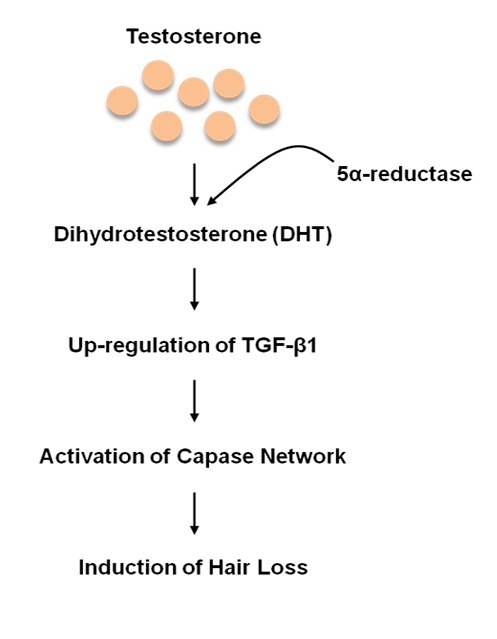
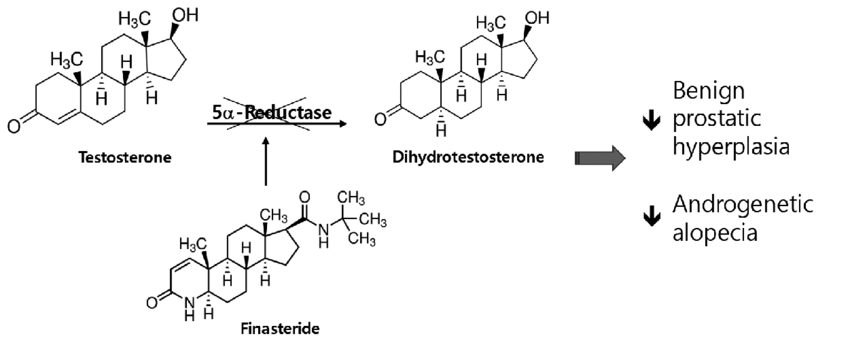
Finasteride is an antiandrogen. It is an inhibitor of the type 2 5-alpha reductase enzyme that converts testosterone to dihydrotestosterone (DHT). It is also used in the treatment of prostate disease, which is common in men. Finasteride is also used for the treatment of male pattern hair loss in many countries of the world. On December 22, 1997, the FDA approved the use of finasteride in the treatment of male pattern baldness. It is used only for men. In women, although it is written by some doctors due to the increase in testosterone in the postmenopausal period, it is not recommended for pregnant women.
How does Finasteride affect hair growth?
Finasteride, which is used for the regulation of the DHT hormone, does not have any effect on hair loss caused by different reasons. It also has no effect in cases of complete baldness because it has an effect on the rapid growth of hair and thickening of the hair strands, not on new hair growth.
It was determined that 48% of the subjects who had hair loss treatment with Finasteride had new hair growth, hair strands thickened, and hair loss stopped in 42%. However, this drug should be used continuously in order to maintain its effect. Otherwise, its effects will disappear within 6-12 months.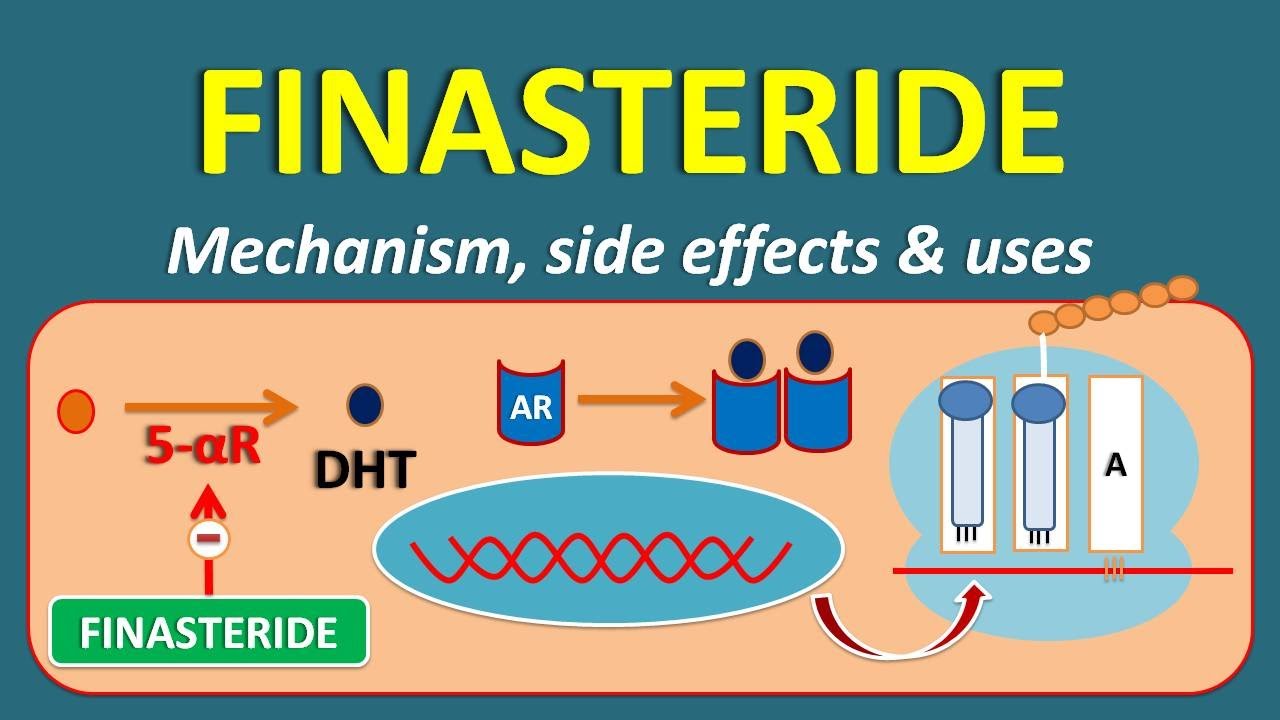
What are the side effects of Finasteride? Are the side effects permanent?
With decreasing testosterone in men, estrogen production may increase and gynecomastia may develop. This may cause more fat and enlargement of the breasts. There may also be an increased likelihood of breast cancer, which is very rare in men.
When DHT decreases, side effects such as impotence (impotence), decreased libido, decrease in sperm count, decrease in orgasm satisfaction, decrease in semen volume occur.
The drug is not recommended during puberty. During this period, there are side effects such as no beard mustache, no voice change, and cessation of neck growth.
Other side effects, on the other hand, include insomnia, increased anxiety, a slowdown in brain functions, and depression.
Some doctors state that only 2% of patients experience side effects.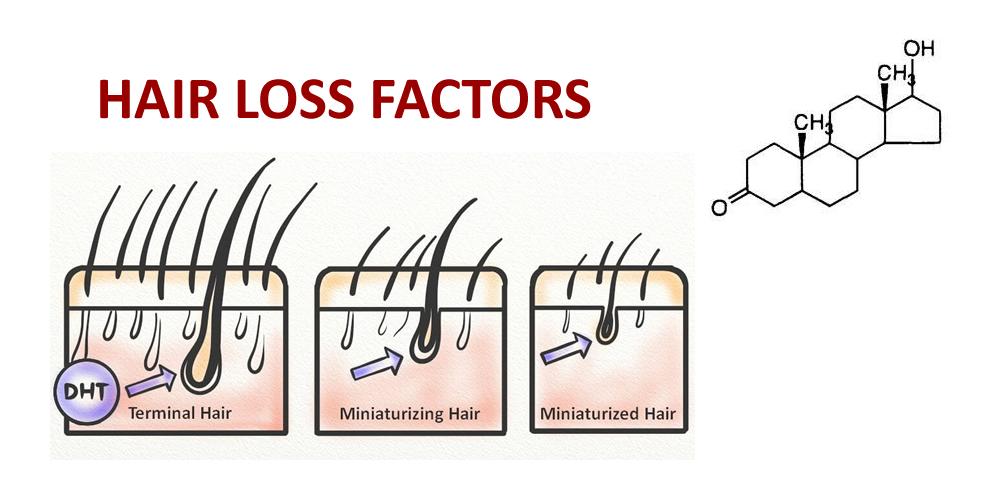
Are the effects of Finasteride permanent?
When Finasteride is used continuously, its effect on the hair is seen. When the drug is discontinued, its effects disappear within 6-12 months. However, experts warn patients that possible side effects may not disappear after stopping the drug.
Thousands of lawsuits have been filed against pharmaceutical company for the side effects of the use of this drug worldwide. The lives of some users have been irreversibly adversely affected.
As a result, finasteride is a drug that has dangers that should be used very carefully.
What is Minoxidil?
Minoxidil is an FDA-approved serum that provides rapid growth and thickening of hair. It comes in different forms for men and women. It is recommended in the form of 2% for women and 5% for men.
What is the effect of Minoxidil on hair growth?
Minoxidil lengthens the anagen phase in the hair, that is, the growth phase of the hair, thus increasing the thickness and length of the hairs. It should be used regularly 1-2 times every day.
What are the side effects of Minoxidil? Are Side Effects Permanent?
Some patients using Minoxidil have also seen increased hair growth elsewhere in the body.
Another side effect is severe headaches seen in many patients.
Acne
Decrease in blood pressure.
Irregular or fast heartbeat
Tingling or loss of sensation in the hands, face, and feet
Sudden weight gain
Chest pain is another side effect that can be seen.
Are the Effects of Minoxidil Permanent?
Minoxidil is effective when used continuously. The effect begins to disappear 3 months after the drug is discontinued. In fact, some patients experience more hair loss than before.
When Finasteride and Minoxidil are used together, their effect on hair becomes stronger.
What is Finasteride and Minoxidil's Mechanism of Action?
First of all, Finasteride blocks DHT and thus helps to stop hair loss and grow new hair. But Minoxidil does not prevent hair loss, although when it is used, it helps new hair grow thicker and faster than before. Minoxidil is a vasodilator and potentially promotes growth.
On the other hand, Finasteride is an inhibitor and prevents hair loss by stopping the conversion of testosterone hormone to dihydrotestosterone, which damages hair follicles in men. The process by which dihydrotestosterone affects the hair is quite complex.
How do Finasteride and Minoxidil Affect Hair Removal?
Finasteride works by selectively blocking the 5-alpha reductase enzyme. This hormone helps break down testosterone into DHT. Men using Finasteride have been shown to significantly lower DHT levels in the bloodstream. Finasteride's effect on hair growth often takes time.

When someone starts taking the drug Finasteride, it has to take it for months or years. As a result, the results may or may not be dramatic.
Furthermore, Minoxidil is another essential remedy used to treat both male and female pattern hair loss. It was initially developed for high blood pressure. The vasodilating effect of this increase in blood flow causes more nutrients and oxygen to flow from your blood to your hair follicles.
It has been stated that it causes an increase in hair growth and growth in most of those who use Minoxidil. The Minoxidil drug has two strengths: liquid and foam. The liquid contains alcohol and propylene glycol, and these are substances that make the hair heavy and difficult to style. For this reason, most patients prefer foam.
How Long Does It Take For Hair To Grow Back After Hair Loss?
Hair grows back at a rate of about 6 inches per year. Also, hair re-growing after hair loss varies depending on how or why your hair falls out. So, the hair growth rate after further hair loss changes again due to different reasons.
- Pattern hair loss: While we are growing, some follicles stop producing hair. That is referred to as a typical hereditary hair loss or pattern hair loss. This type of hair loss is usually permanent, which means that the hair will not grow back.
- Nutritional deficiencies: The lack of enough iron or zinc in people's diets can cause hair loss over time. In addition to more severe and conscious correction of the eating habit, eliminating the deficiency can cause hair growth again. But it can take several months for the hair to grow back.
- Alopecia: When the immune system attacks the hair follicles by mistake, this caused Alopecia. Hair loss can happen on other parts of the body, such as the eyelashes or legs.
- Problems related to thyroid hormone: Diseases experienced in excess or insufficient thyroid hormones can cause hair loss. When the thyroid problem is resolved, the hair starts to grow again.
- Androgenetic hair loss: Androgenetic hair loss is the most common type of shred that many men and women complain about this type of hair loss.
- Scalp psoriasis: Psoriasis is a disease that causes red spots on the skin, and head. Scalp psoriasis can temporarily cause hair loss. Scratching the scalp to relieve itching or remove the scales can make the situation much worse.
- Hormonal changes: Women may lose their hair after birth or during menopause. Men may experience hair loss due to changes in hormones as they get older. Hair loss due to hormonal imbalances is temporary, but it is difficult to predict when the hair will start to grow back.
It is hard to accept that you do not have any control over the disorder or even your own body, but all these causes affect the length of the hair loss process.
question1:: What is Finasteride Mechanism?
answer1:: Finasteride blocks the action of an enzyme called 5-Alpha-Reductase inhibitor. This enzyme changes testosterone to another hormone that causes the prostate to grow or hair loss in males. It will increase testosterone levels in the body, which decreases prostate size and increases hair growth on the scalp. (Testesterone to DHT blocker so if you use Finasteride your Testesterone will be increase. ) Dht (dihydrotestosterone): While it increases beard and body hair, it causes hair loss.
question2:: What is Minoxidil Mechanism?
answer2:: Minoxidil is an adenosine 5'-triphosphate-sensitive potassium channel opener, causing hyperpolarization of cell membranes. Theoretically, by widening blood vessels and opening potassium channels, it allows more oxygen, blood, and nutrients to the follicles. It is a vasodilator, meaning it widens the blood vessels to deliver more oxygen-rich blood to the hair follicles. Minoxidil is an antihypertensive drug and has been shown to increase hair growth within 4-6 months. After the drug is discontinued, it returns to the old situation.
question3:: What is the Side Effect of Finasteride?
answer3:: Erectile Dysfunction, Azoospermia etc.
Would you suggest I start taking a low dose (1mg) of Finasteride?
https://www.miamiherald.com/news/nation-world/national/article130815949.html
https://www.pfsfoundation.org/what-doctors-scientists-are-saying/
https://www.reuters.com/investigates/special-report/usa-courts-secrecy-propecia/
http://www.ijtrichology.com/article.asp?issn=0974-7753;year=2018;volume=10;issue=6;spage=255;epage=261;aulast=Rezende
https://www.medicalnewstoday.com/articles/247858.php
Firstly you can read after then decide for using.
There is no known major side effect of its use topically.
Only systemic use has very dangerous side effects.
We are in favor of using it until side effects are seen. Especially for Norwood 4 and above patients.
question4:: What is the Finasteride etc. Effect?
answer4:: Finasteride blocking 5-alpha-reductase.
5-alpha-reductase inhibitors are a group of drugs that are used in the treatment of an enlarged prostate gland (benign prostatic hyperplasia) and male pattern hair loss. Drugs in this class are finasteride (marketed as Proscar [finasteride 5 mg] and Propecia [finasteride 1 mg]) and dutasteride (marketed as Avodart)
Finasteride isn't selective when it comes to blocking DHT. Instead of affecting a specific part of your scalp or blocking a specific type of hair loss, it will block DHT at its source. This means that finasteride should slow or stop hair loss and potentially regrow some hair regardless of your specific balding pattern.
close::
Search:https://www.ncbi.nlm.nih.gov/pmc/articles/PMC3481923/
https://www.ncbi.nlm.nih.gov/pmc/?term=minoxidil+side+effects
Частые вопросы
Финастерид системно воздействует на биологию ДГТ, в то время как миноксидил действует локально, улучшая цикличность фолликулов и поддерживая экспрессию более толстых стержней.
Многие трансплантаты могут выжить, но необработанные родные волосы могут продолжать уменьшаться в размерах, из-за чего со временем результаты могут выглядеть менее сбалансированными.
Большинству пациентов требуется несколько месяцев постоянного использования, прежде чем изменения на уровне тенденций станут заметны на стандартизированных фотографиях.
Нет. Решения о комбинированной терапии зависят от возраста, характера прогрессирования, переносимости, противопоказаний и обсуждения соотношения риска и пользы под контролем врача.
Частое использование «стоп-старт» приводит к нестабильным результатам и затрудняет интерпретацию истинного ответа.
Смотрите также: Миноксидил и финастерид: дозировка, побочные эффекты и результаты

Что происходит во время дня трансплантации волос FUE?
Процедура пересадки волос FUE обычно занимает от 6 до 8 часов в течение одного дня. Утро начинается с анализа крови…
Читать больше
Планирование трансплантации волос
Планирование пересадки волос начинается с фотографий, стадии Норвуда и расчетов по безопасным донорам — это не самое…
Читать больше
Что посмотреть в Стамбуле во время пересадки волос
Istanbul is a living history with city walls, mosques, palaces, museums and lots of historical places. Вам не нужно…
Читать большеВыпадение волос — Часто задаваемые вопросы
Ответы эксперта доктора Эркама Джаймаза, Стамбул