


Numeri in sintesi
| Piano totale Norwood 7 | ~7.000 innesti (organizzati in più di 2 sessioni) |
|---|---|
| Gamma di pacchetti ESCLUSIVI | 3.500–4.500 innesti per sessione |
| Soffitto a seduta singola (la nostra clinica) | Fino a 5.000–5.500 innesti quando la riserva del donatore lo consente |
| Intervallo minimo tra le sessioni | 6 mesi |
| Tempo fuori dal corpo ideale per l'innesto | < 4 ore |
| Sopravvivenza del trapianto (sessione controllata) | Fino al 98% |
Punti chiave
| Di solito è un paziente che necessita di circa 7.000 innesti per una copertura completa Norwood7; quel numero descrive un piano di ripristino totale, non un singolo giorno operativo. |
| Non è possibile eseguire in tutta sicurezza 7.000 innesti in una sessione o in due giorni consecutivi; il tessuto del donatore ha bisogno di mesi per riprendersi tra un raccolto e l'altro. |
| La nostra clinica non esegue né consiglia piani giornalieri consecutivi come metà degli innesti oggi e metà domani. |
| I casi avanzati richiedono almeno due sessioni separate con un intervallo minimo di sei mesi tra loro. |
| In genere, ogni sessione rimane entro ciò che il donatore può fornire in sicurezza 3.500–4.500 innesti sui pacchetti ESCLUSIVI e fino a 5.500 innesti in casi selezionati di donatori forti. |
Un paziente che ha bisogno di più 7.000 innesti per una copertura significativa dall'attaccatura dei capelli alla corona è solitamente classificato come Norwood7. Anche i casi Norwood 5 e 6 possono necessitare di stadiazione, ma in genere richiedono meno innesti in totale. La cifra dei settemila innesti descrive a piano di restauro a vita, non ciò che può essere estratto e impiantato in sicurezza in una giornata operatoria. Segue una domanda di ricerca comune: "Posso ottenere un Trapianto di capelli da 7000 innesti in due giorni e farla finita?" Alcune cliniche pubblicizzano esattamente questo, suddividendo una mega estrazione in giorni operatori consecutivi in modo che il paziente voli a casa il terzo giorno. Non è così che pianifichiamo il ripristino avanzato. Il Dr. Caymaz non esegue né consiglia mega sessioni di giorni consecutivi. Questo articolo spiega perché due operazioni separate a distanza di mesi, e non due giorni di seguito, proteggono la salute del donatore e la sopravvivenza del trapianto.
Perché un piano da 7.000 innesti di solito significa Norwood 7?
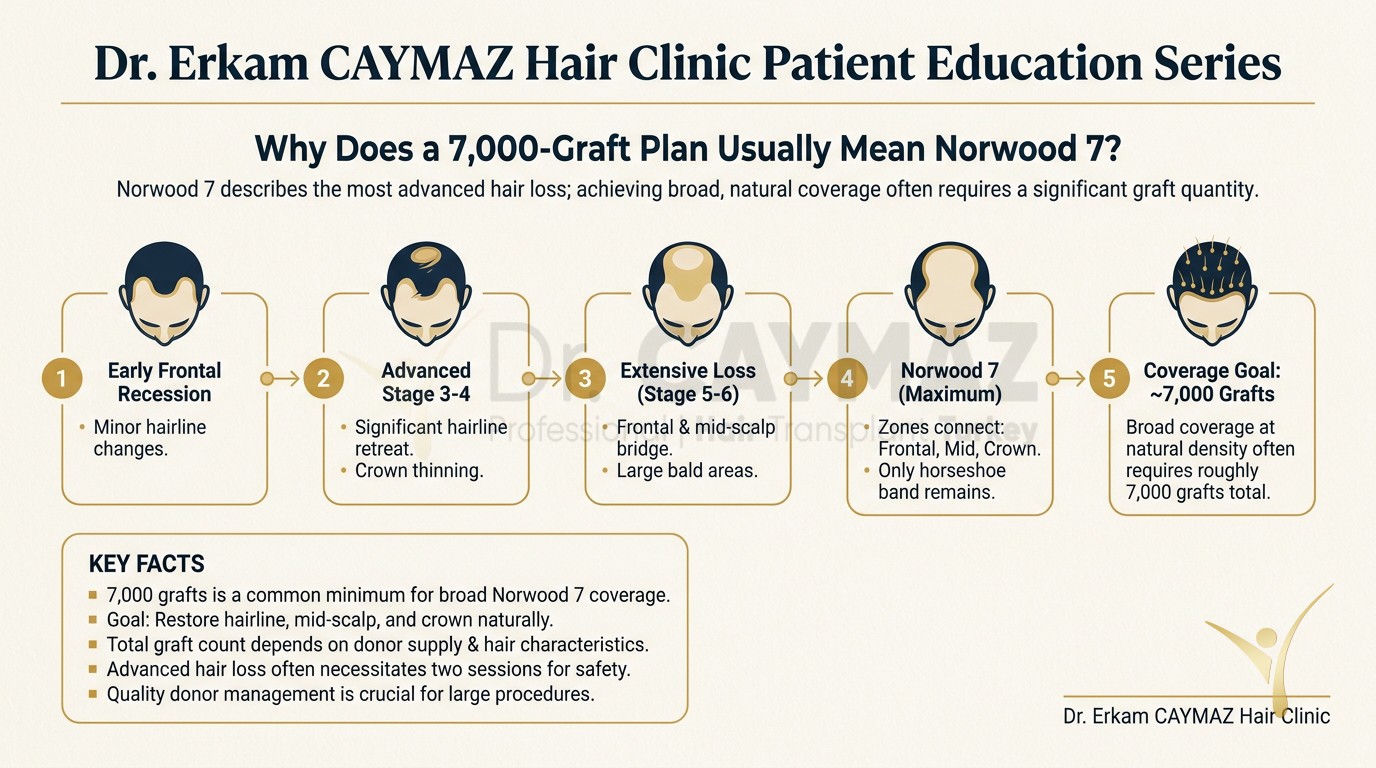
Norwood7 descrive il modello di calvizie maschile più avanzato: le zone frontale, media del cuoio capelluto e della corona si collegano, lasciando solo una fascia di capelli nativi a ferro di cavallo sui lati e sulla schiena. Le guide alla pianificazione spesso citano in modo approssimativo 7.000 innesti come totale minimo quando l'obiettivo è un'ampia copertura a densità naturale attraverso l'intero modello. Gli stadi di Norwood inferiore necessitano di totali inferiori; Norwood 5 potrebbe mirare a 5.000 innesti in un piano graduale e Norwood 6 spesso arriva a circa 6.000. Esempi del mondo reale compaiono nel nostro Casi di studio Norwood 5, 6 e 7.
IL zona donatrice, la fascia di peli resistenti al DHT tra le orecchie, contiene un serbatoio finito. In un cuoio capelluto maschio caucasico sano, la densità media dei donatori è di circa 65-80 unità follicolari per centimetro quadrato. La fornitura totale di donatori sicuri varia tipicamente da 6.000 a 8.000 innesti nel corso della vita, a seconda della lassità del cuoio capelluto, del calibro dei capelli e della composizione dell’innesto. Quando un chirurgo cita 7.000 innesti, la domanda non è mai "quanto velocemente possiamo spostarli?" Ma quante sessioni il donatore può sostenere senza un diradamento visibile. La matematica dell'innesto zona per zona è analizzata nella nostra guida su di quanti innesti hai effettivamente bisogno.
Cosa succede all’area donatrice durante un’estrazione di 7.000 innesti?
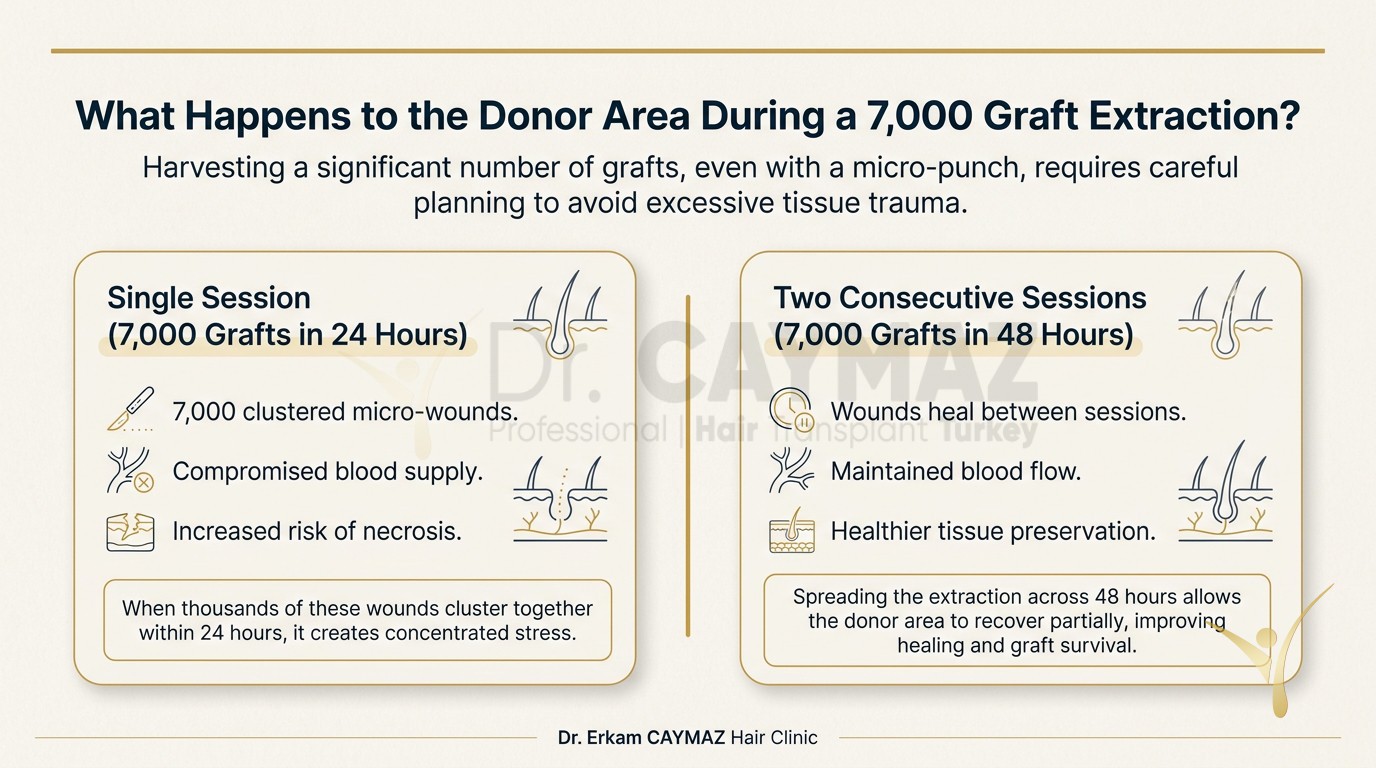
Rimuovere 7.000 innesti in una sola seduta, o nell'arco di due giorni consecutivi, significa raccogliere quasi l'intera fornitura entro 48 ore. Anche con un punch da 0,8 mm, ogni sito di estrazione lascia una microferita che necessita di flusso sanguigno per guarire. Quando migliaia di queste ferite si raggruppano entro 24-48 ore, il tessuto tra di loro può perdere un’adeguata perfusione. Il risultato è sovrasfruttamento dell’area donatrice, dove la parte posteriore della testa appare visibilmente magra, mangiata dalle tarme o sfregiata. Puoi leggere di più a riguardo sovrasfruttamento nel trapianto di capelli e perché è uno degli errori irreversibili più comuni in questo campo.
Confrontatelo con una singola sessione controllata adattata al donatore. Molti pazienti si adattano al Gamma di pacchetti ESCLUSIVI da 3.500 a 4.500 innesti. Quando la densità e la lassità sono forti, può essere sufficiente una seduta presso la nostra clinica fino a 5.000-5.500 innesti dopo la valutazione individuale. I siti di estrazione rimangono sufficientemente distanziati da consentire ai follicoli circostanti di mascherare il raccolto, l’afflusso di sangue rimane intatto e una seconda sessione può utilizzare le riserve rimanenti una volta che il tessuto si è completamente ripreso.
Perché il tempo del trapianto fuori dal corpo è così importante?
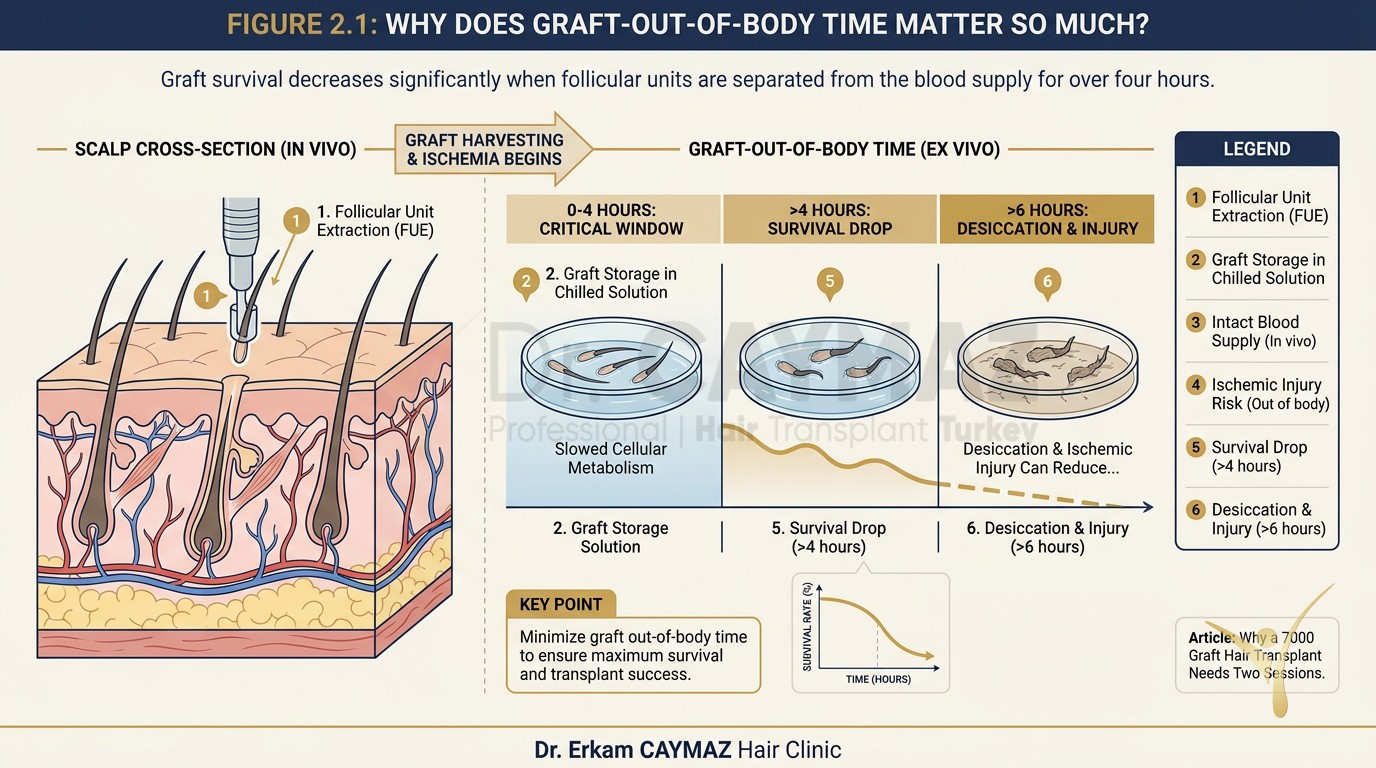
Ogni unità follicolare rimossa dal cuoio capelluto inizia un conto alla rovescia. Una volta separato dal suo apporto sanguigno, l'innesto fa affidamento su una soluzione refrigerata per rallentare il metabolismo cellulare. I dati pubblicati lo dimostrano la sopravvivenza del trapianto diminuisce in modo misurabile quando il tempo fuori dal corpo supera le quattro ore. Oltre le sei ore, l'essiccamento e il danno ischemico possono ridurre i tassi di assorbimento del 10-20% o più.
In una maratona da 7.000 innesti, i primi innesti estratti al mattino possono rimanere in soluzione per otto, dieci, persino dodici ore prima dell'impianto il secondo giorno. Alcune cliniche cercano di risolvere questo problema eseguendo l’estrazione e l’impianto simultaneamente con grandi team a rotazione. Questo approccio divide l'attenzione del chirurgo e richiede un coordinamento che poche équipe mantengono per giornate consecutive di 10 ore senza errori legati alla fatica.
Una singola sessione ben ritmata mantiene l'ultimo innesto entro quella finestra critica di quattro ore. Ciò è vero sia che il piano preveda 4.000 innesti in un pacchetto ESCLUSIVO o fino a 5.500 innesti in un caso di donatore forte. IL Fasi della procedura di trapianto di capelli sono progettati attorno a questo orologio biologico, non attorno a una promessa di marketing del massimo innesti per viaggio.
In che modo due giorni consecutivi differiscono da due sessioni separate?
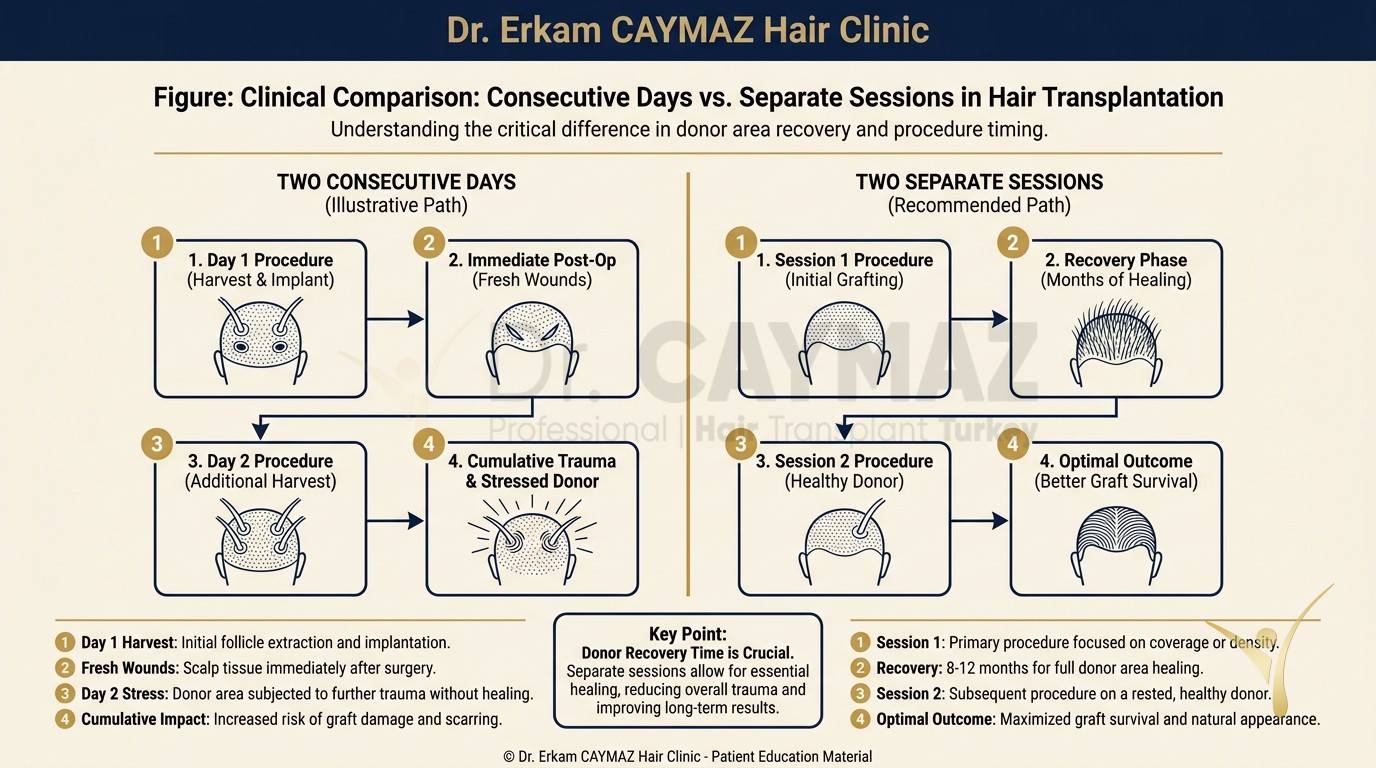
Questa distinzione confonde molti pazienti. "Due giorni" e "due sessioni" sembrano simili ma clinicamente sono molto diversi. Due giorni consecutivi significano comunque che il donatore non avrà mai mesi per riprendersie al paziente viene chiesto di tollerare un secondo giorno operatorio completo mentre le ferite del primo giorno sono fresche. Non è la stessa cosa della Sessione 1 di oggi e della Sessione 2 sei o più mesi dopo.
| Fattore | Due giorni consecutivi | Due sessioni (6+ mesi di distanza) |
|---|---|---|
| Obiettivo di innesto totale | ~7.000 in 48 ore | ~7.000 su un piano graduale |
| Tempo di recupero del donatore | ~12 ore tra i giorni | Minimo 6 mesi tra una sessione e l'altra |
| Conteggio degli innesti per sessione | Spesso più di 3.500 ogni giorno (7.000 in totale) | Tipicamente 3.500–5.500 per sessione (a seconda del donatore) |
| Afflusso di sangue al cuoio capelluto | Ancora compromesso dalle ferite del primo giorno | Restaurato prima della Sessione 2 |
| La politica del dottor Caymaz | Non eseguito né consigliato | Piano standard per Norwood 7 totali |
| Potenziale di sopravvivenza dell'innesto | Ridotto dallo stress dei tessuti e dai lunghi tempi di tenuta | Fino al 98% per sessione controllata |
| Aspetto del donatore | Alto rischio di diradamento visibile | Schema di estrazione graduale e mascherato |
Quando un paziente ritorna per la Sessione 2 almeno sei mesi dopo, il chirurgo può valutare come è guarito il donatore, come sono cresciuti i primi innesti e se il piano originale si adatta ancora al modello del paziente. Questa flessibilità non esiste quando entrambi i giorni si verificano nella stessa settimana. I casi avanzati traggono vantaggio dalla strutturazione pianificazione del trapianto di capelli prima che qualsiasi conteggio degli innesti sia finalizzato.
Quali sono i rischi di una procedura di 5.000 innesti in una sola sessione?
Oltre ai danni ai donatori e ai tempi di attesa prolungati, si verificano numerosi rischi aggiuntivi quando il conteggio degli innesti supera i 5.000 in un giorno operatorio.
Esposizione prolungata all'anestesia. L'anestetico locale con adrenalina intorpidisce il cuoio capelluto e controlla il sanguinamento. In una procedura che dura dalle 10 alle 14 ore, il volume totale di lidocaina si avvicina alla dose massima sicura. Limiti di dosaggio per il farmaci somministrati durante un’operazione di trapianto di capelli fanno parte della consulenza preoperatoria.
Fatica della squadra. Anche i tecnici chirurgici esperti perdono la precisione motoria dopo otto ore consecutive. In un trapianto di capelli, ciò si traduce in innesti schiacciati, incisioni errate e profondità incoerente.
Edema del cuoio capelluto e perdita da shock. Può innescarsi un imballaggio denso su un'ampia area ricevente perdita per shock, perdita temporanea dei peli nativi. Leggi di più perdita di capelli shock dopo il trapianto se si confrontano le aspettative di recupero tra un mega giorno e due sessioni graduali.
Il nostro pacchetto ESCLUSIVO copre Da 3.500 a 4.500 innesti per sessione. Quando la densità dei donatori, la lassità e la riservatezza sono elevate, può essere sufficiente una singola sessione presso la nostra clinica fino a 5.000-5.500 innesti dopo la valutazione individuale. Non pianifichiamo Da 6.000 a 7.000 innesti in una sessione o in giorni consecutivi. Il concetto di "massimo innesti" è fuorviante vale la pena capire prima di confrontare le citazioni.
Quanti innesti possono essere trapiantati in sicurezza in un giorno?
Non esiste un numero universale perché ogni cuoio capelluto è diverso. La densità dei donatori, il calibro dei capelli, la lassità del cuoio capelluto e la salute generale sono tutti fattori che influenzano il tetto. Presso la nostra clinica, la citata La gamma ESCLUSIVA va da 3.500 a 4.500 innesti per sessione. In casi selezionati con una solida riserva di donatori, uno Sessione FUE con zaffiro può raggiungere fino a 5.000-5.500 innesti quando il chirurgo conferma che il donatore può sostenerlo senza un diradamento visibile.
Per un paziente Norwood 7 che necessita di circa 7.000 innesti in totale, i conti sono semplici anche con un donatore forte: La Sessione 1 richiede fino a 5.500 innesti al massimo e la Sessione 2 copre il resto dopo un intervallo di guarigione minimo di sei mesi. Settemila innesti non possono ancora essere completati in una sessione o in due giorni consecutivi. Questo approccio graduale protegge le riserve dei donatori, consente al chirurgo di valutare la crescita della prima sessione prima di finalizzare il secondo piano e mantiene ogni giornata operatoria entro limiti fisiologici di sicurezza.
Dottor Caymaz Insight
| Quando un paziente Norwood 7 ha bisogno di circa 7.000 innesti, non pianifico mai "metà oggi, metà domani". Non eseguo né consiglio mega sessioni consecutive. Dividiamo il lavoro in almeno due operazioni separate con un minimo di sei mesi tra di loro. La sessione 1 può arrivare fino a 5.500 innesti quando il donatore è forte, ma mai 7.000 in un giorno o due giorni consecutivi. Ho visto pazienti arrivare altrove dopo una maratona di due giorni, da 6.000 a 7.000 innesti, e l'area donatrice racconta la storia: irregolare, troppo assottigliata, con cicatrici visibili che limitano qualsiasi correzione futura. Quando pianifico un restauro avanzato, disegno personalmente l'attaccatura dei capelli, creo le incisioni del ricevente con lame in zaffiro e supervisiono l'estrazione e l'impianto durante ogni sessione. Effettuare rapidamente 7.000 innesti in 48 ore scambia la densità a lungo termine con comodità a breve termine. Il donatore è una risorsa non rinnovabile e io lo tratto in questo modo. |
Cosa dovresti chiedere a una clinica che offre 7.000 innesti in due giorni?
Se una clinica propone una mega sessione di due giorni consecutivi, fai domande mirate prima di accettare.
"Entrambi i giorni avverranno nella stessa settimana e quanti innesti al giorno?" Se la risposta è migliaia di estrazioni in giorni consecutivi, il donatore non riceverà mai i mesi di recupero necessari tra una sessione e l'altra.
"Quanti chirurghi e tecnici lavoreranno su di me contemporaneamente?" Le cliniche ad alto volume possono ruotare più team. Comprensione il ruolo del team nel trapianto di capelli ti aiuta a valutare se il modello dà priorità alla qualità o al throughput.
"Qual è il ruolo del chirurgo durante l'estrazione e l'impianto?" In un ambiente responsabile, il chirurgo gestisce la consultazione, la progettazione dell'attaccatura dei capelli e le incisioni mentre i tecnici addestrati estraggono e posizionano gli innesti sotto la supervisione diretta.
"Posso vedere le foto dell'area donatrice e non solo quella del ricevente?" Una procedura ben eseguita lascia il donatore con un aspetto completo e naturale. Consulta gli esempi nel nostro galleria dei risultati dei pazienti.
In che modo la pianificazione graduale protegge i risultati a lungo termine?
La caduta dei capelli è progressiva. Se tutti gli innesti di donatori disponibili fossero utilizzati in un’unica mega sessione all’età di 35 anni, potrebbe non esserci più nulla per affrontare un’ulteriore recessione all’età di 45 anni. La pianificazione graduale crea un margine di sicurezza. Tra una sessione e l'altra, la terapia medica con finasteride o minoxidil può stabilizzare i capelli esistenti e potenzialmente ridurre gli innesti necessari nella Sessione 2. Vedi finasteride moa per sapere come funzionano questi farmaci.
La sessione 1 in genere affronta il problema terzo frontale e medio del cuoio capelluto, le zone che incorniciano il viso. Da sei a dodici mesi dopo, una volta che gli innesti sono cresciuti e il donatore è guarito, la Sessione 2 affronta la corona e gli eventuali spazi rimanenti nel medio cuoio capelluto. Non tutti i pazienti necessitano della Sessione 2 nella sequenza temporale originale; Gli indicatori per un'operazione di follow-up sono trattati nella nostra nota quando è opportuna una seconda seduta.
I pazienti internazionali possono programmare ciascuna sessione come un viaggio separato. Questo modello costa più tempo di viaggio di una maratona di due giorni, ma preserva il capitale dei donatori e la qualità dell’innesto. Inizia con a consultazione quindi il piano corrisponde alla fase di Norwood e alla riserva dei donatori.
Cosa dicono le prove sulle mega sessioni e sulla sopravvivenza dell'innesto?
La letteratura sottoposta a revisione paritaria sostiene costantemente il principio che tempi operatori più brevi e un numero inferiore di innesti per sessione sono correlati a tassi di sopravvivenza più elevati. Gli innesti di unità follicolari conservati per più di sei ore mostrano una ricrescita inferiore rispetto a quelli impiantati entro due o quattro ore. Nella nostra clinica ci esibiamo Da 1 a 2 operazioni VIP al giorno, circa 15 pazienti al mese, quindi ogni caso riceve la massima attenzione senza la pressione della catena di montaggio.
Sessioni controllate, con tempo di trapianto fuori dal corpo mantenuto al di sotto delle quattro ore, raggiungono costantemente tassi di sopravvivenza di fino al 98%. Sessioni di maratona che passano oltre 5.500 innesti in un giorno, o dividere 7.000 in due giorni consecutivi, introducono variabili che nessuna abilità può compensare completamente. I risultati scadenti vengono analizzati in perché alcuni trapianti hanno prestazioni inferiori.
Un piano di due sessioni è più costoso di una maratona di due giorni?
Un piano a due sessioni prevede due viaggi e due periodi di recupero. Alcune cliniche offrono prezzi vantaggiosi per le mega sessioni perché trattano volumi elevati di pazienti, a volte da 5 a 10 operazioni al giorno, per compensare i margini inferiori per innesto.
Ma il calcolo finanziario cambia se la mega sessione produce risultati non ottimali. L’intervento di revisione dopo un trapianto fallito costa più della procedura originale, sia in termini finanziari che in termini di capitale del donatore. Un paziente che ha perso il 20% di 7.000 innesti a causa di tempi di attesa prolungati ha effettivamente sprecato 1.400 innesti che non potranno mai essere recuperati. Quando si confronta il costo totale di due sessioni ben eseguite con una mega sessione più una potenziale revisione, l’approccio graduale è quasi sempre l’investimento migliore. Nostro prezzi e dettagli del pacchetto preventivo per sessione basato sul numero di innesti sicuro per il tuo donatore, non su un mega numero valido per tutti.
Fonti e riferimenti clinici
FAQ
No. Il Dr. Caymaz non esegue né consiglia mega sessioni giornaliere. L’estrazione di circa 7.000 innesti entro 48 ore esaurisce la riserva dei donatori, prolunga il tempo di trasferimento fuori dal corpo oltre i limiti di sicurezza e non consente mesi di recupero dei tessuti tra un prelievo e l’altro. I casi Norwood 7 necessitano di almeno due sessioni separate con un intervallo minimo di sei mesi.
Di solito sì. Un piano totale di circa 7.000 innesti per un'ampia copertura dall'attaccatura dei capelli alla corona corrisponde tipicamente alla perdita del modello Norwood 7. I pazienti Norwood 5 e 6 spesso necessitano di totali inferiori, sebbene possano comunque richiedere due sessioni graduali.
Il nostro pacchetto ESCLUSIVO copre da 3.500 a 4.500 innesti per sessione. Quando la densità, lassità e riserva dei donatori sono elevate, una singola sessione può raggiungere fino a 5.000-5.500 innesti dopo la valutazione individuale. Non pianifichiamo da 6.000 a 7.000 innesti in una sessione o in giorni consecutivi.
È richiesto un minimo di sei mesi tra una sessione e l'altra. Questo intervallo consente all'area donatrice di guarire, ripristina l'afflusso di sangue al cuoio capelluto e dà agli innesti della prima sessione il tempo di iniziare a crescere in modo che il chirurgo possa valutare la copertura prima di pianificare la sessione 2. Molti chirurghi preferiscono 10-12 mesi prima del nuovo prelievo.
Le cliniche con volumi elevati ottimizzano la comodità dei pazienti e la produttività. Possono gestire più team di tecnici contemporaneamente ed elaborare molti pazienti al giorno. Questo modello aumenta il rischio di un eccessivo prelievo di donatori, di essiccazione dell’innesto e di una qualità di impianto incoerente rispetto alla pianificazione VIP graduale.
No. Il Dr. Caymaz non esegue né consiglia la suddivisione in giorni consecutivi per i casi avanzati. Quando sono necessari circa 7.000 innesti, pianifica almeno due operazioni separate a distanza di mesi. La sessione 1 può arrivare fino a 5.500 innesti quando il donatore è forte; La sessione 2 copre il resto.
Se tutti i 7.000 innesti vengono estratti in una sessione o in due giorni consecutivi, il diradamento visibile dei donatori rappresenta un rischio elevato. L'estrazione graduale in due sessioni a distanza di almeno sei mesi consente al chirurgo di distribuire uniformemente i siti di prelievo e di preservare l'aspetto naturale della zona donatrice.
Il dottor Caymaz progetta un piano di due sessioni con almeno sei mesi tra le procedure. La sessione 1 può includere fino a 5.500 innesti quando la riserva del donatore lo consente; La sessione 2 affronta gli obiettivi di copertura rimanenti. Si occupa personalmente della consulenza, della progettazione dell'attaccatura dei capelli e delle incisioni del sito ricevente utilizzando lame in zaffiro, mentre il suo team di tecnici qualificati esegue l'estrazione e l'impianto sotto la sua diretta supervisione.

Chi è il candidato giusto per il trapianto di capelli DHI?
DHI (Direct Hair Implantation) utilizza una penna Choi per posizionare gli innesti senza incisioni prefabbricate…
Leggi di più: Chi è il candidato giusto per il trapianto di capelli DHI?
Trapianto di capelli con malattie della pelle (eczema, psoriasi, lichen planus): tasso di successo
Pazienti con eczema, psoriasi, lichen planus o dermatite seborroica chiedere informazioni sulle percentuali di successo…
Leggi di più: Trapianto di capelli con malattie della pelle (eczema, psoriasi, lichen planus): tasso di successo
Trapianto di peli pubici nelle donne
Il trapianto di peli pubici (PHT) sposta i follicoli del cuoio capelluto nella zona bikini per ripristinare densità…
Leggi di più: Trapianto di peli pubici nelle donneDomande frequenti
Approfondimenti professionali sul trapianto di capelli del Dr. Erkam Caymaz