


Перед планированием трансплантации доктор Каймаз документирует стадию Людвига стандартными фотографиями отдельных линий каждые три-шесть месяцев.
Ключевые цифры
| Общий шаблон | Диффузное истончение Людвига I – III |
|---|---|
| Медицинская первая линия | Часто местный миноксидил |
| Селективность операции | Только локальные дефициты |
| тренировка | Исключить рубцовую алопецию |
Ключевые выводы
| Женская потеря не всегда рецессия по мужскому типу. |
| Перед операцией необходимо исключить рубцовую алопецию. |
| Диффузная неструктурированная потеря может ограничить надежность донора. |
| Фотографии каждые 3–6 месяцев уточняют прогресс. |
Тихая борьба: расшифровка выпадения волос по женскому типу

Выпадение волос у женщин недостаточно обсуждается, недостаточно диагностируется и часто неправильно понимается в клиниках, которые в основном лечат мужчин. В нашей практике мы видим женщин, у которых волосы редеют в течение многих лет, прежде чем они найдут хирурга, который отнесется к этому серьезно. Прогрессирование у женщин редко соответствует чистой шкале Норвуда, используемой для мужчин, оно более рассеянное, более эмоционально сложное и требует совершенно иной схемы лечения. Эта статья отражает то, что мы узнали, работая с пациентками с широким спектром моделей выпадения волос.
Выпадение волос часто обсуждается как мужская проблема, но для миллионов женщин это ежедневная, зачастую молчаливая борьба. В отличие от облысения по мужскому типу, которое характеризуется залысинами, женщина обычно проявляется как постепенное истончение верхней части головы.
Для достижения лучшие результаты При лечении мы должны сначала понять тяжесть состояния, используя Людвиг Шкала.
Что такое шкала Людвига?
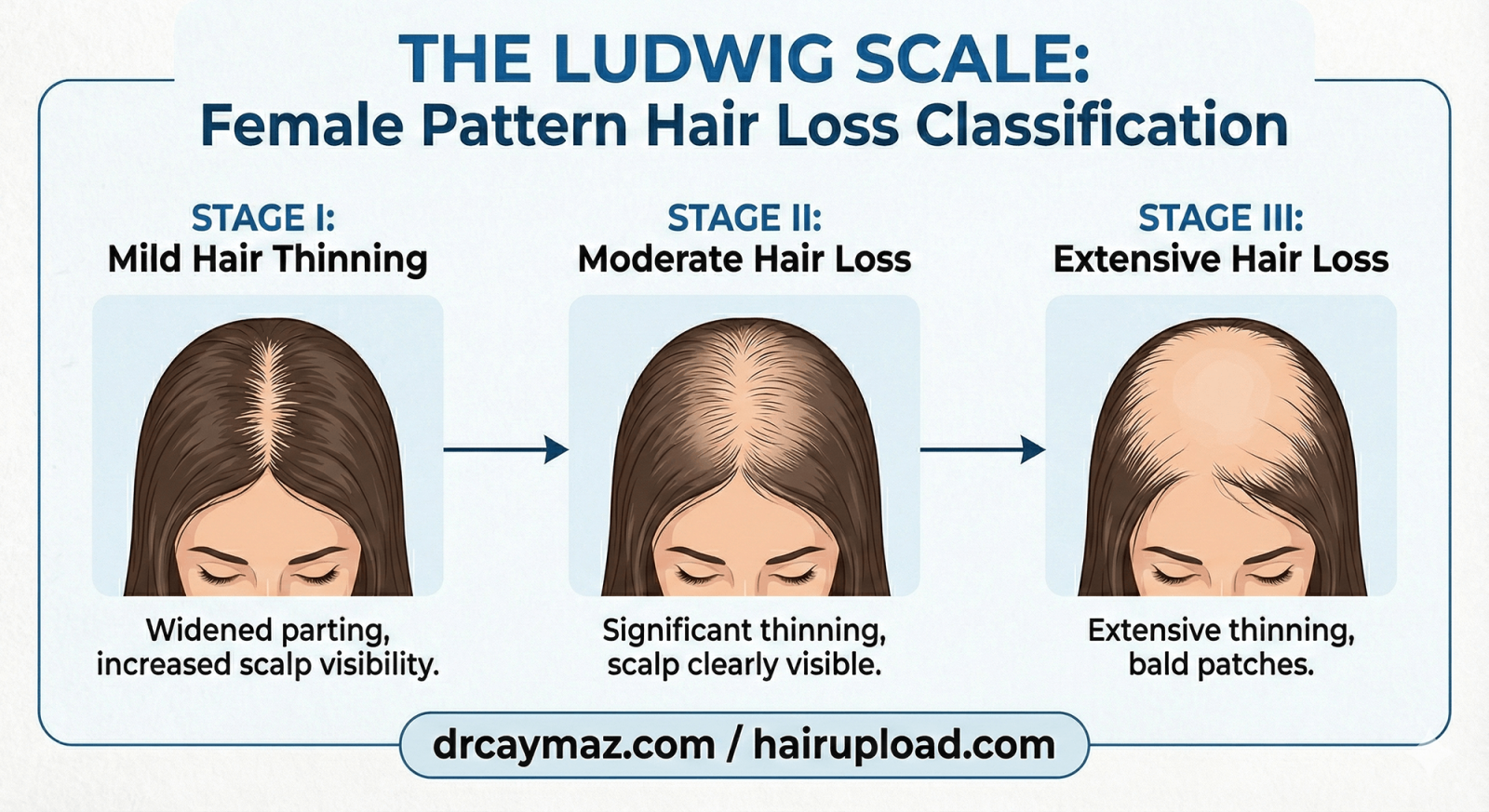
Дерматологи и специалисты по восстановлению волос используют шкалу Людвига для классификации стадий женского облысения:
Тип I: Минимальное истончение, которое можно замаскировать с помощью укладки. Лобная линия роста волос остается нетронутой.
Тип II: Умеренное уменьшение объёма и заметное расширение линии детали.
Тип III: Значительное диффузное истончение кроны. Кожа головы становится отчетливо видна.
Определение вашего этапа по этой шкале — это первый шаг к определению того, являетесь ли вы кандидатом на лучшая пересадка волос процедура.
Почему это происходит?
| Шаблон | Типичная особенность | Первый шаг |
|---|---|---|
| Людвиг диффузный | Центральная расширяющаяся часть | Миноксидил ± антиандроген при наличии показаний |
| Телогеновая алопеция | Острая диффузная сыпь после триггера | Обработать триггер; отложить операцию |
| СЖК/рубцевание | Потеря лобной группы, потеря бровей | Дерматология; избегать трансплантации в активной фазе |
| Локализованная посттравматическая ситуация | Стабильный шрам или пластырь натяжения | Выбранный трансплантат после стабилизации |
Причины часто многофакторны:
1. Генетика: Если у вашей матери или бабушки наблюдалось истончение, вы находитесь в группе более высокого риска.
2. Гормоны: Такие события, как менопауза, беременность или дисбаланс щитовидной железы, могут вызвать выделение гормона.
3. Стресс и диета: Телогеновая алопеция может вызвать временное, но тревожное выпадение волос.
Доктор Каймаз: Понимание
| Когда у женщины наблюдается быстрое расширение центральной части с неповрежденной челкой, я замедляюсь и спрашиваю о выпадении волос на бровях и руках, прежде чем обсуждать количество трансплантатов. Распознавание образов предотвращает ошибочную операцию у нужного пациента. |
Золотой стандарт: сапфир FUE и DHI для женщин
Для женщин, стремящихся к косметическому улучшению плотности, основным препятствием является вид «бритой головы», который часто ассоциируется с трансплантацией. К счастью, современные технологии позволяют небритый или частично выбритые варианты.
Техника сапфира FUE
The Сапфировый метод FUE использует лезвия из драгоценного сапфира, а не из стали. Это позволяет:
Микроразрезы: Меньшие каналы означают более быстрое заживление и меньшую травму кожи головы.
Более высокая плотность: Такая точность позволяет хирургам укладывать фолликулы ближе друг к другу, что имеет решающее значение для восстановления объема в областях истончения.
Естественные углы: Сапфировое лезвие V-образной формы имитирует естественное направление роста волос.
DHI (Прямая имплантация волос)
Для многих женщин DHI является предпочтительным выбором, поскольку зачастую не требует бритья принимающей области. Хирург использует «ручку Чой» для имплантации фолликулов непосредственно между существующими волосами, увеличивая густоту, не повреждая соседние пряди.
Почему стоит выбрать пересадку волос в Турции?
Стамбул заслужил репутацию столицы восстановления волос. А пересадка волос в Турции предлагает уникальное сочетание доступности и опыта мирового уровня.
Экономическая эффективность: Пакеты часто включают проживание и VIP-трансфер. Вы можете проверить наши конкретные Цены и пакеты пересадки волос чтобы увидеть, насколько конкурентоспособны эти тарифы по сравнению с США или Великобританией.
Большой объем опыта: Турецкие хирурги ежегодно выполняют тысячи операций, что дает им беспрецедентный опыт работы со сложными женскими случаями.
Комплексный уход: С момента приземления до последней стирки процесс проходит гладко.
Чего ожидать: путь к восстановлению
1. Консультации и планирование
Осматривается ваша донорская область (обычно затылок). Мы намечаем зону получателя на основе вашей классификации по шкале Людвига.
2. Процедура
Под местной анестезией здоровые фолликулы извлекаются и имплантируются. Использование сапфировых лезвий обеспечивает минимальное образование рубцов.
3. Последующий уход и восстановление
Послеоперационный уход жизненно важен для выживания трансплантата. Вы должны следовать определенным протоколам мытья и защиты. Подробное руководство о том, что произойдет дальше, читайте в нашем Последующий уход за трансплантацией волос страница.
4. Результаты
Требуется терпение. Новые волосы обычно начинают расти через 3-4 месяца. лучшие результаты виден примерно через 12 месяцев.
Часто задаваемые вопросы: Общие вопросы о Пересадка женских волосс
Женщины часто отдают предпочтение оформлению фронтальной части, смягчению висков и плотности линии пробора, а не полной реконструкции кожи головы. Дизайн должен учитывать будущие стилистические предпочтения и потенциальные продолжающиеся диффузные потери за пересаженной лентой. Мегаподсчеты за одну сессию редко бывают уместны. Варианты хирургического вмешательства для женщин описаны в нашей пересадка женских волос статья.
Не при каждом типе истончения операция приносит пользу при первом посещении. Стабильный резерв доноров, реалистичные приоритеты зон и контролируемые сопутствующие заболевания имеют такое же значение, как и общее количество трансплантатов. Откровенный разговор о том, чего может безопасно достичь сегодняшняя сессия, предотвращает сожаления в дальнейшем. Начните со структурированного приемлемость кандидата проверка перед бронированием поездки или депозита.
Медикаментозная терапия может стабилизировать миниатюризацию собственных волос, в то время как хирургическое вмешательство перераспределяет резистентные фолликулы; порядок зависит от возраста, характера и донорского резерва. Начало приема финастерида или миноксидила перед операцией может изменить то, какие зоны вообще нуждаются в трансплантатах. Спешка работать с нестабильными шаблонами может привести к преждевременному расходованию запасов. Сравните пути в сначала пересадка волос или лекарства.
Источники и клинические ссылки
Частые вопросы
У многих женщин развивается диффузное центральное истончение с относительным сохранением лобной части, а не глубокой височной рецессией. Рубцы и воспалительные состояния встречаются чаще и должны быть исключены.
Местный миноксидил широко используется при выпадении волос по женскому типу, когда диагноз подтверждает андрогенетическую миниатюризацию без активного рубцового воспаления.
Во многих регионах использование не по назначению и противопоказано при беременности. Решения требуют эндокринной оценки, консультирования по вопросам контрацепции и наблюдения специалистов.
Отдельные случаи со стабильным донором, локализованным дефицитом и отсутствием активной диффузной нетипичной алопеции могут соответствовать критериям. Большинство диффузных паттернов в первую очередь лечатся с медицинской точки зрения.
Показатели железа, щитовидной железы, андрогенов и анамнез триггеров телогена являются общими отправными точками. При подозрении на рубцовую алопецию может потребоваться биопсия.
Не всегда. Плотность может меняться из-за гормональных сдвигов, однако миниатюризация может продолжаться и ее следует контролировать с помощью фотографий и дерматоскопии.

Операция по пересадке волос для женщин: стоимость и донорская этика
Операция по пересадке волос у женщин обычно требует от 800 до 2500 графтов, что меньше, чем в большинстве случаев у…
Читать больше: Операция по пересадке волос для женщин: стоимость и донорская этика
Последующий уход после пересадки волос: советы для оптимального восстановления
Последующий уход после трансплантации защищает фиксацию трансплантата, заживление кожи головы и внешний вид в…
Читать больше: Последующий уход после пересадки волос: советы для оптимального восстановления
Как заживает донорская зона?
Исцеление донора происходит поэтапно, а не за одну дату. Сначала появляются корки и ранняя болезненность, временное…
Читать больше: Как заживает донорская зона?Выпадение волос — Часто задаваемые вопросы
Ответы эксперта доктора Эркама Джаймаза, Стамбул