


Hair transplantation is not limited to the head; it effectively restores density in the beard, eyebrows, mustache, pubic region, and chest. Using advanced FUE techniques, surgeons extract follicles from the posterior scalp and implant them into these facial and body zones to correct patchiness, scarring, or genetic thinning with permanent, natural-looking results.
*
The concept of hair restoration has evolved far beyond treating male pattern baldness. Modern microsurgery allows us to treat the body as a canvas, restoring confidence in areas that define facial symmetry and personal aesthetics. Whether it is a man seeking a denser beard or a woman looking to restore eyebrows lost to over-plucking, the principles of precision and angulation remain paramount.
1. Beard and Mustache Transplantation
For many men, a full, dense beard is a symbol of masculinity, yet genetics or scarring can lead to patchy growth. Beard transplantation is one of the most common non-scalp procedures, utilizing the FUE (Follicular Unit Extraction) method to move hair from the back of the head to the jawline and cheeks.
The critical factor in beard restoration is angulation. Unlike scalp hair, which grows at a 45-degree angle, facial hair often grows parallel to the skin. The surgeon must create incisions that mimic this flat trajectory to ensure the beard lies naturally and does not stick out.
Dr. Caymaz Insight:
"Patients often assume graft count is the only metric for density, but in beard restoration, the caliber of the hair is equally important. We specifically select multi-hair grafts for the jawline to create bulk, but strictly single-hair grafts for the upper cheek line to ensure a soft, natural transition. Using thick grafts too high on the cheek results in an artificial 'doll-like' appearance."
Beard transplants require flat angulation and specific graft selection (singles vs. multiples) to mimic natural facial hair growth patterns.
2. Eyebrow Restoration
Eyebrows are the frame of the face. Loss of eyebrow density can occur due to over-plucking (traction alopecia), thyroid issues, or trauma. Eyebrow transplantation is widely considered the most technically demanding procedure because the margin for error is microscopic.
The direction of hair growth in the eyebrow changes dramatically from the nose (growing upward) to the tail (growing outward and downward). A successful transplant requires the surgeon to follow this "herringbone" pattern meticulously. Furthermore, since scalp hair grows faster than eyebrow hair, patients must be committed to trimming their new brows every few days. Eyebrow transplants demand precise adherence to the natural "herringbone" growth pattern and require regular trimming post-surgery.
3. Pubic Hair Transplantation
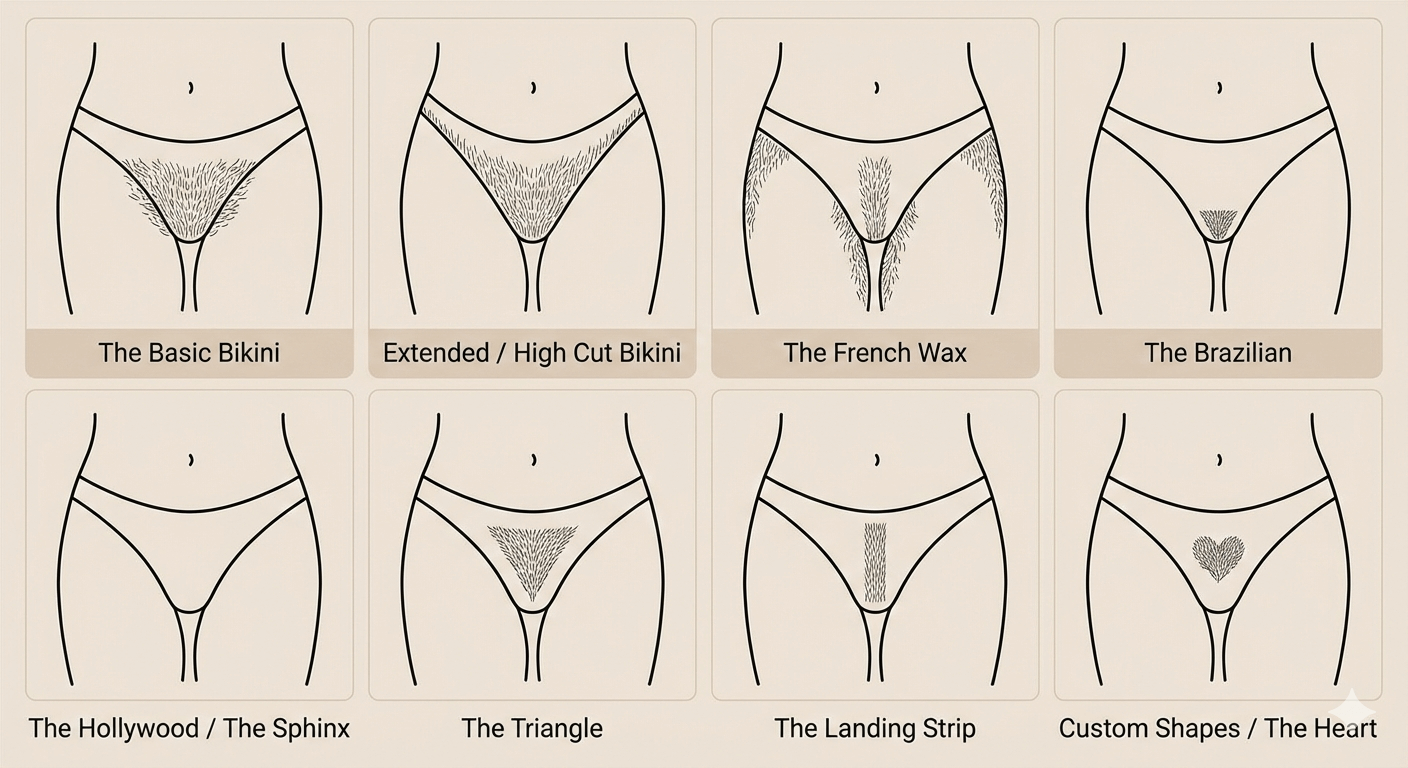
Often sought by women who have over-lasered in the past or individuals with surgical scarring (e.g., C-section scars), pubic hair transplantation restores natural density to the genital region. This procedure is also utilized by transgender patients to affirm their gender identity.
The procedure is discreet and typically requires fewer grafts (500–1,000) compared to scalp surgeries. The focus here is on creating a natural, triangular distribution (for women) or a diamond pattern (for men/masculine presentation) that blends seamlessly with existing skin texture.
Dr. Caymaz Insight:
"The psychological impact of pubic restoration is profound. Technically, the challenge lies in the recipient site creation; the skin in this region is more elastic than the scalp. We must use specialized tension techniques during implantation to ensure the grafts are seated at the correct depth, preventing pitting or cobblestoning."
Pubic hair transplants effectively cover scars and restore density for cosmetic or gender-affirming reasons using specialized tension techniques.
4. Body Hair Transplantation (Chest & Limbs)
While less common, some patients seek to increase hair density on their chest or forearms to achieve a more masculine aesthetic. Conversely, "Body Hair Transplantation" (BHT) can also refer to using chest or beard hair as a donor source to restore a balding scalp when the head donor area is depleted.
When transplanting to the chest, the surgeon must account for the natural swirl patterns of body hair. The growth cycle of body hair is also different (shorter anagen phase), meaning the transplanted hair may not grow as long as it would on the head.
Chest and body hair transplants can enhance masculinity or serve as a donor source for scalp restoration, though growth cycles differ.
Comparative Overview: Non-Scalp Transplant Metrics
| Feature | Beard/Mustache | Eyebrows | Pubic Region | Chest/Body |
| Graft Count (Avg) | 1,500 - 3,000 | 300 - 600 | 500 - 1,000 | 1,000 - 2,000 |
| Procedure Time | 4 - 7 Hours | 2 - 4 Hours | 3 - 5 Hours | 4 - 6 Hours |
| Recovery (Visual) | 7 - 10 Days | 5 - 7 Days | 7 - 10 Days | 10 - 14 Days |
| Anesthesia | Local | Local | Local | Local |
| Key Challenge | Angulation (Flat) | Direction & Curl | Skin Elasticity | Growth Cycles |
Frequently Asked Questions (FAQ)
1. Does transplanted body hair grow like scalp hair?
Yes and no. When scalp hair is transplanted to the face or body, it retains its original genetic programming. This means it will grow long and require trimming. However, over many years, it may slightly adapt to the slower growth cycle of the recipient area, a phenomenon known as "recipient dominance," though regular grooming is usually required.
2. Is it painful to get a transplant in sensitive areas like the pubic region?
No. The procedure is performed under local anesthesia. While the initial injection may cause a momentary pinch, the area is completely numb during the surgery. Post-operative discomfort is generally mild and managed with standard painkillers.
3. Can I use beard hair to fix my receding hairline?
Yes, this is a form of Body Hair Transplant (BHT). Beard hair is an excellent donor source for the mid-scalp or crown because it is thick and provides great coverage. However, it is rarely used for the immediate hairline because its texture is coarser than natural scalp hair.
4. How long does it take to see the final results?
Like scalp transplants, non-scalp grafts go through a "shock loss" phase where the hair falls out after 3-4 weeks. Permanent regrowth begins around month 3 or 4. For beards and eyebrows, you will see significant cosmetic improvement by month 6, with final maturity at 12 months.
5. Are the results permanent?
Yes. The hair follicles taken from the back of the head are genetically resistant to hair loss (DHT resistant). Once transplanted to the eyebrows, beard, or body, they will continue to grow for a lifetime.
Dr. Caymaz's Final Thoughts
The most important takeaway for a patient considering non-scalp restoration is to understand that artistry outweighs graft count. In scalp surgery, we often chase density. In eyebrow and beard surgery, we chase naturalness.
A beard transplant with 4,000 grafts that are angled incorrectly will look unnatural and unmanageable. Conversely, a procedure with 2,000 grafts placed with perfect angulation and distribution will look undetectable. When you look in the mirror, you shouldn't see a transplant; you should just see your face. Trust in a surgeon who understands the unique geometry of facial and body anatomy.
Disclaimer: This article is for informational purposes only and does not constitute medical advice. Individual results may vary. Please consult with a qualified medical professional for a personalized assessment.
*
References:
- Unger, W. P., et al. (2011). Hair Transplantation. 5th Edition. Informa Healthcare.
- Gandelman, M. (2013). Eyebrow Transplantation. ISHRS Forum
- Jimenez, F., et al. (2016). Beard and body hair transplantation by follicular unit extraction. PubMed Abstract*
Частые вопросы
Да, в отдельных случаях, когда донорская кожа головы истощена, но волосы на теле часто тоньше с разными циклами роста, что ограничивает иллюзию плотности на коже головы по сравнению с затылочными трансплантатами.
Фолликулы бороды толстые и могут выглядеть грубыми на линии роста волос. Они часто лучше подходят для заполнения средней части головы или восстановления шрамов, чем тонкие края волос.
Дизайн бровей требует неглубоких, плоских углов с одиночными трансплантатами, повторяющими естественную дугу, поток и направление роста к носу или хвосту.
Точечные рубцы FUE обычно небольшие, но зависят от площади экстракции, типа кожи и интенсивности сбора урожая; донор бороды часто хорошо прячется под щетиной.
Когда резерв кожи головы низкий, в случаях восстановления необходимы трансплантаты-филлеры, а в области лица требуются специальные донорские характеристики, которые обеспечивают борода или волосы на груди.
Отек и образование корок сохраняются в течение семи-десяти дней; уход, потоотделение и бритье требуют определенного для клиники времени, чтобы защитить имплантированные трансплантаты.

Стоимость пересадки волос в Турции и Великобритании: руководство по планированию на 2026 год
VIP-пакеты в Турции обычно стоят 5 000–7 500 евро «все включено», в то время как сопоставимые частные расценки в…
Читать больше: Стоимость пересадки волос в Турции и Великобритании: руководство по планированию на 2026 год
Принимать ли финастерид после пересадки волос?
Various drugs that are thought to have a clinical effect can be mentioned when treating hair loss. After hair…
Читать больше: Принимать ли финастерид после пересадки волос?
Как использовать одиночные графты на линии роста волос?
как следует использовать одиночные трансплантаты на линии роста волос?
Читать больше: Как использовать одиночные графты на линии роста волос?
Технологии пересадки волос: обзор последних достижений
Hair loss is a common problem that affects millions of people around the world. It can be caused by a variety of…
Читать больше: Технологии пересадки волос: обзор последних достиженийПересадка бороды — Часто задаваемые вопросы
Ответы эксперта доктора Эркама Джаймаза, Стамбул