


Hair transplantation is not limited to the head; it effectively restores density in the beard, eyebrows, mustache, pubic region, and chest. Using advanced FUE techniques, surgeons extract follicles from the posterior scalp and implant them into these facial and body zones to correct patchiness, scarring, or genetic thinning with permanent, natural-looking results.
*
The concept of hair restoration has evolved far beyond treating male pattern baldness. Modern microsurgery allows us to treat the body as a canvas, restoring confidence in areas that define facial symmetry and personal aesthetics. Whether it is a man seeking a denser beard or a woman looking to restore eyebrows lost to over-plucking, the principles of precision and angulation remain paramount.
1. Beard and Mustache Transplantation
For many men, a full, dense beard is a symbol of masculinity, yet genetics or scarring can lead to patchy growth. Beard transplantation is one of the most common non-scalp procedures, utilizing the FUE (Follicular Unit Extraction) method to move hair from the back of the head to the jawline and cheeks.
The critical factor in beard restoration is angulation. Unlike scalp hair, which grows at a 45-degree angle, facial hair often grows parallel to the skin. The surgeon must create incisions that mimic this flat trajectory to ensure the beard lies naturally and does not stick out.
Dr. Caymaz Insight:
"Patients often assume graft count is the only metric for density, but in beard restoration, the caliber of the hair is equally important. We specifically select multi-hair grafts for the jawline to create bulk, but strictly single-hair grafts for the upper cheek line to ensure a soft, natural transition. Using thick grafts too high on the cheek results in an artificial 'doll-like' appearance."
Beard transplants require flat angulation and specific graft selection (singles vs. multiples) to mimic natural facial hair growth patterns.
2. Eyebrow Restoration
Eyebrows are the frame of the face. Loss of eyebrow density can occur due to over-plucking (traction alopecia), thyroid issues, or trauma. Eyebrow transplantation is widely considered the most technically demanding procedure because the margin for error is microscopic.
The direction of hair growth in the eyebrow changes dramatically from the nose (growing upward) to the tail (growing outward and downward). A successful transplant requires the surgeon to follow this "herringbone" pattern meticulously. Furthermore, since scalp hair grows faster than eyebrow hair, patients must be committed to trimming their new brows every few days. Eyebrow transplants demand precise adherence to the natural "herringbone" growth pattern and require regular trimming post-surgery.
3. Pubic Hair Transplantation
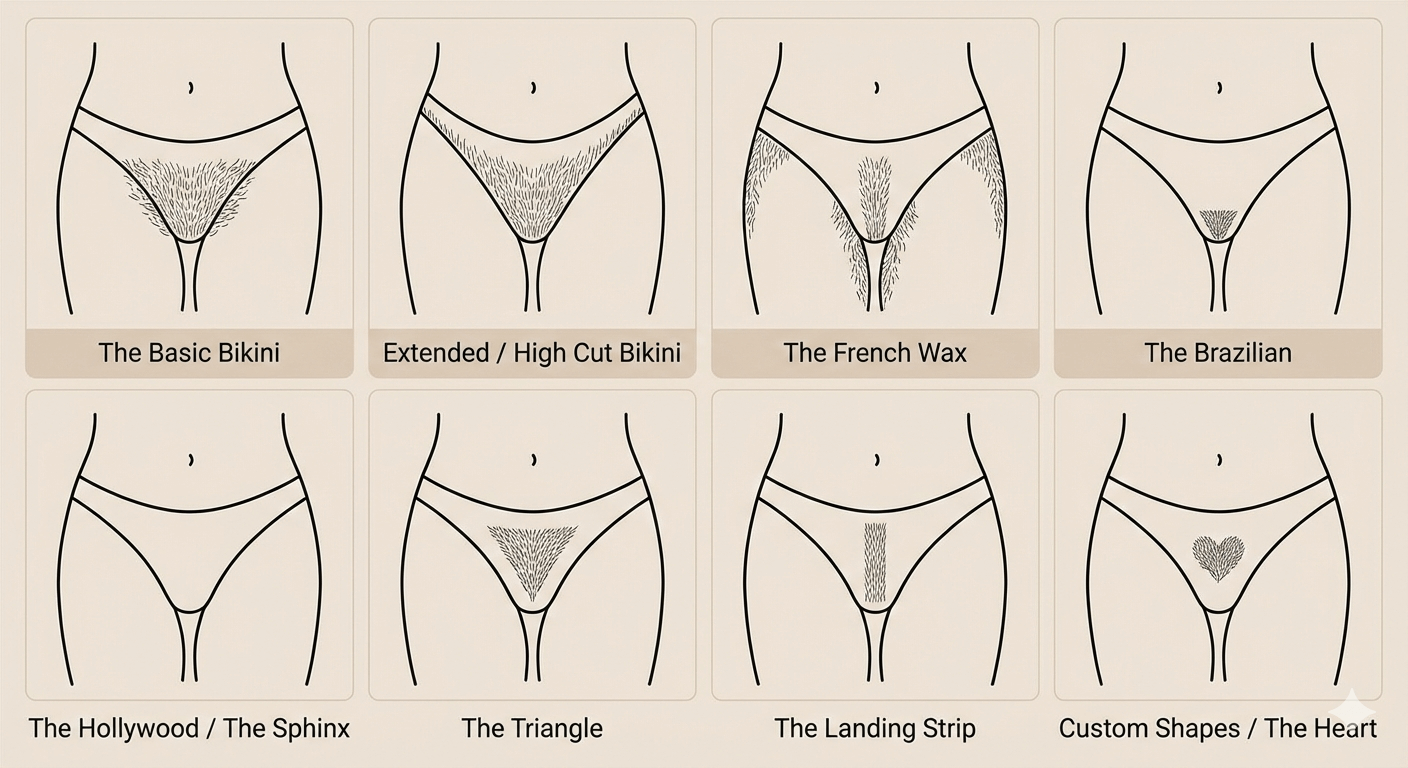
Often sought by women who have over-lasered in the past or individuals with surgical scarring (e.g., C-section scars), pubic hair transplantation restores natural density to the genital region. This procedure is also utilized by transgender patients to affirm their gender identity.
The procedure is discreet and typically requires fewer grafts (500–1,000) compared to scalp surgeries. The focus here is on creating a natural, triangular distribution (for women) or a diamond pattern (for men/masculine presentation) that blends seamlessly with existing skin texture.
Dr. Caymaz Insight:
"The psychological impact of pubic restoration is profound. Technically, the challenge lies in the recipient site creation; the skin in this region is more elastic than the scalp. We must use specialized tension techniques during implantation to ensure the grafts are seated at the correct depth, preventing pitting or cobblestoning."
Pubic hair transplants effectively cover scars and restore density for cosmetic or gender-affirming reasons using specialized tension techniques.
4. Body Hair Transplantation (Chest & Limbs)
While less common, some patients seek to increase hair density on their chest or forearms to achieve a more masculine aesthetic. Conversely, "Body Hair Transplantation" (BHT) can also refer to using chest or beard hair as a donor source to restore a balding scalp when the head donor area is depleted.
When transplanting to the chest, the surgeon must account for the natural swirl patterns of body hair. The growth cycle of body hair is also different (shorter anagen phase), meaning the transplanted hair may not grow as long as it would on the head.
Chest and body hair transplants can enhance masculinity or serve as a donor source for scalp restoration, though growth cycles differ.
Comparative Overview: Non-Scalp Transplant Metrics
| Feature | Beard/Mustache | Eyebrows | Pubic Region | Chest/Body |
| Graft Count (Avg) | 1,500 - 3,000 | 300 - 600 | 500 - 1,000 | 1,000 - 2,000 |
| Procedure Time | 4 - 7 Hours | 2 - 4 Hours | 3 - 5 Hours | 4 - 6 Hours |
| Recovery (Visual) | 7 - 10 Days | 5 - 7 Days | 7 - 10 Days | 10 - 14 Days |
| Anesthesia | Local | Local | Local | Local |
| Key Challenge | Angulation (Flat) | Direction & Curl | Skin Elasticity | Growth Cycles |
Frequently Asked Questions (FAQ)
1. Does transplanted body hair grow like scalp hair?
Yes and no. When scalp hair is transplanted to the face or body, it retains its original genetic programming. This means it will grow long and require trimming. However, over many years, it may slightly adapt to the slower growth cycle of the recipient area, a phenomenon known as "recipient dominance," though regular grooming is usually required.
2. Is it painful to get a transplant in sensitive areas like the pubic region?
No. The procedure is performed under local anesthesia. While the initial injection may cause a momentary pinch, the area is completely numb during the surgery. Post-operative discomfort is generally mild and managed with standard painkillers.
3. Can I use beard hair to fix my receding hairline?
Yes, this is a form of Body Hair Transplant (BHT). Beard hair is an excellent donor source for the mid-scalp or crown because it is thick and provides great coverage. However, it is rarely used for the immediate hairline because its texture is coarser than natural scalp hair.
4. How long does it take to see the final results?
Like scalp transplants, non-scalp grafts go through a "shock loss" phase where the hair falls out after 3-4 weeks. Permanent regrowth begins around month 3 or 4. For beards and eyebrows, you will see significant cosmetic improvement by month 6, with final maturity at 12 months.
5. Are the results permanent?
Yes. The hair follicles taken from the back of the head are genetically resistant to hair loss (DHT resistant). Once transplanted to the eyebrows, beard, or body, they will continue to grow for a lifetime.
Dr. Caymaz's Final Thoughts
The most important takeaway for a patient considering non-scalp restoration is to understand that artistry outweighs graft count. In scalp surgery, we often chase density. In eyebrow and beard surgery, we chase naturalness.
A beard transplant with 4,000 grafts that are angled incorrectly will look unnatural and unmanageable. Conversely, a procedure with 2,000 grafts placed with perfect angulation and distribution will look undetectable. When you look in the mirror, you shouldn't see a transplant; you should just see your face. Trust in a surgeon who understands the unique geometry of facial and body anatomy.
Disclaimer: This article is for informational purposes only and does not constitute medical advice. Individual results may vary. Please consult with a qualified medical professional for a personalized assessment.
*
References:
- Unger, W. P., et al. (2011). Hair Transplantation. 5th Edition. Informa Healthcare.
- Gandelman, M. (2013). Eyebrow Transplantation. ISHRS Forum
- Jimenez, F., et al. (2016). Beard and body hair transplantation by follicular unit extraction. PubMed Abstract*
FAQ
Oui dans certains cas où le donneur de cuir chevelu est épuisé, mais les poils sont souvent plus fins avec des cycles de croissance différents, limitant l'illusion de densité sur le cuir chevelu par rapport aux greffes occipitales.
Les follicules de la barbe sont épais et peuvent paraître grossiers à la racine des cheveux. Ils sont souvent meilleurs pour le remplissage du milieu du cuir chevelu ou la réparation des cicatrices que les bords fins des cheveux.
La conception des sourcils nécessite des angles plats et peu profonds avec des greffes de poils simples suivant l'arcade naturelle, le flux et la direction de croissance vers le nez ou la queue.
Les cicatrices des points FUE sont généralement petites mais dépendent de l’étendue de l’extraction, du type de peau et de l’intensité de la récolte ; Le donneur de barbe se cache souvent bien sous le chaume.
Lorsque la réserve du cuir chevelu est faible, les cas de réparation nécessitent des greffes de comblement, ou les zones du visage nécessitent des caractéristiques de donneur dédiées que procurent la barbe ou les poils de la poitrine.
Le gonflement et la formation de croûtes surviennent pendant sept à dix jours ; la toilette, la transpiration et le rasage nécessitent un timing spécifique à la clinique pour protéger les greffons implantés.

Greffe des tempes pour une ligne de cheveux naturelle
The element that should be considered as an indispensable part of hair transplantation is temple hair transplantation…
Lire Plus: Greffe des tempes pour une ligne de cheveux naturelle
Est-ce que tous les cheveux transplantés poussent ? Comprendre la croissance des cheveux après une greffe de cheveux
Tous les follicules transplantés ne mûrissent pas en même temps en une croissance visible identique. Le calibre des…
Lire Plus: Est-ce que tous les cheveux transplantés poussent ? Comprendre la croissance des cheveux après une greffe de cheveux
Chute de cheveux : comprendre les causes et les traitements efficaces
Hair loss is a common concern for many people, but it is important to understand that it is a natural part of the hair…
Lire Plus: Chute de cheveux : comprendre les causes et les traitements efficaces
Greffe de cheveux en Turquie
Nous sommes heureux de vous annoncer que nous avons obtenu de meilleurs résultats que la technique DHI en matière de…
Lire Plus: Greffe de cheveux en TurquieQuestions fréquemment posées
Conseils professionnels en greffe de cheveux par le Dr Erkam Caymaz