


Chiffres clés
| Densité visuelle avec curl (exemples) | ~2 000 à 3 000 greffons peuvent sembler pleins dans certains cas |
|---|---|
| Poinçon Micro FUE (exemple clinique) | ~0,9 mm sélectionné dans le boîtier |
| Incision en saphir (exemple clinique) | ~1,5 mm là où prévu |
| Note sur le taux de croissance | Les cheveux bouclés poussent souvent plus lentement ; patience pour la maturation |
Points clés à retenir
| Follicules courbés sous la peau augmente le risque de transection sans extraction expérimentée. |
| Conception ethnique des cheveux doit correspondre à une identité à texture afro, et non à un modèle européen copié. |
| Curl ajoute volume visuel; le nombre de greffons peut différer de celui des calculateurs pour cheveux raides. |
| Planification Saphir FUE + DHI dans une clinique expérimentée d'Istanbul prend en charge les angles naturels. |
La chirurgie de greffe de cheveux déplace les follicules sains vers des zones clairsemées, mais la technique n’est jamais universelle. Cheveux afro-texturés et bouclés a une courbure unique, une croissance plus lente chez de nombreux patients et une forte densité visuelle par greffon. À Istanbul, les patients internationaux recherchent des cliniques qui comprennent ces différences plutôt que de traiter chaque cuir chevelu comme des cheveux raides asiatiques ou européens. Cet article explique les changements dans la planification, l'extraction et la conception de la racine des cheveux pour les patients afro-américains et d'origine africaine à la clinique du Dr Caymaz.
Qu’est-ce que les cheveux afro-texturés dans la planification d’une greffe ?
Le typage des cheveux par origine ethnique est un raccourci clinique, pas une étiquette. Les motifs afro-coily (souvent des boucles de type IV à VI) présentent une courbure serrée en surface et, surtout, courbure sous le cuir chevelu. Un follicule qui semble vertical à la sortie de la peau peut être fortement incliné vers le bas. C’est pourquoi les tutoriels FUE génériques échouent : le coup de poing doit suivre le véritable vecteur folliculaire, et non la seule sortie du poil visible.
Le nombre total de cheveux et la vitesse de croissance varient individuellement. Les cheveux frisés peuvent pousser plus lentement d’un mois à l’autre, de sorte que les délais de maturation s’allongent par rapport à certains cas de cheveux raides. La patience tout au long des douze premiers mois fait partie d’une consultation honnête.
En quoi la greffe de cheveux afro diffère-t-elle des cheveux raides ?
| Facteur | Cheveux raides (typique) | Cheveux afro-crépus (typiques) |
|---|---|---|
| Chemin folliculaire | Souvent plus proche de la perpendiculaire | Fréquemment courbé sous l'épiderme |
| Risque de transsection | Abaisser avec des poinçons standards | Plus haut sans grossissement ni compétence |
| Densité visuelle par greffon | Peut nécessiter un nombre plus élevé pour la couverture | Curl peut paraître plus complet avec des comptes inférieurs |
| Conception de la racine des cheveux | Varie selon l'origine ethnique | Front souvent plus droit, tempes fortes ; voir Greffe de cheveux afro |
Les procédures de barbe et de cuir chevelu nécessitent des angles d’extraction et de placement tenant compte des boucles.

Un poinçon spécial est-il utilisé pour l’extraction des cheveux bouclés ?
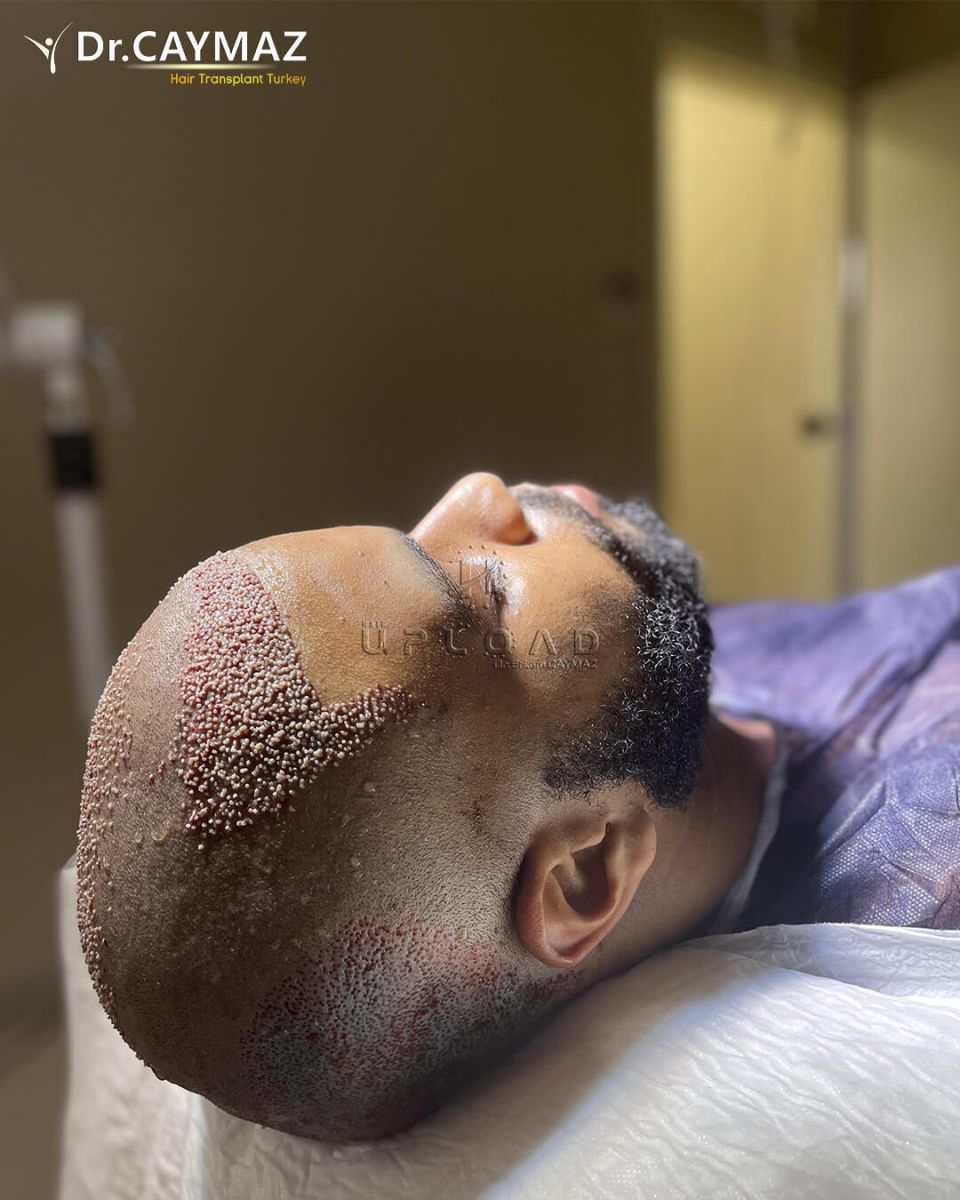
Le diamètre et la profondeur du poinçon sont sélectionnés par patient. À la clinique du Dr Caymaz, l'extraction motrice micro FUE est couramment utilisée autour Poinçons de 0,9 mm le cas échéant, associé à Saphir FUE création de chaîne à proximité 1,5 mm là où le plan le prévoit. L’objectif est d’avoir des unités folliculaires intactes, pas des records de vitesse.
Parce que les greffons enroulés occupent plus d'espace visuel, 2 000 à 3 000 greffons bien placés peut produire un look plus complet que le même numéro dans les cheveux fins et raides. Cet avantage disparaît si les angles sont erronés ; une boucle mal placée se lit comme des frisottis et non comme de la densité. La planification des zones suit toujours les priorités de la couronne (planification de la greffe par zone).
Dr Caymaz Insight
| Les cheveux bouclés punissent les devinettes. J'ouvre moi-même des canaux parce qu'une racine de cheveux européenne dessinée sur un patient afro semble fausse au bout de six mois. Beaucoup de mes patients veulent une ligne frontale basse et droite avec des tempes fortes situées juste au-dessus du muscle frontal, et non un zigzag copié à partir d’une photo de manuel. L’extraction est lente, amplifiée et contrôlée greffon par greffon. La rapidité sans le respect des boucles est la façon dont les cliniques brûlent ensemble le donneur et la réputation. |
Comment est conçue une ligne de cheveux afro ?
La conception ethnique des cheveux est un travail d’identité, pas un devoir de géométrie. Les lignes de cheveux à texture afro favorisent souvent un bord frontal plus propre et plus droit avec des points de tempes définis plutôt que des motifs de dentelle en micro-zigzag courants dans certains modèles caucasiens. La transition de densité doit toujours paraître naturelle sous une lumière vive et des coupes courtes.
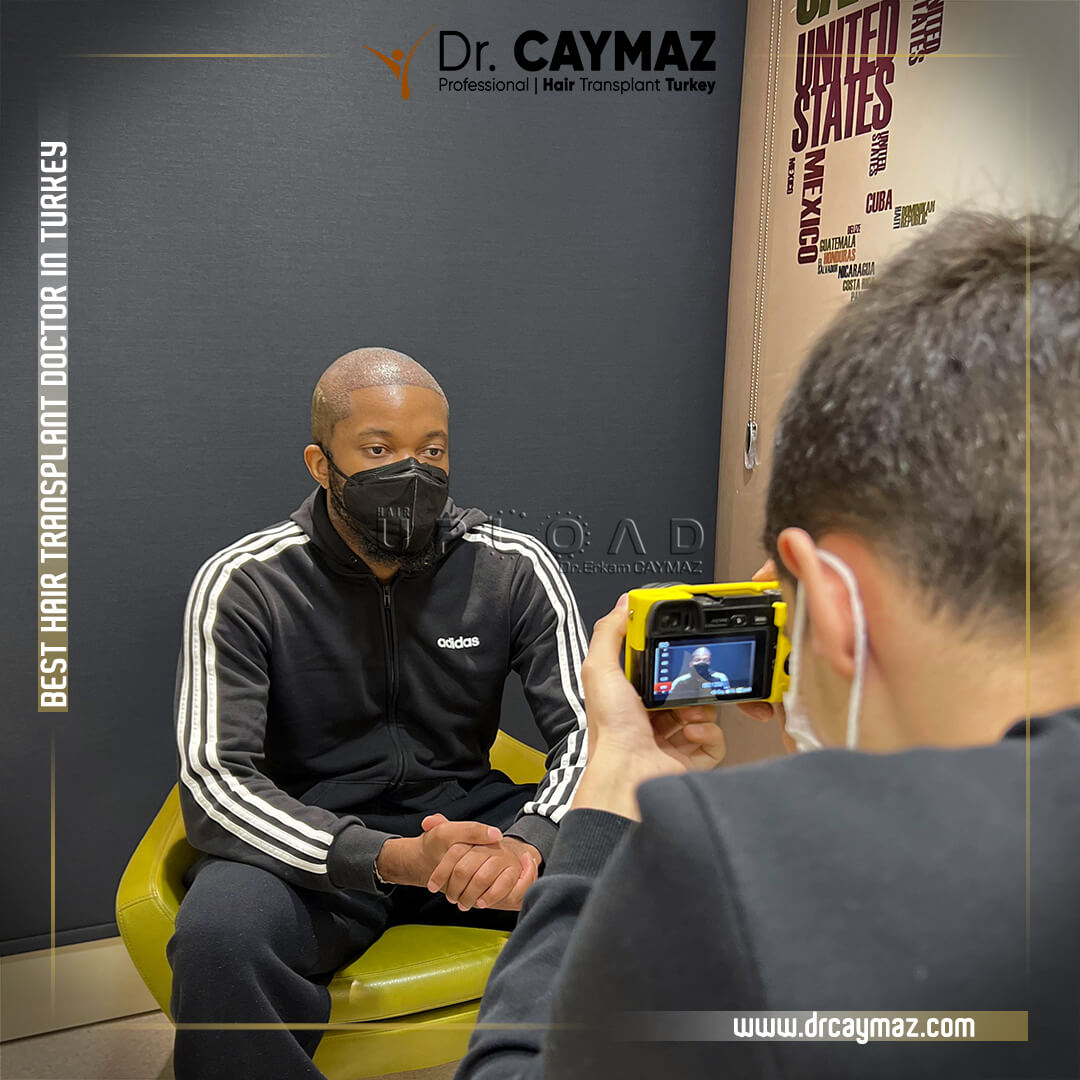
La planification de la racine des cheveux doit respecter les proportions de texture afro et les préférences du patient.
Pourquoi les patients choisissent-ils Istanbul pour une greffe de cheveux afro ?
Istanbul combine des équipes chirurgicales expérimentées, une infrastructure de voyage médical et une photographie de cas transparente. Les patients afro venant d’Europe, d’Amérique du Nord ou d’Afrique doivent vérifier études de cas sur les cheveux bouclés, pas seulement le prix par greffon. Renseignez-vous sur les taux de transection, la politique de pointage et qui ouvre les canaux.
Risque chéloïde, type de peau et dépistage médical
Les patients d’origine afro posent parfois des questions sur les cicatrices chéloïdes ou hypertrophiques après FUE. Les véritables chéloïdes sont rares lors d'une extraction à l'emporte-pièce standard lorsque la guérison du donneur est surveillée, mais le type de peau et les antécédents de cicatrices doivent être examinés. La taille contrôlée du poinçon, la section peu profonde et le fait d'éviter la surexploitation réduisent les changements visibles des donneurs. Les patients souffrant de diabète, d'hypertension ou de problèmes actifs du cuir chevelu doivent obtenir une autorisation médicale avant de voyager, selon la même logique de dépistage que celle utilisée pour les autres candidats chirurgicaux.
L'analyse préopératoire cartographie la direction des boucles, la densité des donneurs et la couverture prévue. La proportion de la racine des cheveux peut faire référence à des concepts d'équilibre facial tels que ceux de notre nombre d'or à la racine des cheveux article, adapté pour un cadrage afro-texturé plutôt que des mesures copiées.
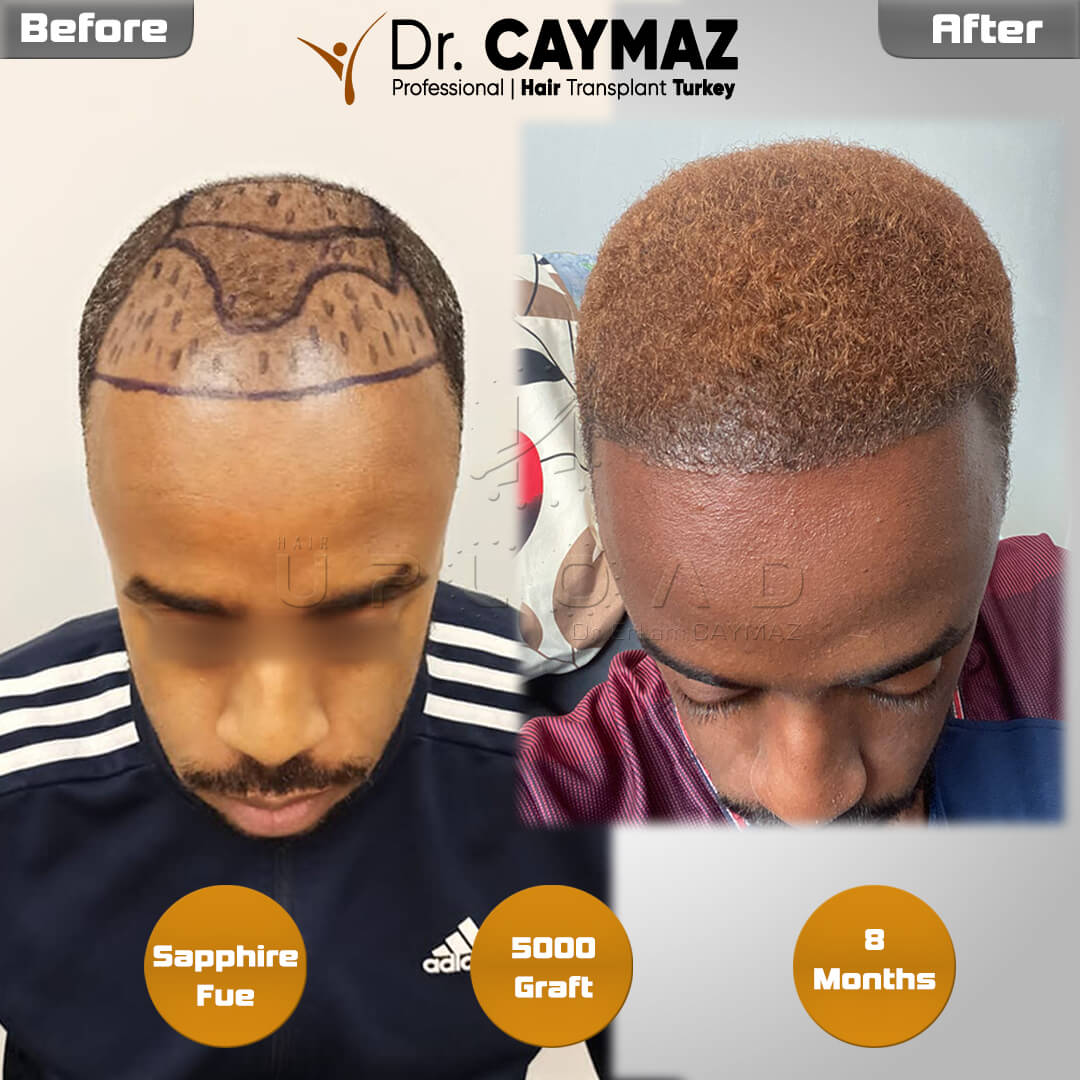
Conception de la ligne de cheveux afro-américaine : les résultats mûrissent au fil des mois à mesure que la longueur des boucles revient.
Les examens de cas vidéo aident à définir des attentes réalistes. Les chaînes cliniques incluent des présentations courtes de la conception des cheveux afro et des délais de maturation pour les téléspectateurs internationaux planifiant un voyage à Istanbul.
Conception de la ligne de cheveux afro (YouTube Short)
Revue de cas de greffe afro-texturée
Exemple de planification capillaire
La greffe afro-texturée à Istanbul réussit lorsque l'équipe respecte la biologie des boucles, conçoit une racine des cheveux authentique et protège la réserve de donneurs. La technologie compte : lames en saphir, micropoinçons et grossissement. L’expérience en matière d’extraction coily reste le facteur décisif.
La planification clinique s'améliore lorsque des sujets connexes sont examinés dans l'ordre plutôt que sous forme d'allégations marketing isolées. Les règles de calendrier, de candidature et de suivi doivent rester cohérentes dans chaque article que vous lisez. Si un concept ne vous semble pas familier, faites une pause et comparez-le avec vos propres photos et votre liste de médicaments avant d'agir. Les équipes documentent ces recoupements lors du suivi pour éviter les avis contradictoires. La pièce complémentaire sur équilibre entre la densité de greffe de cheveux sans dommage… utilise le même langage de jalon décrit ici.
Les patients demandent souvent quel est le lien entre ce sujet et les décisions voisines en matière de protection des donneurs, de rétablissement ou de traitement médical à long terme. Les règles de calendrier, de candidature et de suivi doivent rester cohérentes dans chaque article que vous lisez. Si un concept ne vous semble pas familier, faites une pause et comparez-le avec vos propres photos et votre liste de médicaments avant d'agir. Les équipes documentent ces recoupements lors du suivi pour éviter les avis contradictoires. La pièce complémentaire sur suis-je un bon candidat pour la greffe de cheveux utilise le même langage de jalon décrit ici.
Les détails ci-dessous sont autonomes, mais de nombreuses questions de consultation chevauchent des sujets éducatifs adjacents sur ce site. Les règles de calendrier, de candidature et de suivi doivent rester cohérentes dans chaque article que vous lisez. Si un concept ne vous semble pas familier, faites une pause et comparez-le avec vos propres photos et votre liste de médicaments avant d'agir. Les équipes documentent ces recoupements lors du suivi pour éviter les avis contradictoires. La pièce complémentaire sur meilleure conception de ligne de cheveux mâle femelle utilise le même langage de jalon décrit ici.
La planification clinique s'améliore lorsque des sujets connexes sont examinés dans l'ordre plutôt que sous forme d'allégations marketing isolées. Les règles de calendrier, de candidature et de suivi doivent rester cohérentes dans chaque article que vous lisez. Si un concept ne vous semble pas familier, faites une pause et comparez-le avec vos propres photos et votre liste de médicaments avant d'agir. Les équipes documentent ces recoupements lors du suivi pour éviter les avis contradictoires. La pièce complémentaire sur consultation de greffe de cheveux utilise le même langage de jalon décrit ici.
La planification de la densité diffère pour les cheveux plus bouclés ; notre guide greffons par cm² explique pourquoi curl modifie le numéro cible sûr.
Sources et références cliniques
FAQ
Les étapes sont les mêmes (FUE ou DHI), mais les follicules bouclés et enroulés se courbent sous le cuir chevelu. L’angle d’extraction, la taille du poinçon et la direction de l’implant nécessitent des compétences supplémentaires pour éviter la transection et la croissance incarnée.
Le choix de la clinique varie en fonction des boucles et de l'épaisseur de la peau. À la clinique du Dr Caymaz, le travail moteur micro FUE utilise souvent des poinçons d'environ 0,9 mm sélectionnés au cas par cas, avec des incisions de lame en saphir proches de 1,5 mm le cas échéant.
La plénitude visuelle peut être obtenue avec un nombre de greffons inférieur à celui des cheveux lisses, car les boucles ajoutent du volume. Les chiffres exacts dépendent toujours de la taille de la zone chauve, du calibre des cheveux et des objectifs de conception.
La conception doit respecter l'identité ethnique : souvent une ligne frontale plus droite, des tempes définies et un placement à une hauteur de front anatomiquement sûre. Les modèles d’autres groupes ethniques ne doivent pas être copiés.
Le donneur de barbe peut compléter la FUE du cuir chevelu lorsqu’il est soigneusement planifié. La visibilité des boucles et des cicatrices doit être discutée lors de la consultation.
Istanbul propose des équipes FUE expérimentées, une logistique de voyage médicale compétitive et des cliniques qui publient des photographies de cas à texture afro. Vérifiez l'expérience des cheveux bouclés, pas seulement le prix de la greffe.

Spironolactone et Minoxidil ensemble pour la perte de cheveux
La spironolactone bloque la miniaturisation des follicules induite par les androgènes, tandis que le minoxidil stimule…
Lire Plus: Spironolactone et Minoxidil ensemble pour la perte de cheveux
Que se passe-t-il lors d’une journée de greffe de cheveux FUE ?
Une procédure de greffe de cheveux FUE dure généralement 6 à 8 heures par jour. La matinée commence par des analyses de…
Lire Plus: Que se passe-t-il lors d’une journée de greffe de cheveux FUE ?
Liste de contrôle pour un devis de greffe de cheveux : coûts entre la Turquie et les États-Unis
Les forfaits de greffe de cheveux VIP en Turquie coûtent généralement entre 5 000 et 7 500 € tout compris (Sapphire…
Lire Plus: Liste de contrôle pour un devis de greffe de cheveux : coûts entre la Turquie et les États-Unis
Greffe de cheveux et maladies de peau (eczéma, psoriasis, lichen plan) : quel taux de réussite ?
Patients avec eczéma, psoriasis, lichen plan ou dermatite séborrhéique renseignez-vous sur les taux de réussite des…
Lire Plus: Greffe de cheveux et maladies de peau (eczéma, psoriasis, lichen plan) : quel taux de réussite ?Greffe de cheveux en Turquie — Questions Fréquentes
Réponses d'experts par le Dr. Erkam Caymaz, Istanbul