


One of the most worrying issues after getting a hair transplant is losing the existing natural hair around the operational site. Although not always encountered, this is a normal and expected situation named shock hair loss. In this article, we tried to answer frequently asked questions about this unpleasant but mostly temporary situation.
Why Does Shock Loss Occur?
Like every surgical operation, hair transplantation can cause trauma in the operational site. This surgical trauma leads to a phenomenon which is known as shock hair loss. The native hair follicles can become shocked from this trauma and hair can fall out. Surgical trauma can be both physical or chemical. Losing the hair can start as early as the few days after the operation to a couple of months. Shock hair loss can both occur at the donor or recipient site but mostly occurs at the site where the grafts are implanted between and around existing native hair.
How Long Does Shock Loss Last After Hair Transplant?
Before answering this question, it is important to know there are two types of shock loss, which are temporary and permanent. The most commonly seen one is temporary shock loss and it can take about 3 or 4 months for the hair to grow back. This type of shock loss is not preventable and therefore impossible to know beforehand. Moreover, there is no scientific evidence to know why it occurs at some people but does not at others. Temporary shock loss is likely to occur when the hair follicles are not strong enough to endure the surgical trauma that is going near itself. After healing themselves, they start to grow new hair.
The other type of shock hair loss is permanent shock loss. Physician-related or unrelated factors can cause permanent shock hair loss. If the native hair follicles are transected by the physician, they will not be coming out ever. This happens when the hair transplantation procedure is carried out by an inexperienced physician. Also, it is important the devices that the surgeon uses have new technological advances. For example, it is known that sapphire blades are made from durable crystal which has a smooth surface that does not lose its sharpness. They are known to cause less trauma in the incision site. However, there is no experiment conducted yet to prove if they cause less shock loss in a clinical environment.
Another reason for permanent shock loss is if the existing natural hair follicles are already gone into the miniaturization process. In other words, these hairs would have fallen out sooner or later even there was not any surgical procedure.
How to Prevent Shock Loss After Hair Transplant?
Although there is no scientific data on the prevention of shock loss, there are things both patient and surgeon can do to minimize the risk.
What can you do to prevent shock loss?
It is very important to make detailed research before choosing a center. You should ask the experience of the medical staff and you should question which technology they are using for their procedures. These two factors are important to ensure there is no permanent hair loss as explained above.
What can the surgeon do to prevent shock loss?
Surgeons will prescribe treatments after the hair transplant to prevent shock loss. Finasteride 1 mg is usually administered post-operationally to strengthen the hair follicles but lots of side effect for using Finasteride.
Would you suggest I start taking a low dose (1mg) of Finasteride?
https://www.miamiherald.com/news/nation-world/national/article130815949.html
https://www.pfsfoundation.org/what-doctors-scientists-are-saying/
https://www.reuters.com/investigates/special-report/usa-courts-secrecy-propecia/
http://www.ijtrichology.com/article.asp?issn=0974-7753;year=2018;volume=10;issue=6;spage=255;epage=261;aulast=Rezende
https://www.medicalnewstoday.com/articles/247858.php
Firstly you can read sir after than decide for using. We think that topical use has fewer side effects, but there is no guarantee that it will not have any side effects as in systemic use. Systemic use has very dangerous side effects.But this does not mean that these side effects will appear in everyone.
Also, a well-experienced surgeon will keep the recipient sites parallel to the hair follicles, not create too dense transplantation near a site that has natural hair, and uses a chemical that is known to cause a chemical trauma like epinephrine (adrenaline – 1mg max.) in the anesthetic very carefully and minimally. Minoxidil forte spray. Biotin, saw palmetto tablet also take a day. Cocunut oil helping also too.
We are offering our supplements.
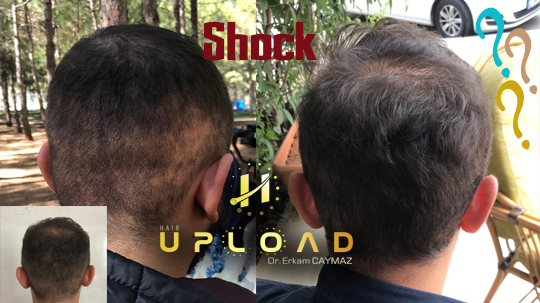
You can see one patient 4 months process
As Dr.Erkam CAYMAZ Hair Upload Hair Clinic we are delighted to answer any further questions about shock loss or all your questions about hair transplantation. Feel free to contact us.
الأسئلة الشائعة
وهو تساقط مؤقت أو مستمر ناجم عن الإجهاد الجراحي في البصيلات المحيطة، وغالبًا ما يتم رؤيته بالقرب من مناطق التلاعب بالمتلقي والمتبرع.
يلاحظ العديد من المرضى تغيرات من الأسابيع الأولى حتى الشهر الثاني تقريبًا، اعتمادًا على الشفاء الفردي وضعف البصيلات.
لا، العديد من الحالات تتعافى، لكن البصيلات المصغرة الموجودة مسبقًا أو الصدمة الجريبية المباشرة يمكن أن تؤدي إلى عودة غير كاملة.
إن التخطيط الدقيق للقنوات، والتحولات المحافظة للكثافة، والدعم بعد العملية الجراحية الموجه طبيًا يمكن أن يقلل من مخاطر الإصابة التي يمكن تجنبها.
إذا كان التساقط تقدميًا، أو غير متماثل، أو لم يتغير بعد فترات الاسترداد المتوقعة، فمن المستحسن المتابعة المنظمة بالصور.
يعد التخلص من الصدمة مرحلة طبيعية ضمن فترة التعافي الأوسع من عملية زراعة الشعر، وعادة ما تستغرق من الأسبوع الثاني إلى الثامن، قبل أن يصبح النمو الجديد مرئيًا خلال الأشهر الثلاثة إلى الأربعة تقريبًا.

الحد الأدنى من الطعوم لكل سم²: الشعر الأفريقي مقابل العادي
The minimum number of grafts per 1 cm² required for a successful hair transplant depends heavily on your natural hair…
اقرأ المزيد: الحد الأدنى من الطعوم لكل سم²: الشعر الأفريقي مقابل العادي
التخطيط لزراعة الشعر
يبدأ التخطيط لزراعة الشعر بالصور ومرحلة نوروود وحسابات المتبرعين الآمنة - وليس أعلى رقم للبصيلات في الكتيب. عندما يكون…
اقرأ المزيد: التخطيط لزراعة الشعر
تأثير الحصى بعد زراعة الشعر: الأسباب والإصلاح
We want to say it is a really rare side effect (1/100.000 - 300.000). "Cobblestone" in hair transplantation refers to a…
اقرأ المزيد: تأثير الحصى بعد زراعة الشعر: الأسباب والإصلاح
النسبة الذهبية في تصميم خط الشعر أثناء الزراعة
النسبة الذهبية: ظهور خط الشعر أثناء زراعة الشعر؟
اقرأ المزيد: النسبة الذهبية في تصميم خط الشعر أثناء الزراعةتساقط الصدمة بعد زراعة الشعر — الأسئلة الشائعة
إجابات الخبراء بقلم الدكتور إركام جايماز، إسطنبول